
Last updated November 16, 2026
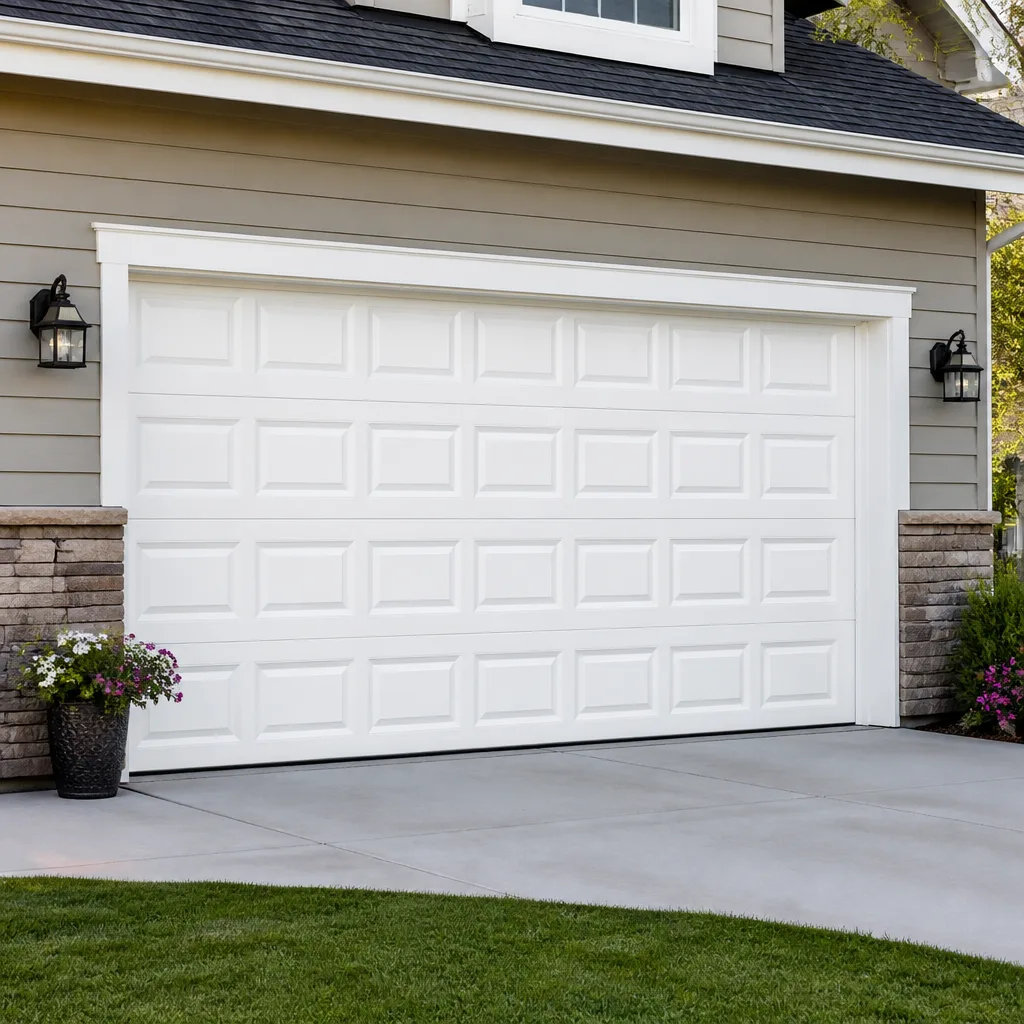 Raised-panel steel
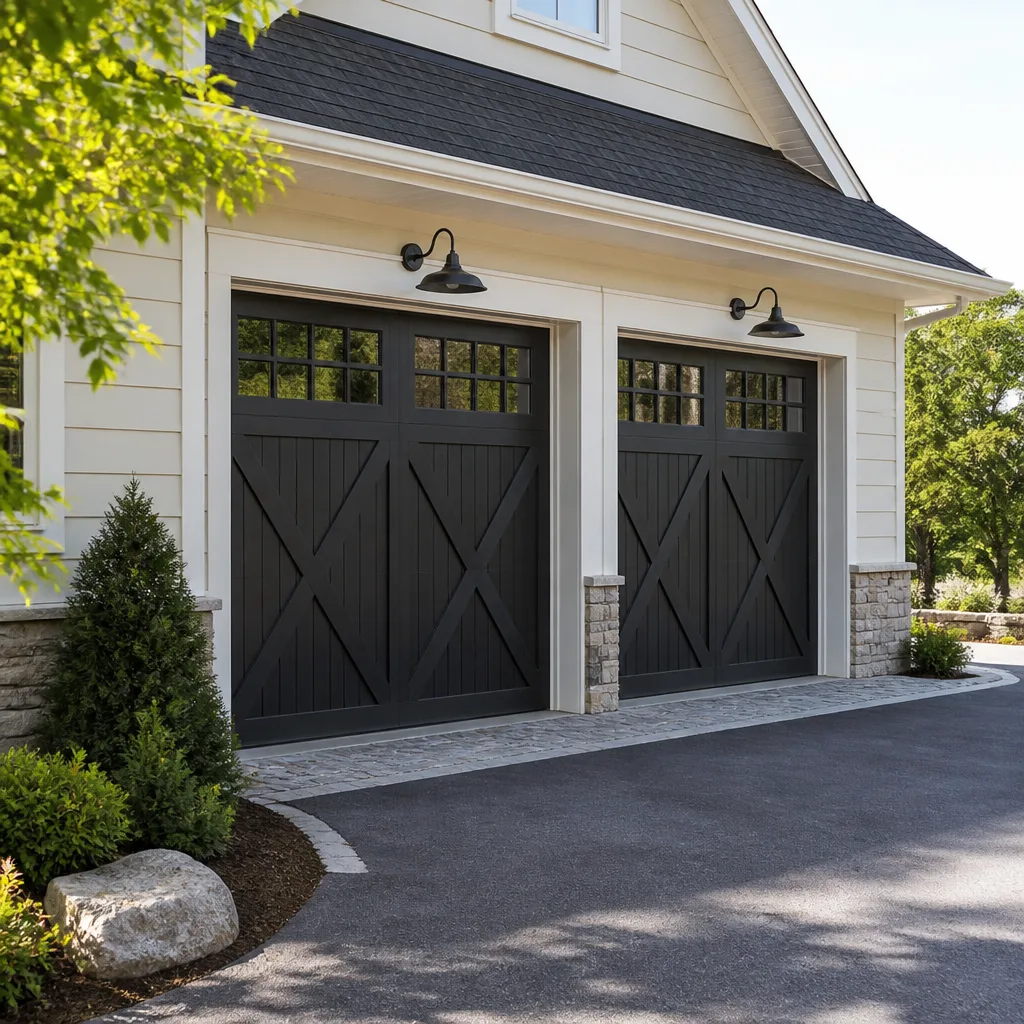 Carriage house
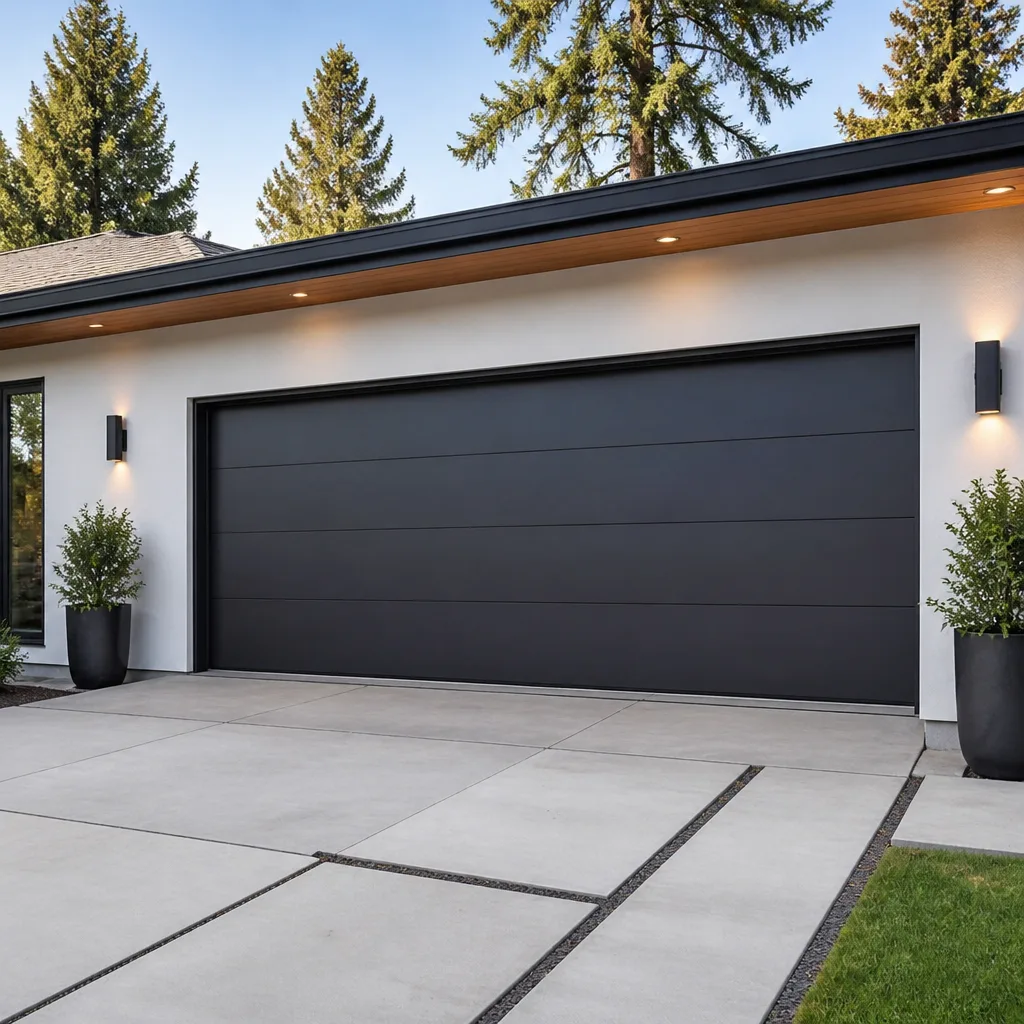 Modern flush
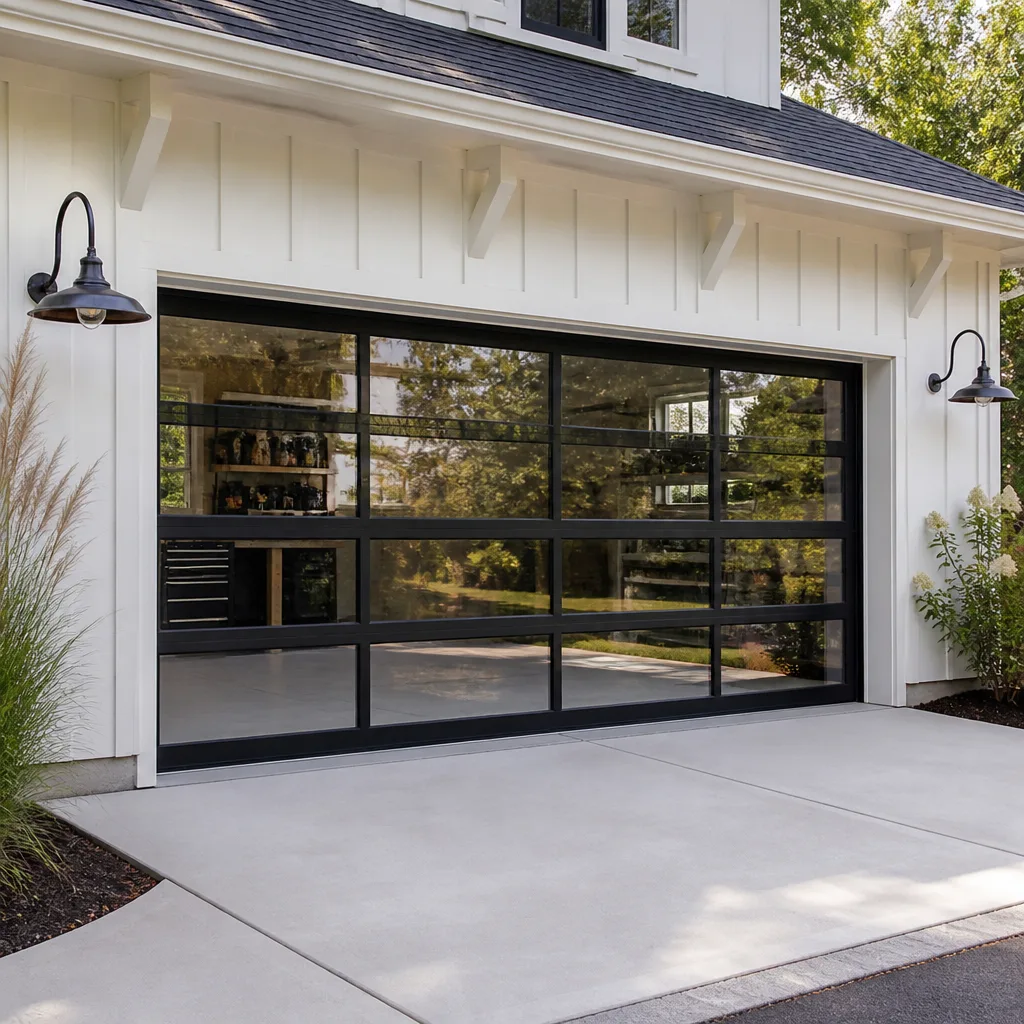 Full-view glass
 LiftMaster openers
 Chamberlain openers
Full 25-point door and opener safety check with every visit - springs, cables, rollers, tracks, and your LiftMaster or Chamberlain opener included
You get a price before we start. It does not change when the pro arrives.
Get your free estimateGarage Door Emergency Preparedness Guide for Arlington Homes
Most garage door emergencies are decided before anything breaks. The door that’s frozen to the driveway on a January morning, the spring that snaps while the car is parked inside, the opener that dies during a summer storm outage – none of those are really about the failure itself. They’re about whether the homeowner already knows what to do. A dead opener, a snapped spring, or a door frozen to the ground all feel like a crisis because they arrive without warning, yet the homeowner’s response is what decides whether it’s a half-hour inconvenience or a problem that keeps the car trapped for a day. This guide covers the three things worth knowing before something fails on an Arlington door: how to release it by hand, how to prepare for the weather this area actually gets, and how to have a repair number ready before you need one.
Quick Answer
Garage door emergencies in Arlington usually come down to one of four things: a torsion spring failure, an opener that won’t respond, a door frozen to the ground in cold weather, or a power outage that leaves the door stuck closed. The single most useful skill is knowing how to use the manual release cord correctly so you can open the door by hand without damaging the opener’s trolley. The second is having a licensed repair specialist’s number saved before you need it, and knowing the right questions to ask when you call.
Key Takeaways
- Learn the manual release cord before you need it – most people don’t, and that’s what turns an outage into a lock-in.
- A broken torsion spring is never a do-it-yourself repair. Stop, don’t force the door, and call a specialist.
- Storm and cold-weather prep takes ten minutes and prevents the most common Arlington door failures.
- Vet your repair contact in advance so a real emergency doesn’t leave you choosing between strangers on the phone.
Styles & brands we work with
- Raised-panel steel
- Carriage house
- Modern flush
- Full-view glass
- LiftMaster openers
- Chamberlain openers
Table of Contents
- How the Manual Release Cord Actually Works
- Winter Emergencies: A Door Frozen to the Ground
- Storm Prep Checklist for Arlington Weather
- What to Do When a Spring Breaks With the Car Inside
- Power Outages and Dead Openers
- How to Choose a Repair Provider Before You Need One
- Preventive Checks That Head Off Most Failures
How the Manual Release Cord Actually Works
The manual release cord disconnects your door from the opener so you can lift it by hand. It hangs from the trolley carriage that rides along the opener’s rail, usually with a red handle on the end. Pulling it – and only when the door is fully closed – unlocks the carriage from the drive system so the door moves freely on its tracks. That’s the whole point of it during a power outage or a dead opener.
Here’s where people get it wrong. The cord is meant to be pulled when the door is down and at rest, not while the opener is mid-cycle or the door is partway up. Pull it while the door is moving or already open and the carriage can slam back into the trolley when the opener next engages, which bends the carriage arm and can strip the trolley. On a LiftMaster or Chamberlain opener, that’s a repair that goes well beyond a simple reset. We’ve seen it happen plenty of times on Arlington doors, and it’s almost always avoidable.
The correct sequence:
- Make sure the door is completely closed and the opener is not running.
- Pull the release cord straight down until you feel the carriage disengage. You’ll hear a click.
- Lift the door slowly by hand. A well-balanced door should rise with steady pressure. If it feels extremely heavy, don’t force it – the spring may already be broken, and a door that heavy can come down hard.
- To reconnect, close the door fully, then pull the cord again (or run the opener once) so the carriage re-engages with the trolley.
If your door has a wall-mounted lock, release that before you lift. And if the cord is missing, cut short, or frayed, that’s a safety issue worth fixing on its own. When the door won’t reconnect cleanly or the carriage looks bent, that’s a signal to stop and call a specialist rather than keep working it. Our garage door opener repair team handles carriage and trolley damage regularly, and it’s a straightforward fix when it’s caught before the arm bends further.
Winter Emergencies: A Door Frozen to the Ground
When an Arlington cold snap drops overnight temperatures and the bottom seal freezes to the concrete, the door won’t lift. It’s not broken. The rubber seal has bonded to the slab, sometimes with a little ice in the gap. The instinct is to hit the opener and let the motor force it – and that’s exactly what bends the bottom panel, tears the seal, or overloads the opener’s gear.
What actually works, in order:
- Turn the opener off or unplug it so nobody hits the button while you’re working.
- Break the bond gently along the bottom edge. A plastic putty knife or a stiff broom can slide under the seal without scratching the concrete. Never use a metal shovel or pry bar – it gouges the floor and cuts the seal.
- Warm the seal and the gap carefully. A hair dryer on low, moved along the bottom, softens the rubber enough to release it. Don’t use a heat gun or a torch on the seal or the door panel.
- Lift the door by hand once the seal is free, feeling for any sticking, before you reconnect the opener.
To keep it from happening again, clear snow and meltwater away from the door’s path after a storm, keep the bottom seal pliable (a dry silicone spray on the rubber helps), and make sure the concrete apron slopes away from the door so standing water doesn’t refreeze in the gap. If the door still resists after the seal is free, or if a panel is already bent from a forced lift, stop. A bent bottom section on a Clopay or Raynor door can sometimes be straightened, but a specialist needs to look at it. For a door that’s already been forced, the right call is a professional assessment before you run the opener again.
Storm Prep Checklist for Arlington Weather
Arlington’s storm profile is what you’d expect for Northern Virginia: summer thunderstorms with heavy rain and wind, occasional derechos that knock out power for hours, and winter systems that bring ice and freezing rain. Each one stresses a different part of the door system. Power loss stresses the opener and your access. Wind and debris stress the panels and tracks. Ice stresses the seal and the balance. A short prep routine before a forecasted event covers all three.
- Test the manual release now. Pull it once, reconnect it, and confirm it works while the power is still on. Learning it during an outage is the wrong time.
- Clear the door’s path. Move anything leaning against the door, and clear the tracks of leaves, grit, and loose debris so the rollers don’t bind.
- Check the tracks and hinges. Look for loose bolts, bent track sections, or a hinge that’s pulling away. Storm vibration finds a weak point.
- Confirm your opener has a battery backup if that matters to you, or make sure you know how to release the door by hand.
- Trim what overhangs. A branch that hangs over the door can drop onto a panel in high wind. Keep the roof edge and the door’s clearance clear.
- Save your repair number and note your door’s brand and model. Knowing your door is a Genie or a Craftsman system makes the first call faster.
A quick pre-storm walk-around takes ten minutes. If you spot something that needs attention – a bent track, a dragging roller, a panel that’s out of alignment – it’s far cheaper to handle it before the storm than after. Our team sees the pattern every storm season: the doors that come through cleanly are the ones someone checked beforehand.
What to Do When a Spring Breaks With the Car Inside
This is the one that scares people most, and the anxiety is justified because the spring is the most dangerous component on a garage door. Torsion springs hold the door’s full weight under high tension. When one breaks, you’ll usually hear a sharp bang, and the door will suddenly become very heavy and may not open at all. If your car is inside the garage, you’re not stuck – but you need to move carefully.
First, understand what not to do. Never try to lift the door by hand when a spring is broken, especially if it’s a torsion spring above the door. The door can drop, and a door that heavy is not something to hold. Never try to remove, loosen, or replace the spring yourself. Never prop the door up with something to get the car out and then run the opener, which can wrench the track and the panels. And don’t keep hitting the opener – it will strain the motor and gear against a load it wasn’t built to move.
What to do instead:
- Wait for the door to settle fully. Don’t touch it while it may still shift.
- Use a side door or the house entrance to get access to the garage from inside.
- If your car needs to come out and the door can’t safely move, call a repair specialist. On an Arlington door with a broken torsion spring, the safe path is a technician who can secure the door and get it moving again.
- Keep people and pets away from the door and from the track area until it’s secured.
If your door uses extension springs, they run along the sides with a safety cable through them, and a break is still not a homeowner job – the cable is there to catch the spring, but the components are under tension. The bottom line on springs: a specialist handles this one. It’s the single most important “do not do it yourself” item on the whole door.
Power Outages and Dead Openers
When the power goes out, or the opener simply won’t respond, the door isn’t the problem – the drive system is. Overhead door openers need power to release the door’s drive, so a dead opener leaves the door locked in place unless you use the manual release. That’s why the release cord is the first thing to know. It’s also why the most useful backup on an opener is a battery, which keeps the unit running for a limited number of cycles during an outage.
If the opener is dead but the power is on, the likely causes are a tripped breaker, a blown fuse, a bad wall switch, or a safety sensor that’s out of alignment. Check the breaker first, then look at the safety eyes near the floor on each side of the door – if one is misaligned or blocked, the opener won’t close the door, and many models won’t open it either. A Craftsman or LiftMaster unit has indicator lights that tell you what’s wrong if you know where to look, which is one reason it helps to have someone who works on your brand.
If the opener is getting power but the door still won’t move, the problem is inside the unit or in the drive. That’s the point to stop guessing. A specialist can diagnose it in one visit. More important for an emergency: once the manual release is used, reconnecting the carriage has to be done correctly, or the opener will strain against a carriage that never seated. If you’ve had to open the door by hand and reconnection feels off, that’s worth a call before you run the door again.
How to Choose a Repair Provider Before You Need One
The worst time to vet a garage door repair company is during an emergency, when you’re calling whoever answers and can’t compare. The best time is today, while the door still works. A little preparation means your first call on a broken night goes to someone you’ve already checked out, not a stranger with an unfamiliar name.
Here’s what to ask before you ever need them:
- Are you licensed and insured? A legitimate garage door repair specialist carries coverage. Ask directly and expect a clear answer.
- Do you charge a service or diagnostic fee? Ask up front. A free estimate is the standard many homeowners expect, so confirm it before anything gets dispatched.
- Will the price be quoted before work starts? The written estimate should set the price. If a company won’t put it in writing first, that’s a red flag.
- What’s the dispatch window and how do I reach you? A real service answers the phone and can tell you when a technician can come.
- Do you work on my brand and model? A Craftsman, a Raynor, a Chamberlain – the more of the common systems a company handles, the faster they can diagnose yours.
- Is the work done by your own technicians, or subcontracted? Know who shows up.
The problem with calling blind during an emergency is the operators who prey on the panic – they quote a low number on the phone and inflate it on the invoice. Save a number you’ve checked. We talk with homeowners in Arlington every week who wish they’d done that first. Our own approach is straightforward: we’re a garage door specialist, we quote before any work starts, and our technicians have up to 11 years of experience on the brands we see most. The point isn’t that you need to call us – it’s that you call someone you’ve already vetted.
Preventive Checks That Head Off Most Failures
The calls that come in during an emergency are often for things that were visible weeks earlier. A garage door gives plenty of warnings. The trick is knowing what to look at and looking on a schedule rather than only when something breaks.
- The balance test. With the opener disconnected, lift the door halfway and let go. A well-balanced door holds position. If it drops or rises on its own, the springs are out of adjustment and a failure is closer than you think.
- The sound test. A door that creaks, grinds, or bangs is telling you something is loose or worn – a roller, a hinge, a track section.
- The visual test. Check the torsion spring above the door for gaps or a section that looks separated. Check the extension springs along the sides. Look at the cables for fraying. These are all early warning signs.
- The roller and track check. Look for flat spots on rollers and any bent or out-of-line track. Lubricate the moving parts with a dry, garage-door-safe lubricant, not grease.
- The safety sensor check. Block the beam with your foot and confirm the door reverses. If it doesn’t, the door isn’t safe to run.
- The weather seal check. A torn or hardened bottom seal lets in water that refreezes in winter and stresses the door every cycle.
If any of these turns up an issue, it’s far cheaper to fix now than during a failure. A technician can service a whole door in one visit and identify the parts that are close to failing. If you’re already seeing multiple warning signs, that’s a sign it’s time for garage door repair rather than another month of waiting. Our Kingsley Garage Door Repair team handles repair, opener service, and installation, so if a door is genuinely beyond saving, we’ll tell you that rather than sell you a replacement you don’t need.
Common Mistakes to Avoid
- Pulling the manual release while the door is moving. It bends the carriage arm and strips the trolley. Pull it only when the door is fully closed and the opener is idle.
- Forcing a frozen door with the opener. In an Arlington cold snap, this bends the bottom panel and tears the seal. Free the seal by hand first.
- Trying to replace a torsion spring yourself. This is the most dangerous repair on the door. Leave it to a specialist, full stop.
- Running the opener against a broken spring. It strains the motor and can wrench the tracks and panels. Stop and call.
- Using grease or a heavy oil on the tracks and rollers. It attracts grit and gumming. Use a dry, door-safe lubricant instead.
- Calling the first number that answers in a panic. That’s how surge-priced operators get a foot in the door. Vet a company before you need it.
- Ignoring the warning signs. A noisy, unbalanced, or slow-moving door is telling you a failure is coming. Deal with it while you can still schedule the work.
See the difference
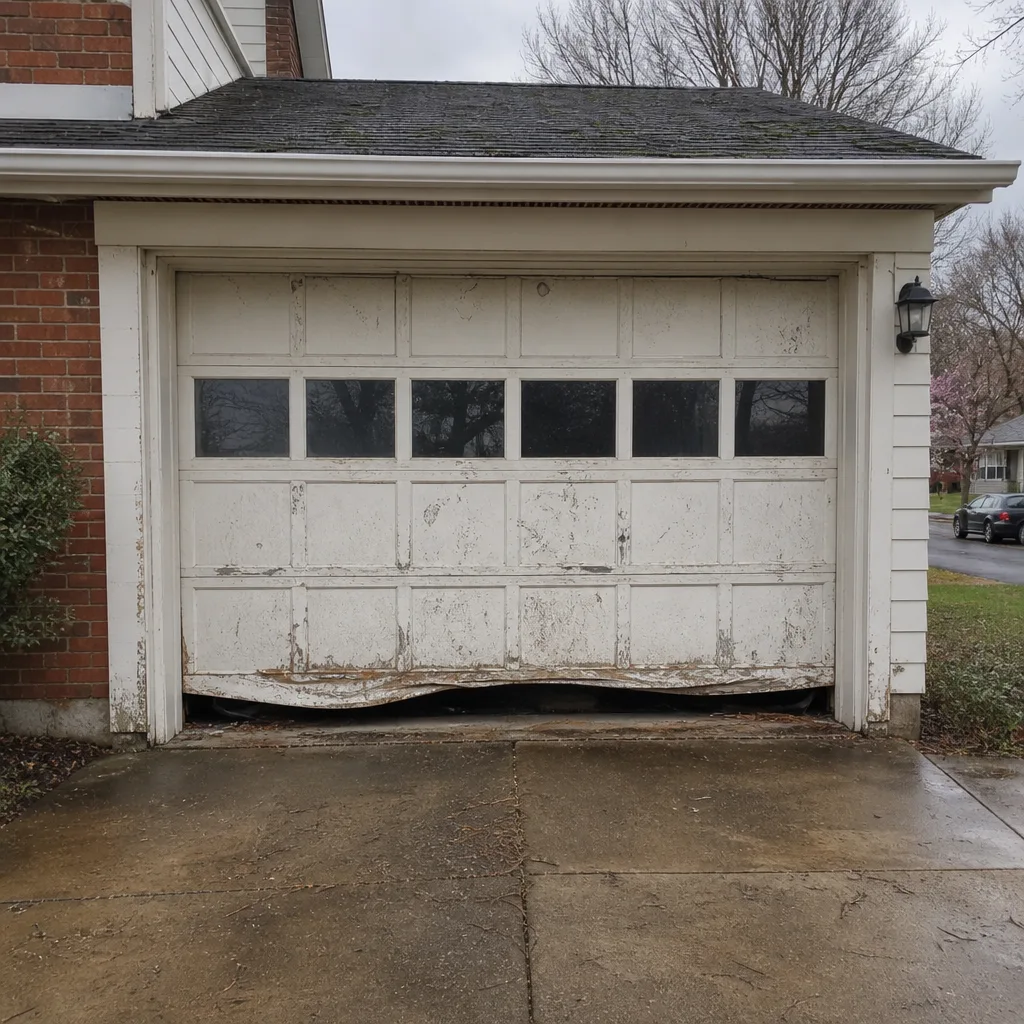 Before
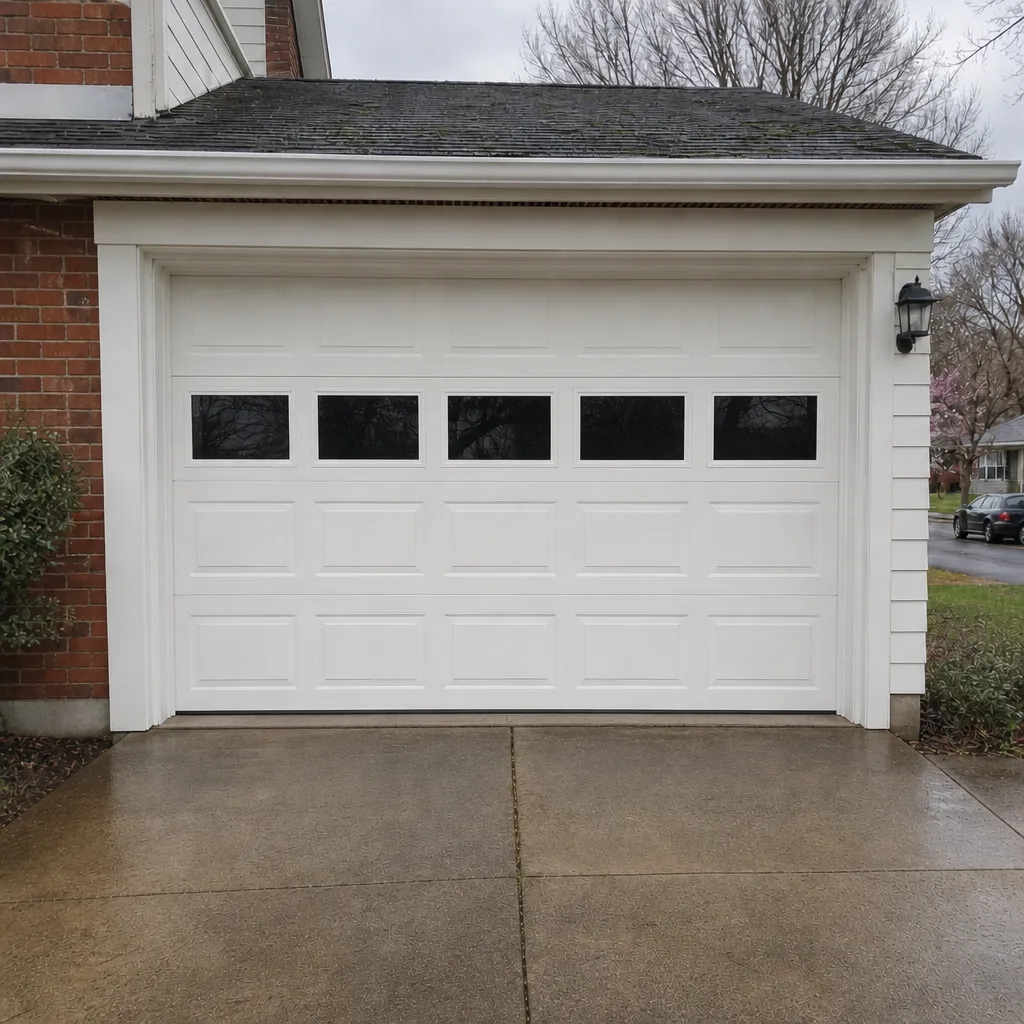 After
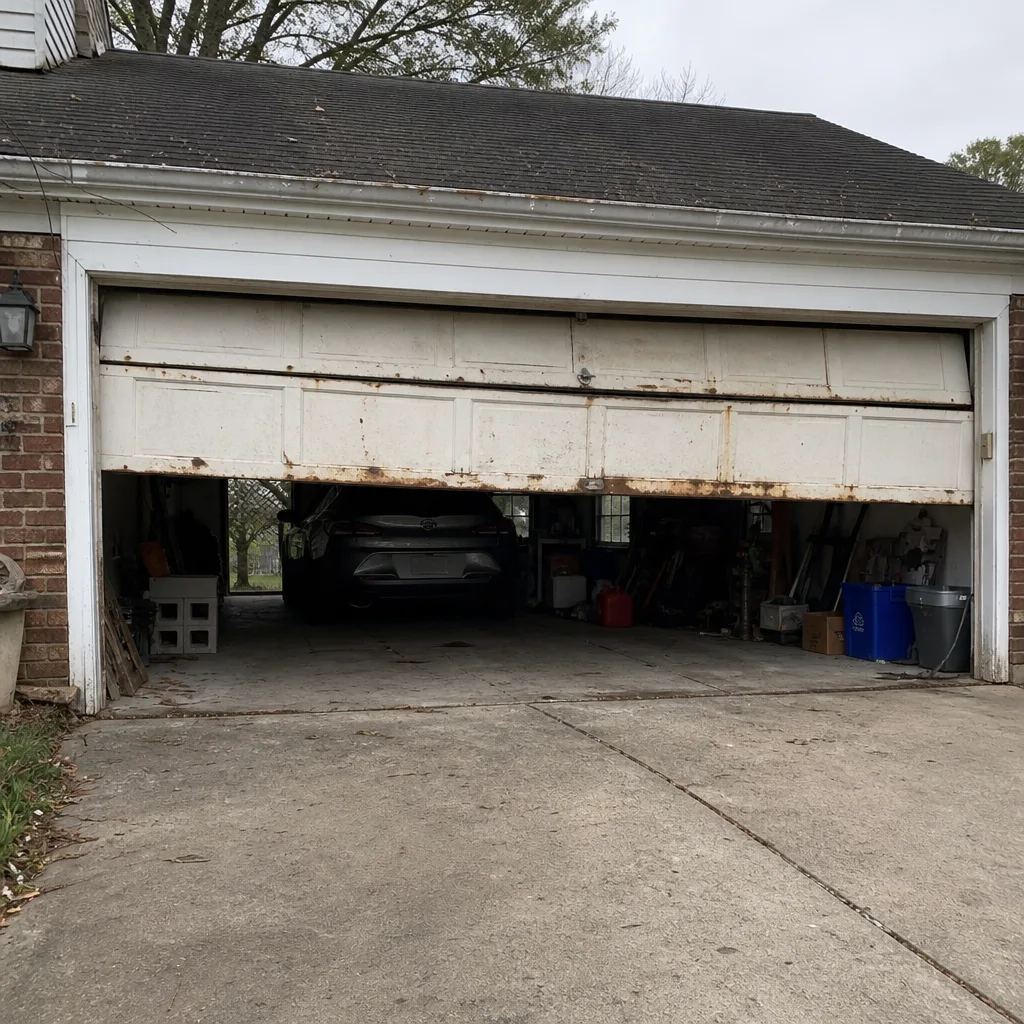 Before
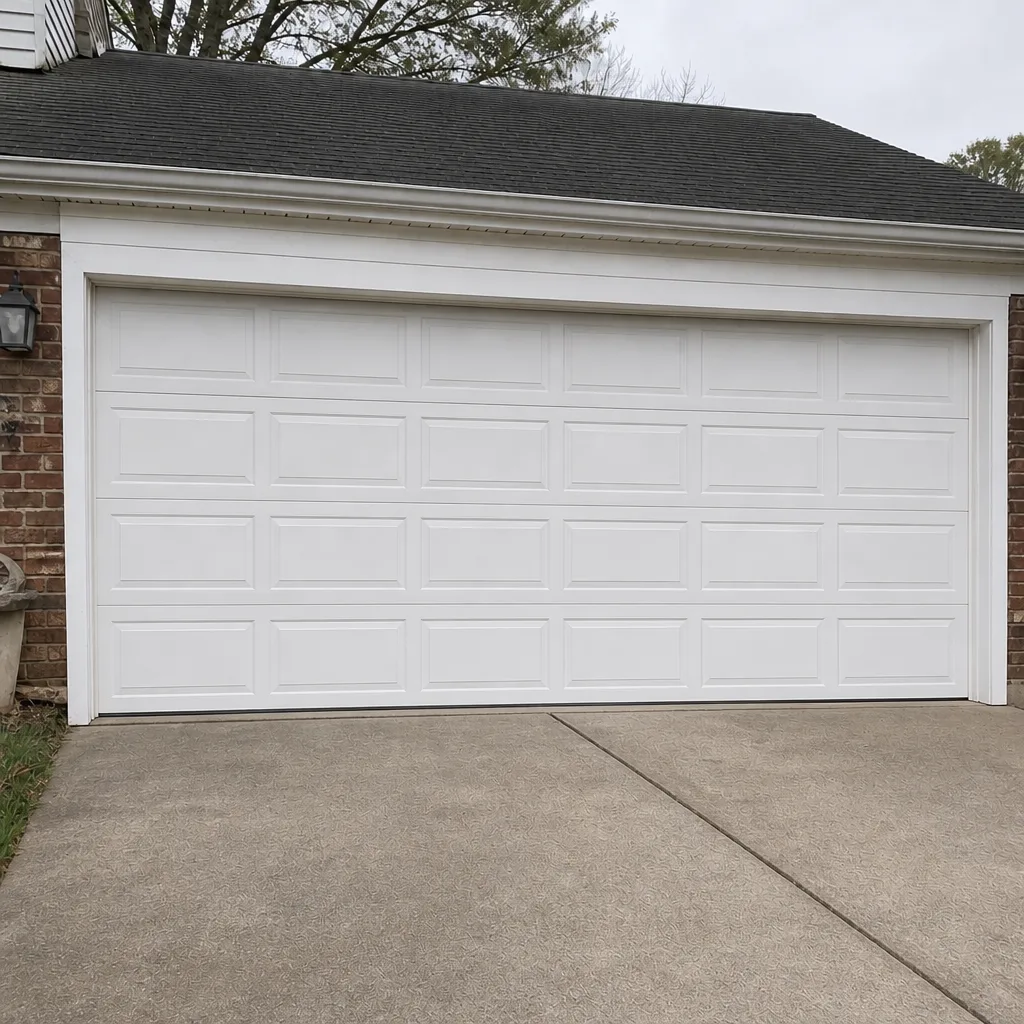 After
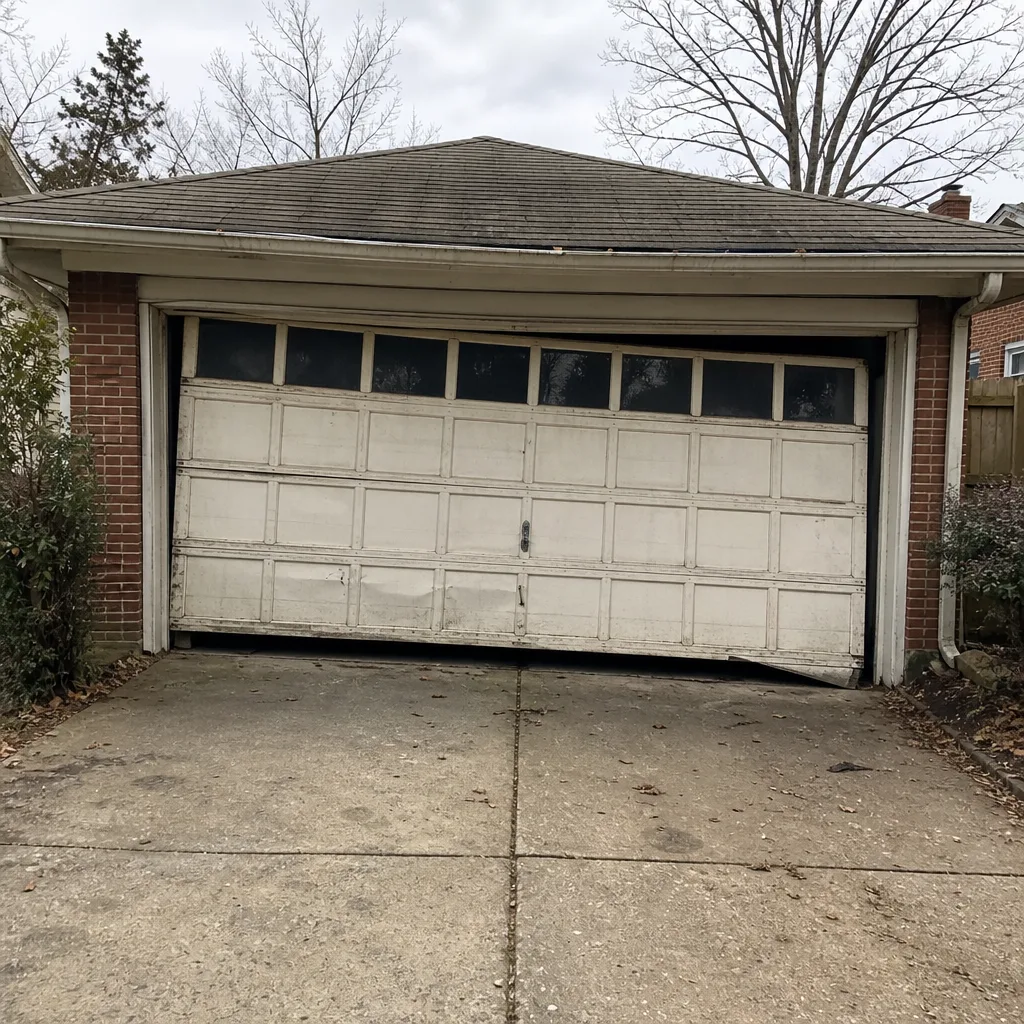 Before
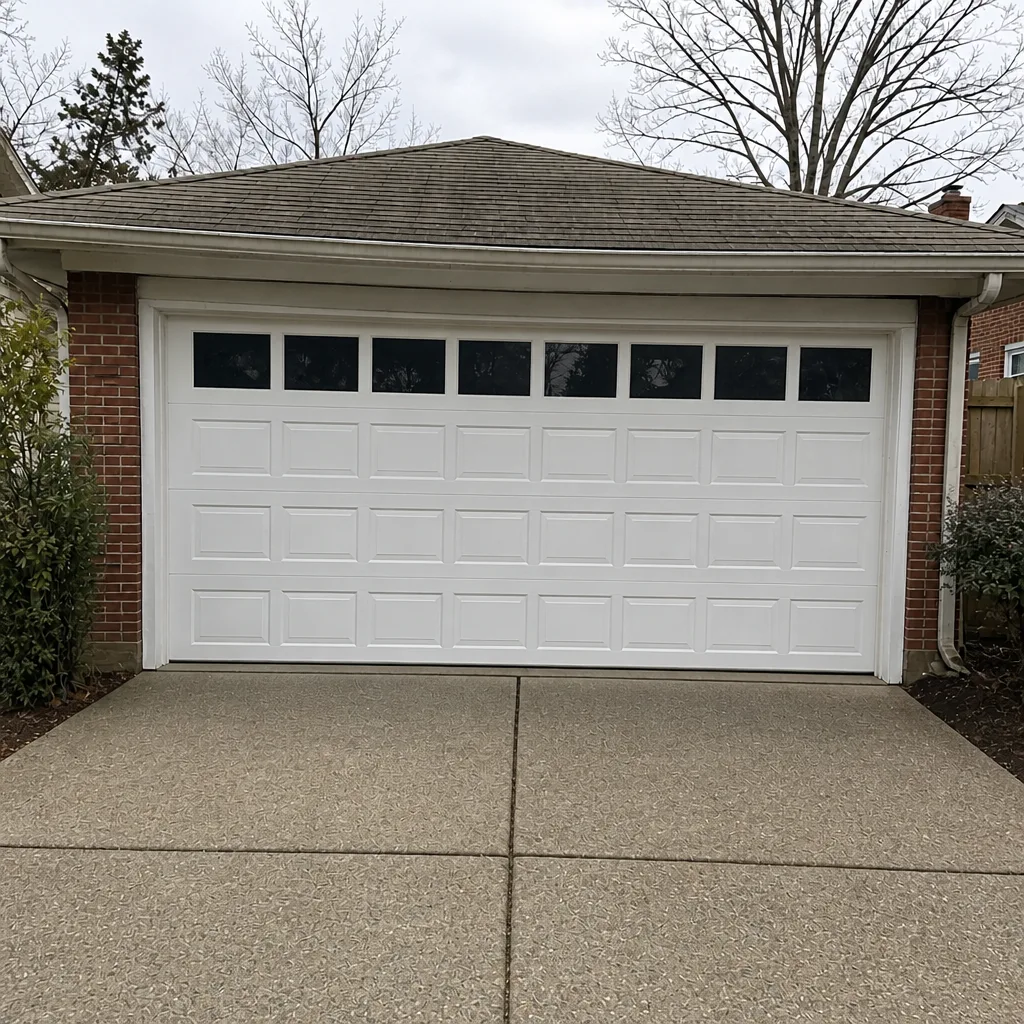 After
When to Call a Professional
Some jobs are a quick homeowner fix and some absolutely are not. Call a professional when a torsion or extension spring has broken or looks close to it; when the door won’t open or close and the manual release doesn’t free it cleanly; when the opener runs but the door doesn’t move, or moves erratically; when a panel or track is bent from a forced lift or storm impact; when the door is out of balance and won’t hold position; and when a safety sensor won’t reverse the door. Those are the cases where a wrong move causes real damage or injury. Kingsley Garage Door Repair offers free estimates in Arlington – call (844) 484-2584. We answer 24/7. Fast dispatch from 7am to 7pm, Sunday through Friday.
Frequently Asked Questions
Check the opener’s power and the safety sensors first, then use the manual release cord if the door won’t respond. Make sure the door is fully closed and the opener is off when you pull the cord, then lift the door by hand. If it feels extremely heavy, stop – the spring may be broken, and that’s a call to a specialist.
Yes, using the manual release cord. Pull it straight down while the door is fully closed and the opener is idle, then lift the door by hand. An opener with a battery backup can also run for a limited number of cycles during an outage. Never pull the release while the door is moving.
Turn the opener off, free the bottom seal gently with a plastic tool, and warm the gap with a hair dryer on low. Never force the door with the opener or pry it with metal. Clear meltwater from the door’s path afterward so it doesn’t refreeze. If a panel bent from a forced lift, call for repair.
Winter brings the frozen-to-the-ground problem, and summer storms bring the power-outage problem. Spring failures peak during the morning rush, when the door runs most. Each season stresses a different part – the seal and springs in cold, the opener and access during storms – which is why a pre-season check helps.
Yes. A broken torsion spring leaves the door locked in place and dangerous to lift, so the safe path is a specialist who can secure the door and get it moving. Don’t force it by hand or run the opener against it, and keep people and pets clear until it’s secured.
Yes. Our technicians are experienced on the eight major brands we work on, and we quote the price in writing before any work starts. Call (844) 484-2584 for a free estimate. We answer 24/7. Fast dispatch from 7am to 7pm, Sunday through Friday.
The Bottom Line
Garage door emergencies in Arlington are predictable, and that means you can prepare for them. Learn the manual release cord before a power outage or a dead opener makes you learn it the hard way. Treat a frozen door with gentle heat and a plastic tool, not the opener. Never touch a broken torsion spring yourself. Do a short storm and winter prep pass each season, and save a repair number you’ve already checked out. Those five habits cover almost every door emergency a homeowner will face. The door doesn’t have to be an emergency at all if you know what to do before it fails.
Written by the team at Kingsley Garage Door Repair.