
Last updated November 16, 2026
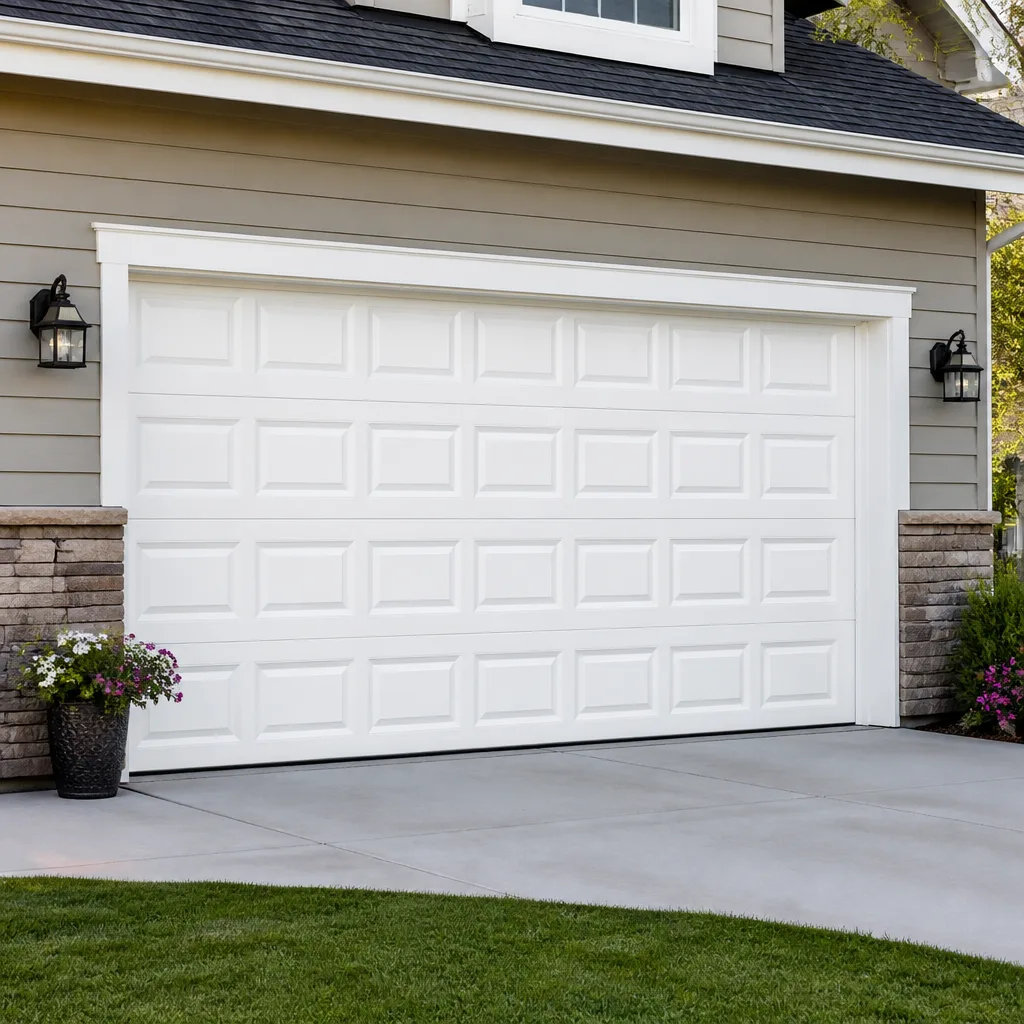 Raised-panel steel
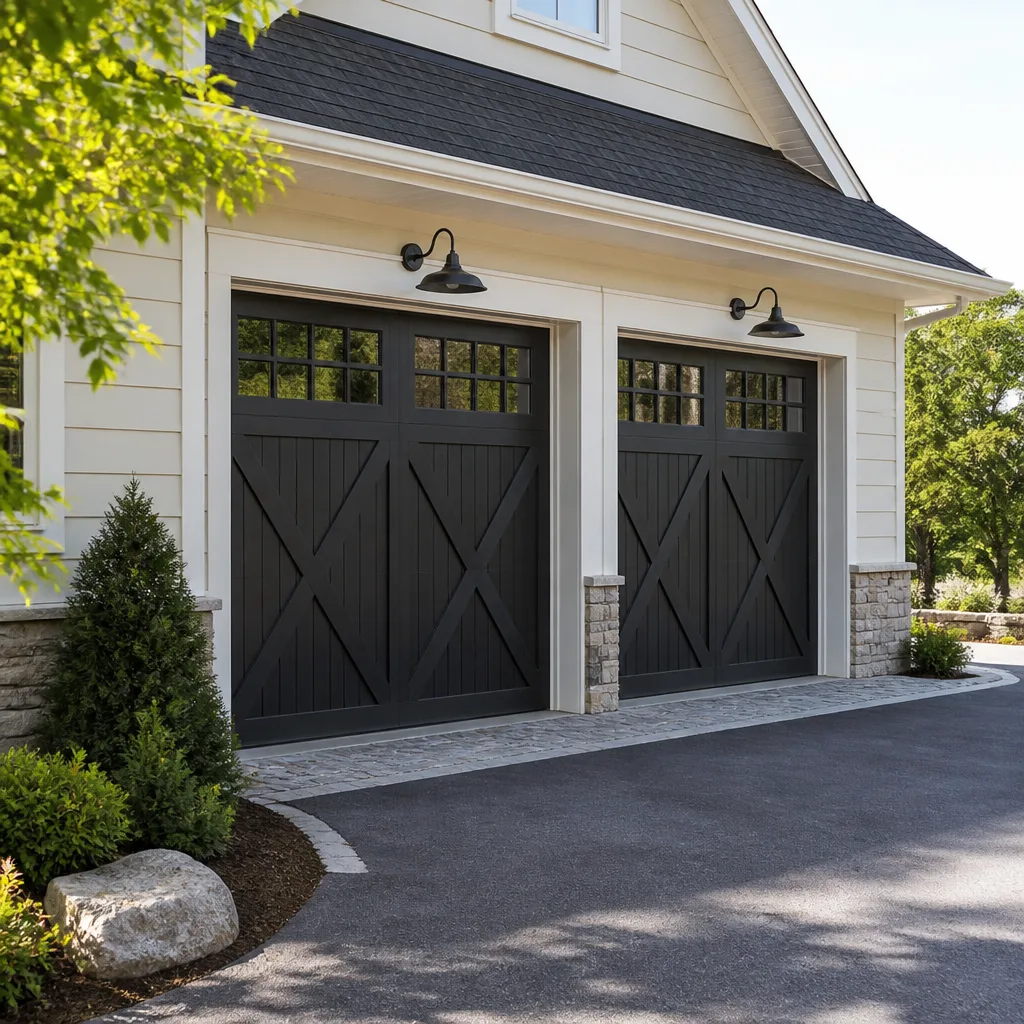 Carriage house
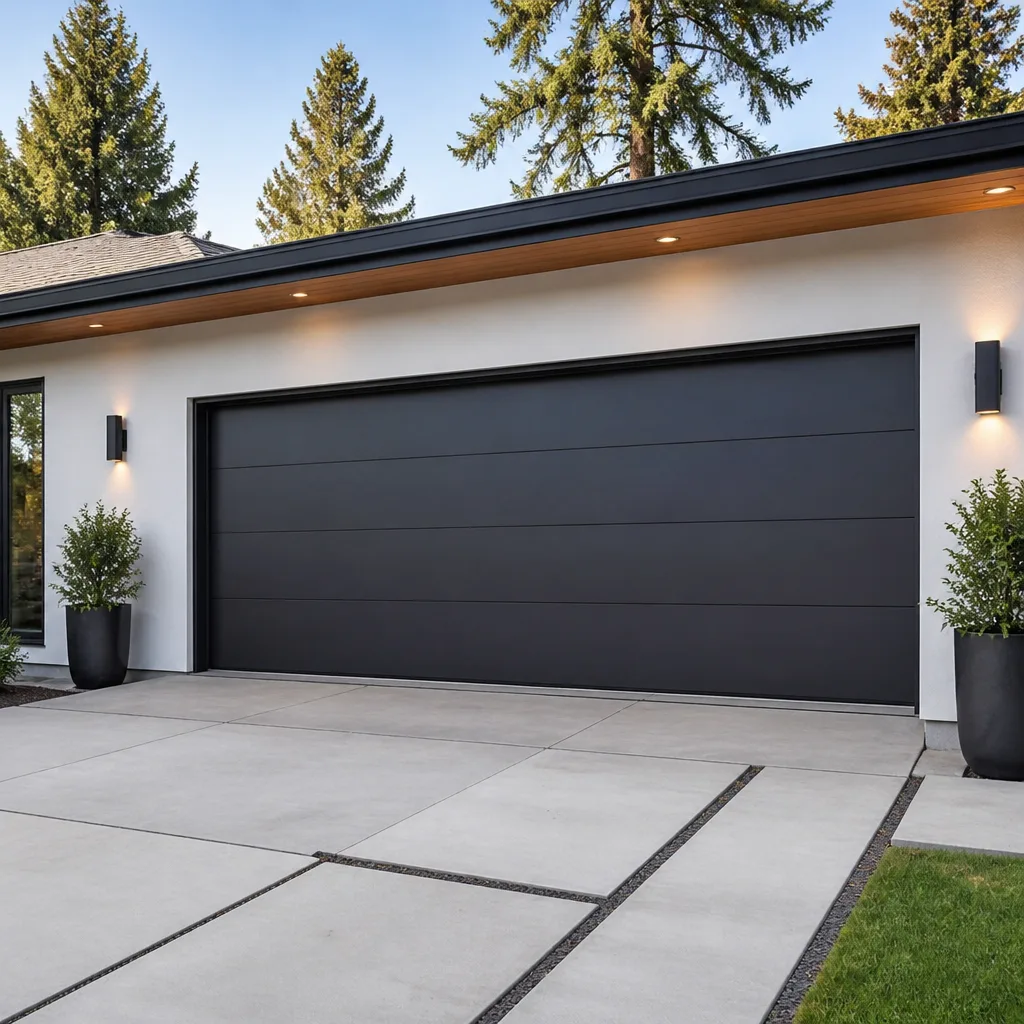 Modern flush
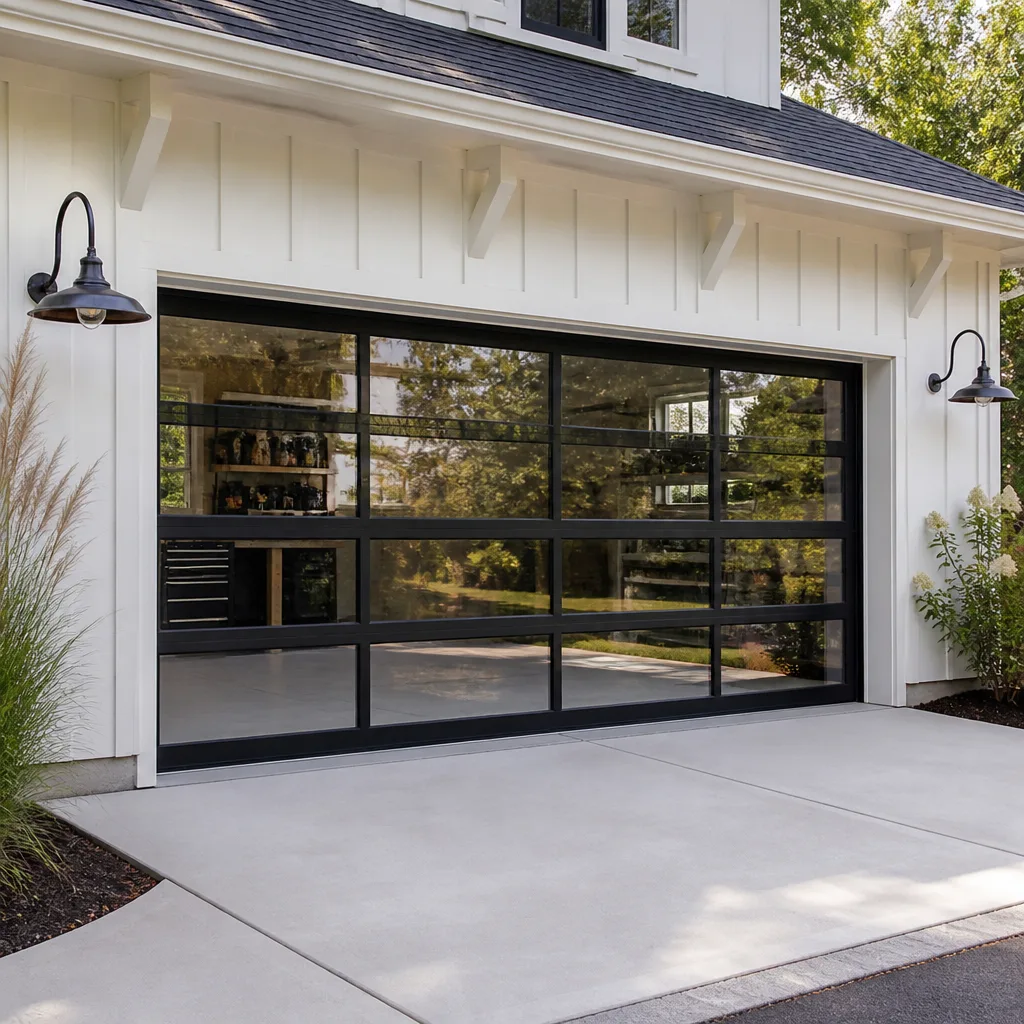 Full-view glass
 LiftMaster openers
 Chamberlain openers
Full 25-point door and opener safety check with every visit - springs, cables, rollers, tracks, and your LiftMaster or Chamberlain opener included
You get a price before we start. It does not change when the pro arrives.
Get your free estimateGarage Door Permits, Codes & Inspections in Arlington, VA: What You Need to Know
A garage door replacement doesn’t sound like it needs a permit. But if your installer changes the structural header above the opening or installs a new operator on a circuit that wasn’t designed for it, you’ve crossed into permit territory, and that matters the moment you sell or file an insurance claim. Most Arlington homeowners never hear this from the contractor who takes the job, because it’s easier to close a sale when paperwork doesn’t come up. This guide lays out what actually triggers a permit in Arlington County, what an inspector checks, what an unpermitted job costs you later, and where HOA approval sits on top of the county layer.
Quick Answer
In Arlington County, a like-for-like garage door replacement that keeps the same opening, header and track configuration usually does not need a building permit. Any work that alters the structural framing, width or height of the opening, or that adds or relocates an opener circuit, generally does. Whether your specific job crosses that line is a question for the Arlington County building department, so ask them directly before work starts and get the answer in writing from whoever performs it. Approval is also not automatic across multiple agencies: county sign-off and HOA review are separate steps.
Styles & brands we work with
- Raised-panel steel
- Carriage house
- Modern flush
- Full-view glass
- LiftMaster openers
- Chamberlain openers
Table of Contents
- What triggers a garage door permit in Arlington County?
- Like-for-like replacement vs. structural alteration
- The electrical permit question for new openers
- What an Arlington County inspector actually checks
- How unpermitted work surfaces during a home sale
- The HOA layer on top of county approval
- Which codes apply to a residential garage door in Arlington
- Frequently asked questions
What triggers a garage door permit in Arlington County?
The dividing line comes down to whether you’re replacing a door or changing the building. Arlington County, like most Virginia jurisdictions, treats a straight swap of a door into an existing, unmodified opening as ordinary maintenance. Change the opening itself and you’re into permitted construction. The distinction is structural, not cosmetic, and it’s the piece most homeowners never have explained to them.
Here’s how to think through it before you call anyone:
- Same opening, same dimensions, same track layout: usually maintenance, no permit. This covers the overwhelming majority of residential replacements in Arlington.
- Widening or heightening the opening: the header above the door carries load. Resizing it means re-engineering and reframing, which needs a permit.
- Replacing a damaged header or jack stud: that’s structural framing, and structural framing needs a permit.
- Converting a manual door to an operator: the door side is usually fine. The electrical side may not be (more on that below).
- Changing from a sectional door to a one-piece tilt-up or roll-up: the track geometry and ceiling clearances change, and the framing often needs to accommodate that.
- Adding a second door or infilling an existing opening: new opening, new framing, permit.
We work with Kingsley Garage Door Repair customers across Arlington who ask us this question after the fact, once a neighbor or a real estate agent has flagged something. We always point them to the county building department rather than guessing, because Arlington County is the only authority that can tell you what your specific address requires. The rules are consistent in principle, but each property sits on its own lot, with its own grade, its own zoning overlay and its own prior permit history. Those details change the answer.
One practical note: older homes in neighborhoods like Ballston and Virginia Square often have had prior work done without permits by earlier owners. When you pull a permit for new garage work, the county may see the older unpermitted scope in the record, which can drag unrelated projects into the conversation. If you’re buying a home, ask for the permit history before you close.
Like-for-like replacement vs. structural alteration
Like-for-like means the new door occupies the same opening, at the same width and height, on the same track, with the same motor mounting point, and without any modification to the frame, header or ceiling structure. If every one of those is true, most replacements in Arlington are treated as maintenance. If any one of them changes, treat it as a structural alteration and expect a building permit. The line is that clean.
Where homeowners get confused is that “same size” and “same door” aren’t the same thing. You can install a Clopay door of identical dimensions in an identical opening and still trigger a permit if the new door weighs substantially more than the old one, because the spring system and track brackets have to handle the load. The opening hasn’t changed, but the load path through the brackets and jamb has. Whether that tips into “structural” is a judgment call for the county, and it’s why we tell homeowners to describe the load change, not just the door size, when they ask.
A few more distinctions worth writing down before you order a door:
- Verify the opening’s actual clear dimensions. Measure the finished opening, not the door.
- Confirm the existing header material and spacing with whoever performs the work. A structural change here is a permit item.
- Check whether the existing jamb studs are sound or split. Replacing them counts as framing.
- Look at the track radius and ceiling drop. A low-headroom door in a converted basement garage may need structural changes to fit.
- Note whether the current door ever had a permit pulled for it. If the door was added after the house was built, the record matters.
This is also the point where a specialist beats a generalist. A technician who only works on garage doors will recognize the difference between a load-bearing header and a non-structural one within a few minutes of looking, because they’ve seen hundreds of them. When you book garage door repair in Arlington with a dedicated specialist, part of what you’re paying for is an accurate read on whether the scope in front of you is maintenance or construction. That read affects whether you need a permit at all.
The electrical permit question for new openers
In Arlington County, adding a new garage door opener usually requires an electrical permit in addition to a building permit when the work involves new wiring, a new dedicated circuit, moving an outlet, or connecting to a panel that isn’t already serving the space. Swapping an opener on existing, code-compliant wiring is usually treated differently, but the only reliable answer for your address is the one the county gives you. This is the second layer of permitting most homeowners never hear about.
Here’s why it matters. A garage door opener draws a meaningful amount of current on start-up, and the circuit it runs on has to be sized for that motor plus whatever else shares the circuit. Older Arlington homes sometimes have a garage on a shared lighting circuit, and adding a LiftMaster or Chamberlain operator to that setup is exactly the kind of change that tips into electrical permit territory. It’s not a legal technicality; it’s a safety question about whether the wire in the wall can carry the load the motor pulls.
This is also the reason a technician should never hand you a quote for a new opener without asking what circuit it will run on. A brand-fluent specialist will ask about the existing outlet, its amperage, and whether it’s dedicated. If it isn’t, the electrical scope becomes part of the job, and the permit conversation follows from that.
We say this plainly to Arlington homeowners: an opener install that skips the electrical permit question isn’t saved money, it’s deferred risk. If a claim ever comes up around a garage fire or an electrical fault, the first thing an adjuster will ask for is the permit record. Presenting a job that has none is a problem you don’t want to be in the middle of.
The same applies when you call us for garage door opener repair and the diagnosis turns out to be “the circuit has been wrong since the house was built.” That’s not a repair, that’s a wiring correction, and it belongs in the permit conversation, not just in your invoice.
What an Arlington County inspector actually checks
An Arlington County garage door inspection is much narrower than homeowners expect. The inspector isn’t grading the quality of your install, they aren’t testing your opener’s remote range, and they aren’t weighing your door. They’re confirming that the permitted scope was built to the approved plans and that the structural and life-safety elements are in place. That’s it. Knowing what’s on the checklist removes about 90% of the anxiety around the appointment.
Broadly, an inspector is looking at:
- Framing and header: the structural elements match the approved plan, sized and connected correctly.
- Attachment to the structure: the door’s brackets and the opener’s rail are fastened into framing, not into drywall or sheathing alone.
- Track alignment and clearances: the tracks run true and the door doesn’t bind at either jamb.
- Opener mounting: the operator is supported from structure and is clear of any pinch or crush point.
- Electrical connections (when an electrical permit is part of the scope): the circuit, junction boxes and connections meet code.
- Safety devices: the photo-eye sensors and the auto-reverse function are functioning as designed.
Two points trip people up. First, the inspector doesn’t test whether your door looks nice or matches your house. Second, they don’t test every homeowner preference. If your door has a particular decorative trim or a custom finish, that isn’t the inspection’s concern. The inspection is about safety and structure, not aesthetics.
We’ve seen the same thing happen on jobs in neighborhoods like Cherrydale and Lyon Village: the homeowner expects a long visit, and it turns out to be a fifteen-minute check because everything was built to plan and the safety sensors were already dialed in. Which is to say, most inspections go quickly when the work was done to spec and the paperwork was right. When they don’t, it’s almost always a paperwork mismatch rather than a construction problem.
How unpermitted work surfaces during a home sale
Unpermitted garage door work surfaces at three specific moments in a home sale: the buyer’s inspection, the title company’s permit search, and the appraisal. Any one of them can stop a closing dead, and the seller usually has no idea anything is wrong until the buyer’s agent sends over the first round of objections. In Arlington, where the housing market moves quickly and buyers are well-represented, this is not a rare event.
The mechanism is straightforward. Most title companies pull a permit history on a property during the settlement process. If a permit was pulled but never closed out, the record shows an open permit. An open permit blocks closing in most transactions until it’s resolved, which means either the seller completes the inspection and closes the permit, or they negotiate a credit with the buyer. Either way, the resolution is slower and more expensive than doing it right the first time.
- Home inspection: the inspector notes the door, opener or framing and calls for further evaluation if the configuration doesn’t match the age or style of the house.
- Title search: the permit record reveals work that was pulled but never inspected, or work that has no record at all.
- Appraisal: a structural change to the garage that isn’t in the record can prompt an appraiser to condition the appraisal on verification.
- Buyer’s objection period: once flagged, the buyer has leverage to demand remediation before closing.
- Resolution: pulling the permit retroactively, having the work inspected, and closing it out. That process can take weeks and may require redoing any work that doesn’t meet code.
The cost of resolving this after the fact isn’t just the permit fee. It’s the second visit from a technician to correct anything the inspector flags, the delay to your closing, and the concessions you make to a nervous buyer. Almost every homeowner we’ve talked to about this after the fact says the same thing: they wish someone had told them at the quote stage.
The HOA layer on top of county approval
County approval and HOA approval are two separate processes, and one does not imply the other. A permit from Arlington County confirms the work meets building code. It doesn’t say anything about whether your HOA’s architectural review committee has approved the door’s color, style, material or window configuration. You can have a fully permitted, code-compliant install and still be in violation of your association’s rules, and that letter arrives after the door is already on the house.
Arlington has a lot of HOAs and civic associations, and they vary enormously. Some require an architectural review application for any visible exterior change, including a door swap. Others only care when the structural footprint changes. A few are effectively silent on garage doors unless a neighbor complains. There’s no county-wide rule that tells you which applies to you; it comes down to your specific association’s governing documents.
The order of operations matters:
- First: read your HOA’s architectural guidelines for exterior changes.
- Second: if a review is required, submit the door’s manufacturer spec sheet, color, and style before you order the door, not after.
- Third: run the county permit question in parallel, not in sequence, so the two processes don’t hold each other up.
- Fourth: get HOA approval in writing before installation day. Verbally “it’s fine” from a committee member is not the same as a written approval.
There’s one more wrinkle: even when the county doesn’t require a permit for a like-for-like replacement, your HOA may still require architectural review. Two independent gates, both of which have to open before the install goes in. Homeowners who only think about the county are the ones who end up removing a brand-new door.
Which codes apply to a residential garage door in Arlington
Residential garage doors in Arlington County are governed by the Virginia Uniform Statewide Building Code, which adopts the International Residential Code for one- and two-family dwellings. The specific provisions that matter for a garage door are the ones covering structural framing, opening protection, and the safety devices on any automatic operator. Precise section numbers and specific thresholds are the county’s territory; ask the Arlington County building department for the exact citation that applies to your property and write it down.
The elements we’re asked about most often fall into four categories:
- Structural: header sizing, jack stud connection, and any modification to the opening. These are the items that make the difference between maintenance and construction.
- Auto-reverse and photo-eye: any automatic operator has to have a functioning safety system that reverses the door on contact and stops it when an obstruction is detected.
- Entrapment protection: the safety devices have to be positioned and functional per the manufacturer and the code the county enforces.
- Electrical: the circuit serving a new or relocated opener has to meet the electrical provisions in the code and, in Arlington, usually requires an electrical permit for new work.
Where a garage door is the only separation between a home and its garage, the code also cares about the wall, the self-closing door and the fire separation between the two. If your garage door work touches any of those adjoining elements (for example, replacing a door jamb that’s also the fire separation), that scope goes beyond the garage door itself, and the permit scope usually expands with it. This is a detail most homeowners never consider, because they think of the door as a single component, not as an element in a fire-rated assembly.
Our technicians have up to 11 years of experience with residential garage door and opener code questions, and we still tell every Arlington homeowner to confirm specific code citations with the county. We know the door. The county knows the code. Nobody should be guessing about the other.
Common Mistakes to Avoid
- Assuming “same size” means “same scope.” A replacement of identical dimensions can still need a permit if the door is significantly heavier and the brackets have to change. Talk it through with the county before ordering.
- Skipping the electrical permit on a new opener. A new operator on a circuit that wasn’t designed for it is the single most common permit gap we see in Arlington. Ask the electrician’s question out loud at the quote stage.
- Treating county approval as HOA approval. They’re separate, and a door can be perfectly legal with the county and still violate your association’s covenants. Read the HOA documents first.
- Not asking for the permit history before buying a home. In a fast-moving Arlington market, buyers often skip this step. It’s cheap to check and expensive to discover later.
- Letting a contractor start without a written scope. Verbal assurances that “we don’t need a permit” mean nothing if the work turns out to cross the structural line. Get the scope in writing and confirm it against the county’s answer.
- Pulling a permit but never closing it out. An open permit on record stalls a future sale. If you pull a permit, follow through on the inspection.
- Ordering the door before HOA review. In Arlington, HOAs with architectural review committees take time. Ordering first and asking forgiveness later is how homeowners end up eating the cost of a second door.
See the difference
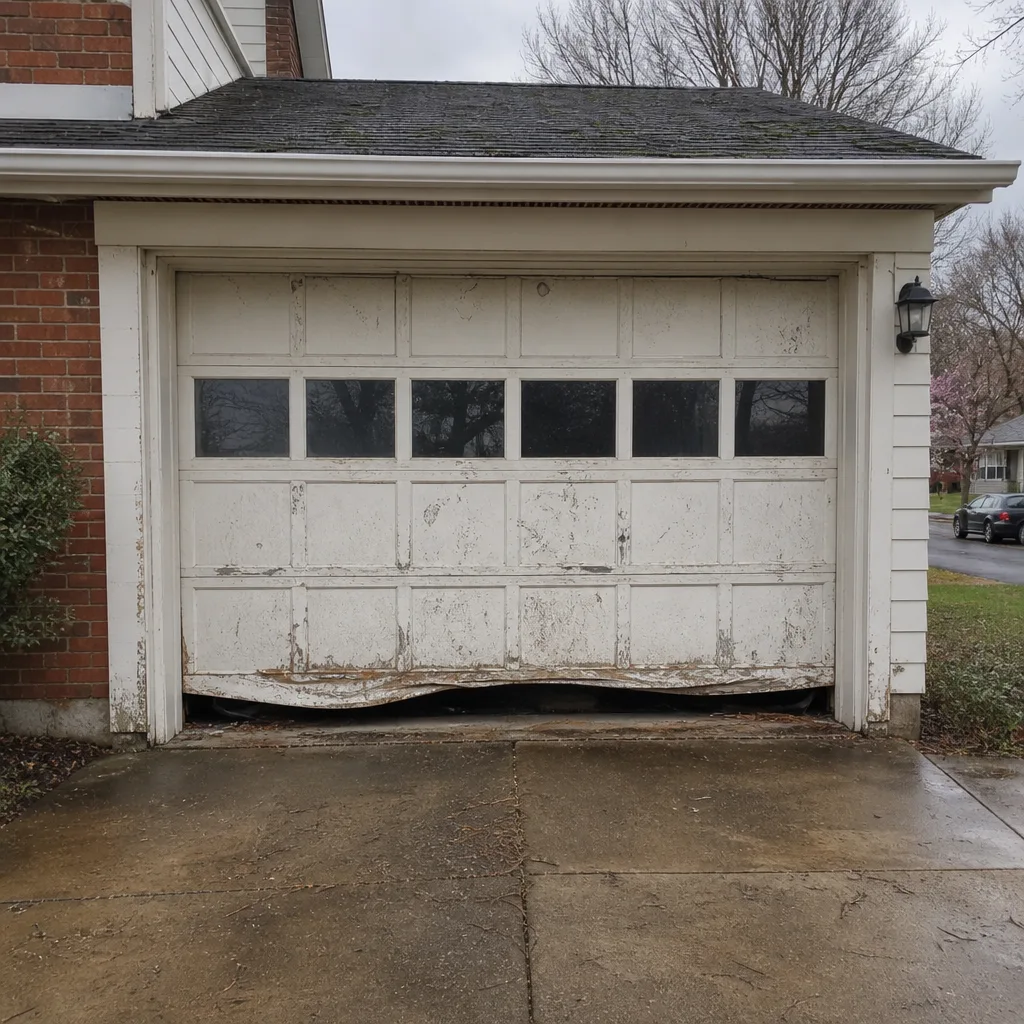 Before
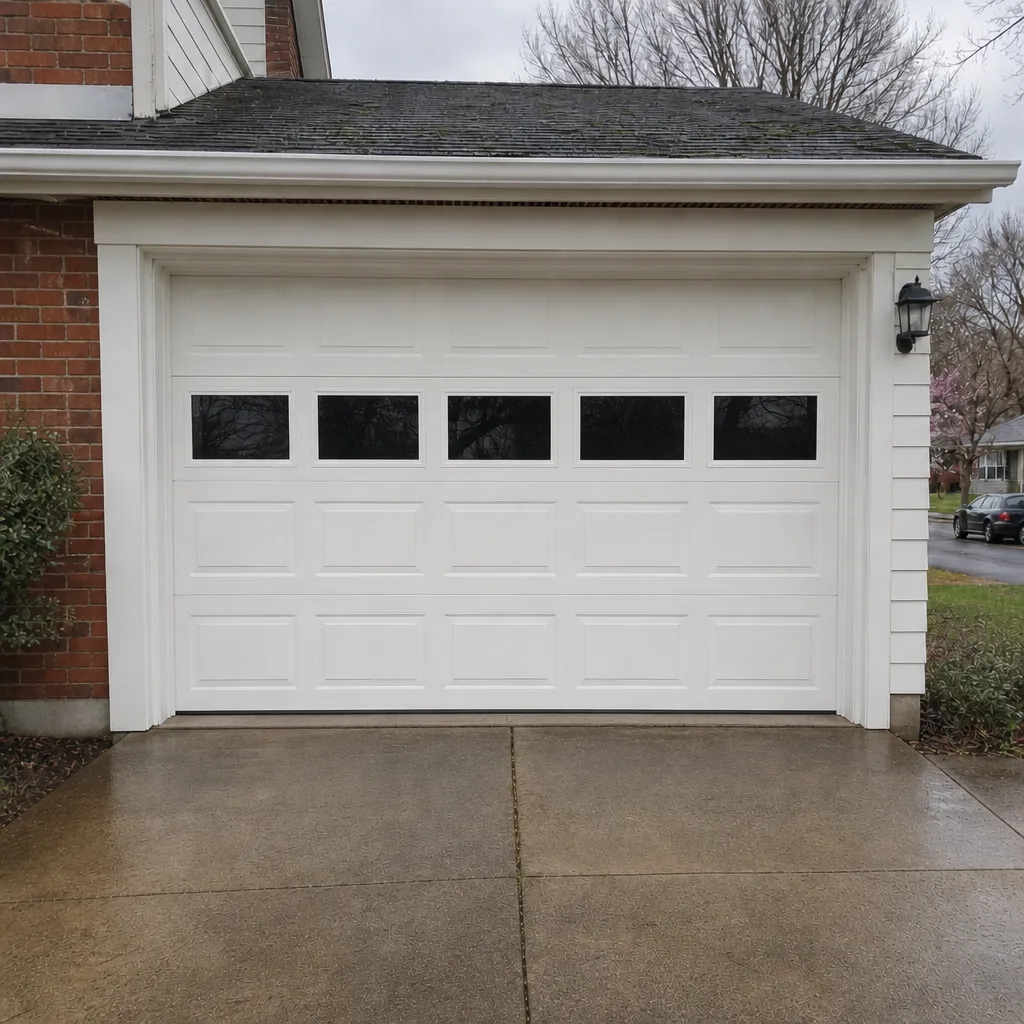 After
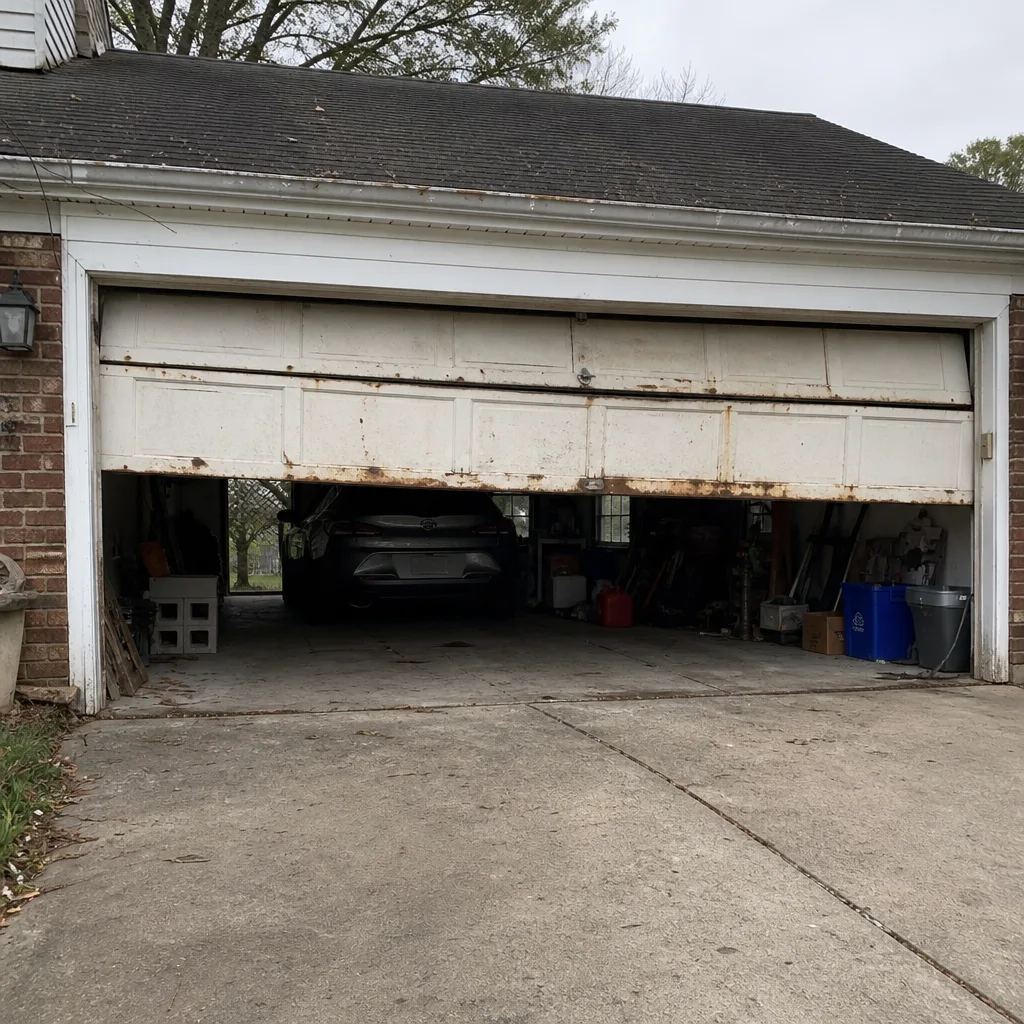 Before
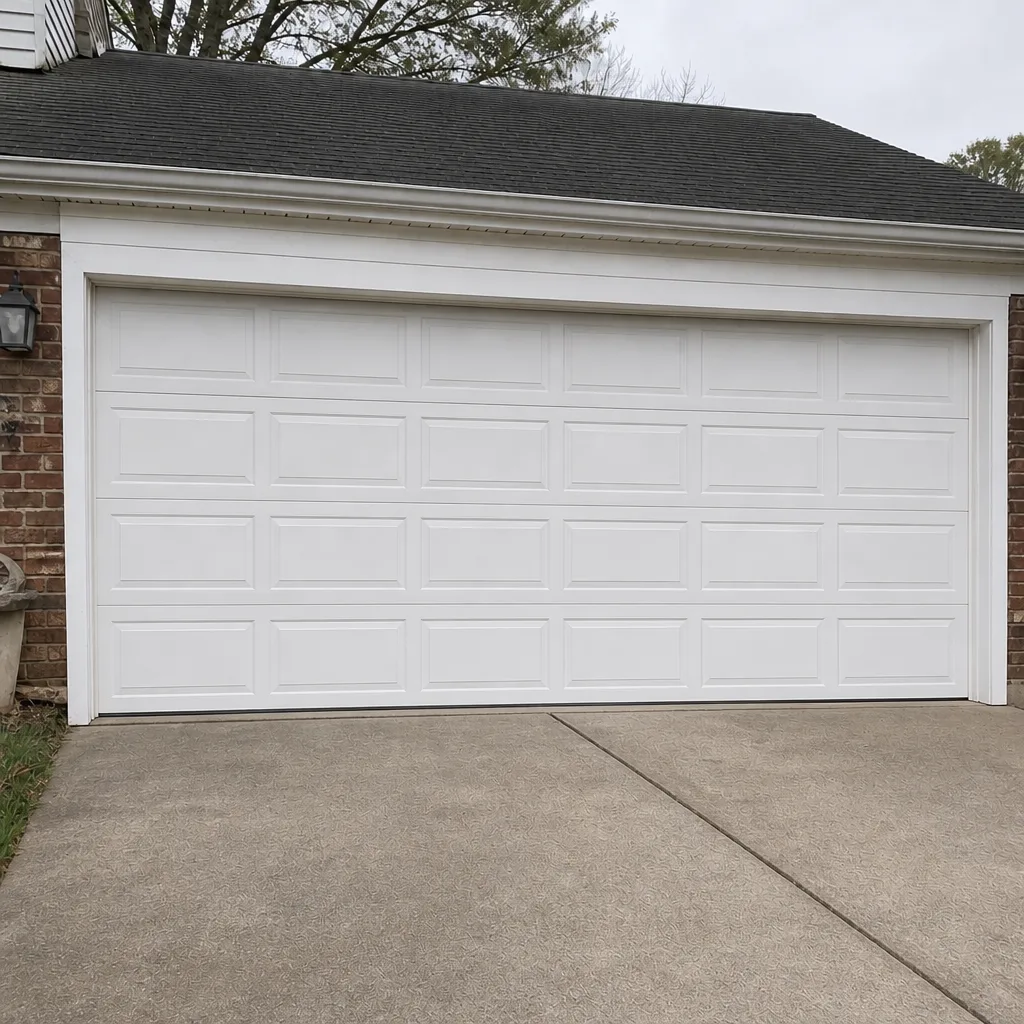 After
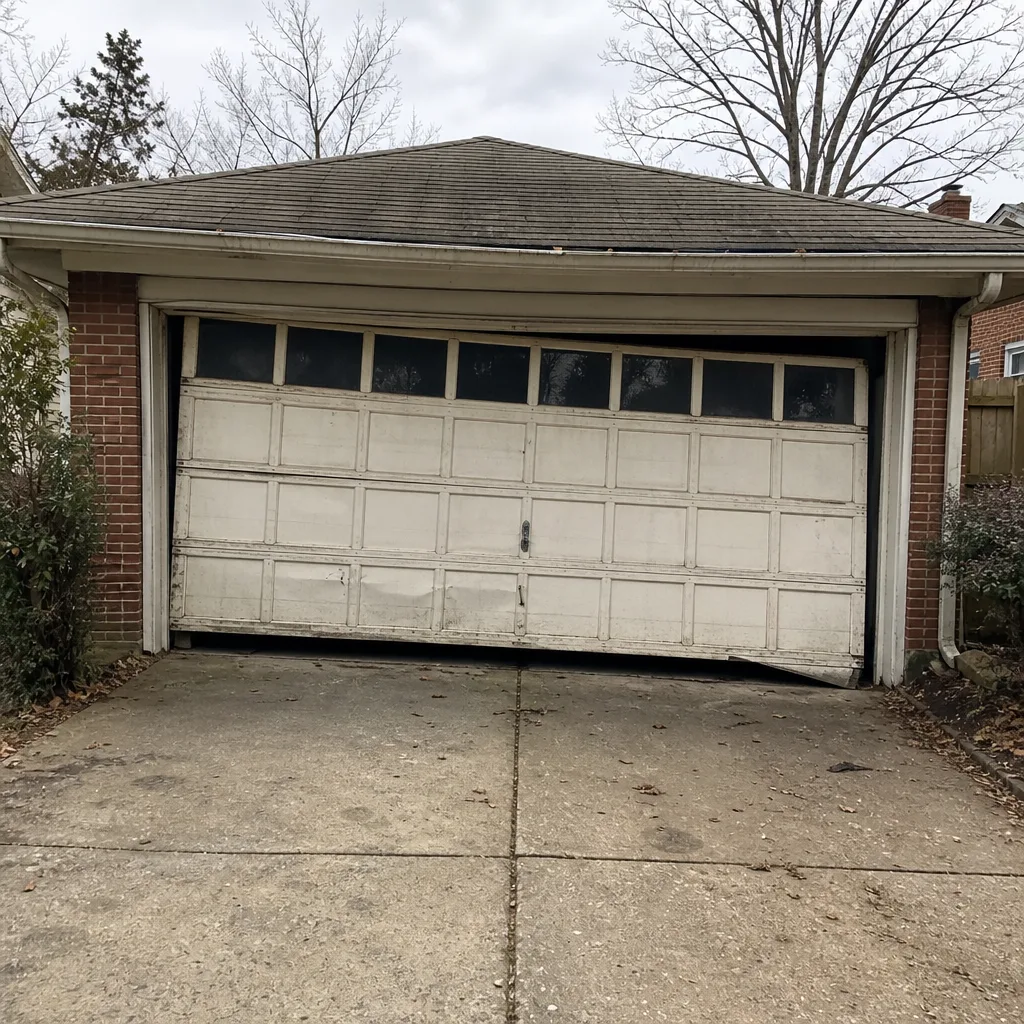 Before
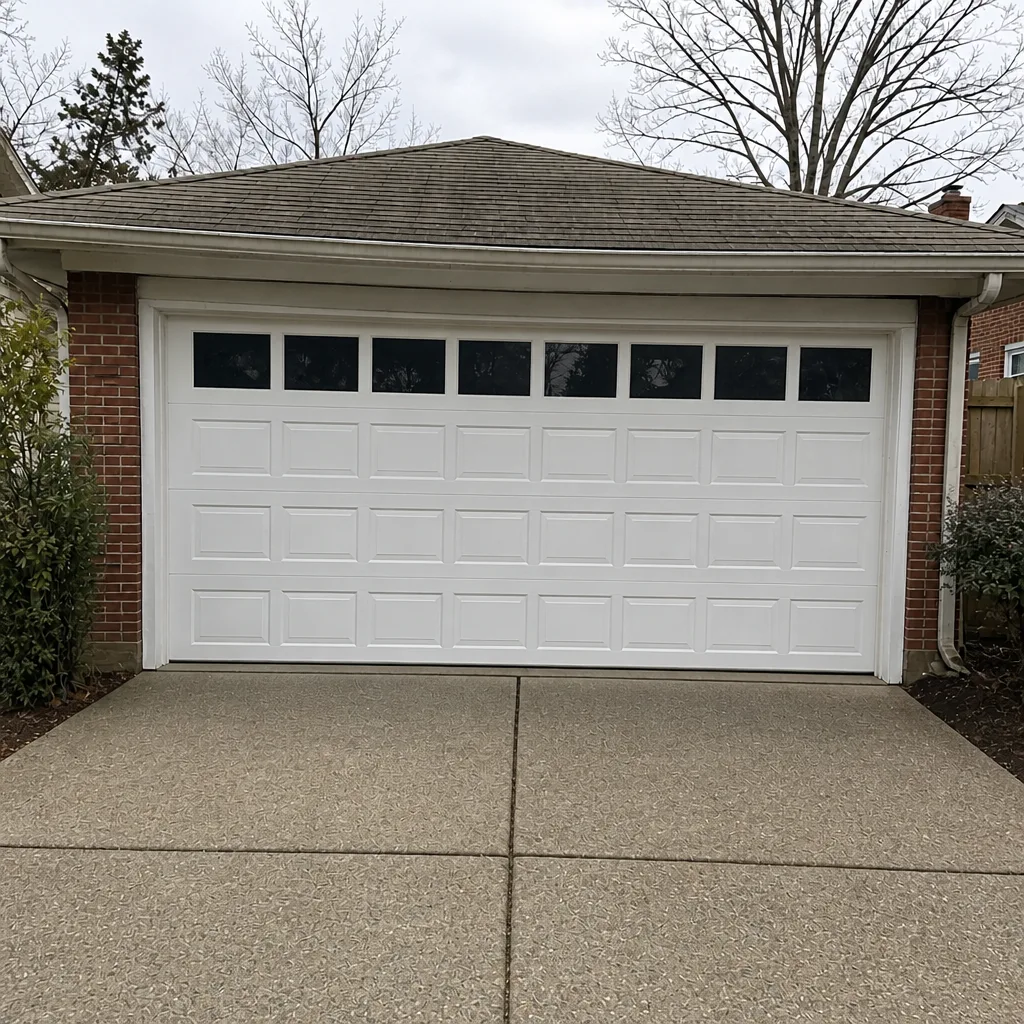 After
When to Call a Professional
Call a specialist when the scope is unclear, when the opening needs any structural change, when a new opener will land on wiring that hasn’t been evaluated for it, or when your door is failing in a way that makes you unsure which side of the line you’re on. A broken spring, a door that reverses immediately after closing, an opener that runs for a few seconds and stops: those are all diagnostic questions that need a trained eye, and the answer often determines whether you’re looking at a repair or a permitted install.
Kingsley Garage Door Repair offers free estimates in Arlington. We work on residential garage doors from Clopay, Amarr, Wayne Dalton and Raynor and openers from LiftMaster, Chamberlain, Genie and Craftsman, so we can give you a straight read on your specific system before anyone touches it. Call (844) 484-2584. We answer 24/7. Fast dispatch from 7am to 7pm, Sunday through Friday.
If you live in or around Arlington and you’re not sure whether your project needs a permit, that call is the place to start. The estimate is free, the scope is written, and the permit question is answered before any work begins.
Frequently Asked Questions
Usually not, if it’s a like-for-like replacement in an existing, unmodified opening with the same track and mounting configuration. Anything that changes the structural header, the opening dimensions, the framing or the electrical circuit generally requires a permit. The only definitive answer for your address comes from the Arlington County building department, so ask them directly and confirm the scope with whoever performs the work before the job starts.
It often does when the new opener involves new wiring, a new dedicated circuit, moving an outlet, or connecting to a panel that hasn’t already been serving the space. Swapping an opener on existing, code-compliant wiring is usually treated differently, but the county is the authority that makes the call. Call (844) 484-2584 for a free estimate, and ask the county the electrical question in writing before work is scheduled.
The inspector verifies that the permitted scope was built to the approved plans, that structural elements and attachments are correct, that the opener is mounted to structure, and that the auto-reverse and photo-eye safety devices function properly. In most permit-ready jobs, it’s a short visit. Quality of finish, aesthetics, and homeowner preferences are not part of the scope.
There’s no single figure, and any contractor who gives you one without looking at the property is guessing. The resolution usually involves pulling the permit retroactively, having the work inspected, correcting anything the inspector flags, and closing the permit out. If the correction requires structural work, the cost grows quickly. Get a written estimate before you start, and remember that the resolution cost is almost always higher than doing it right the first time.
No. County approval is a building code sign-off. HOA approval is a separate architectural review that operates on the association’s own governing documents. Getting one does not imply the other, and in Arlington, HOAs with architectural review committees can take real time. Submit the HOA application before you order the door.
Possibly, but usually measured in days, not weeks, for a straightforward residential job. The delay depends on how busy the county’s permit desk is and whether an electrical permit is part of the scope. Schedule the permit pull and the door order in parallel rather than in sequence, and the delay is often absorbed. If you’re planning a larger structural change, plan for more lead time.
The Bottom Line
The permit question for garage door work in Arlington is narrower than it sounds and more important than most contractors let on. Like-for-like replacements are usually maintenance. Anything that touches the header, the framing, the opening dimensions or the electrical circuit generally isn’t, and the electrical permit is the piece most homeowners never hear about. County approval and HOA approval are separate gates that both have to open. Get the scope in writing, confirm the permit answer with Arlington County before work begins, and you’ll never be the homeowner who discovers an open permit at the closing table. Call (844) 484-2584 for a free estimate, and we’ll help you sort out which side of the line your job sits on before anyone picks up a tool.
Written by the team at Kingsley Garage Door Repair.