
Last updated November 16, 2026
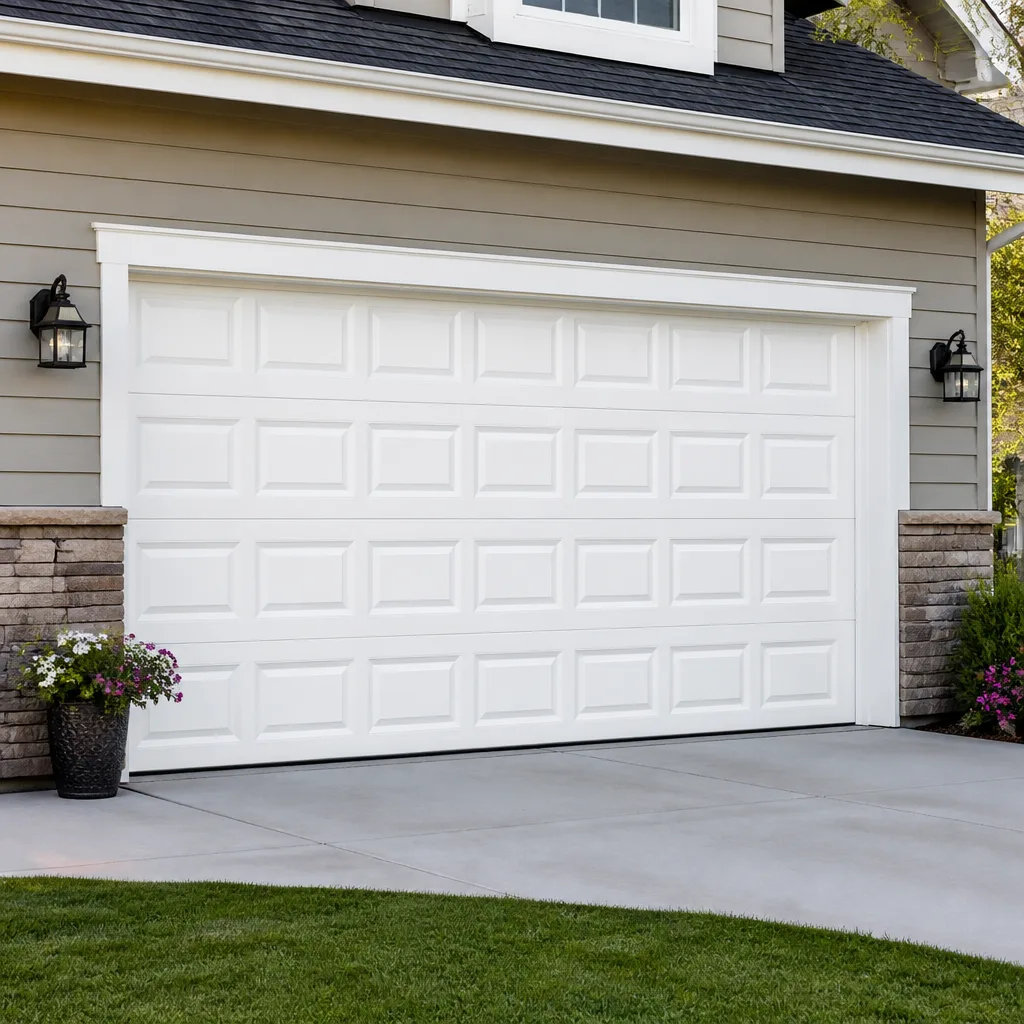 Raised-panel steel
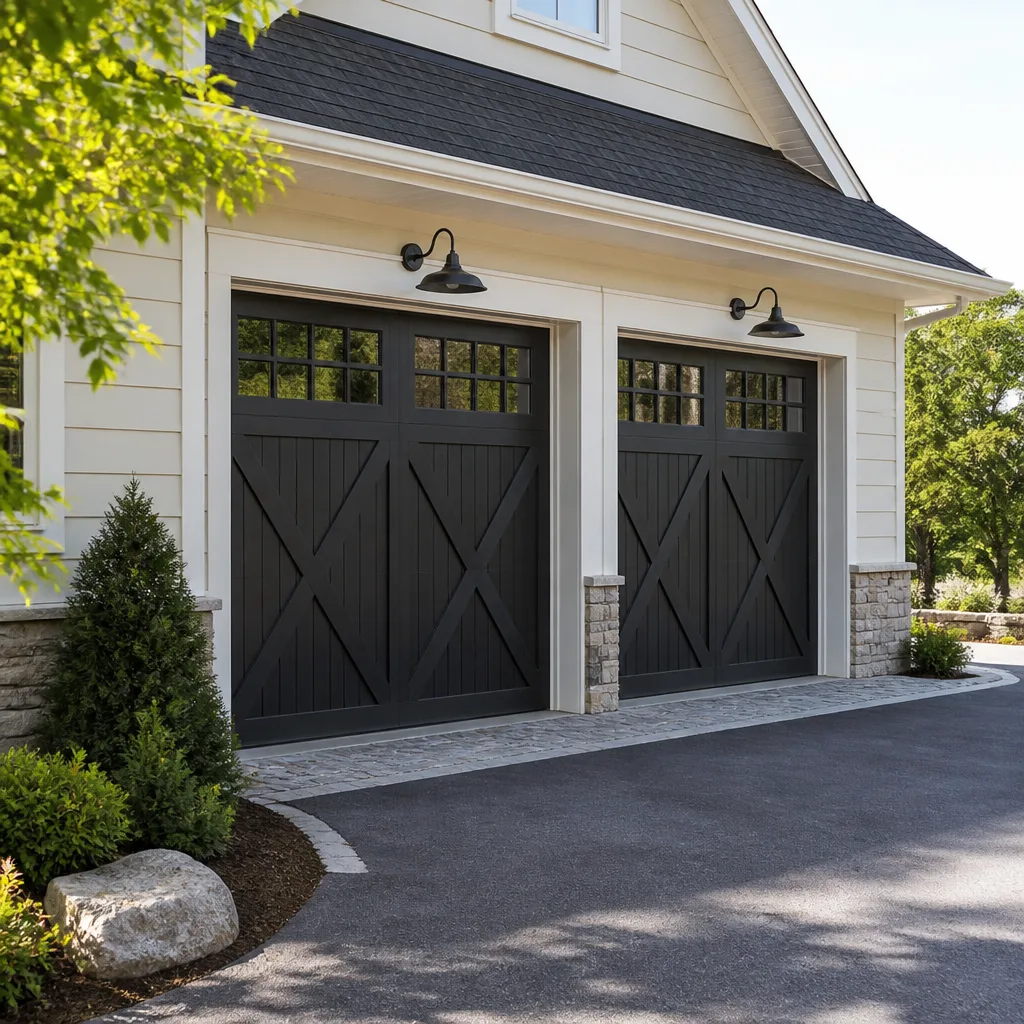 Carriage house
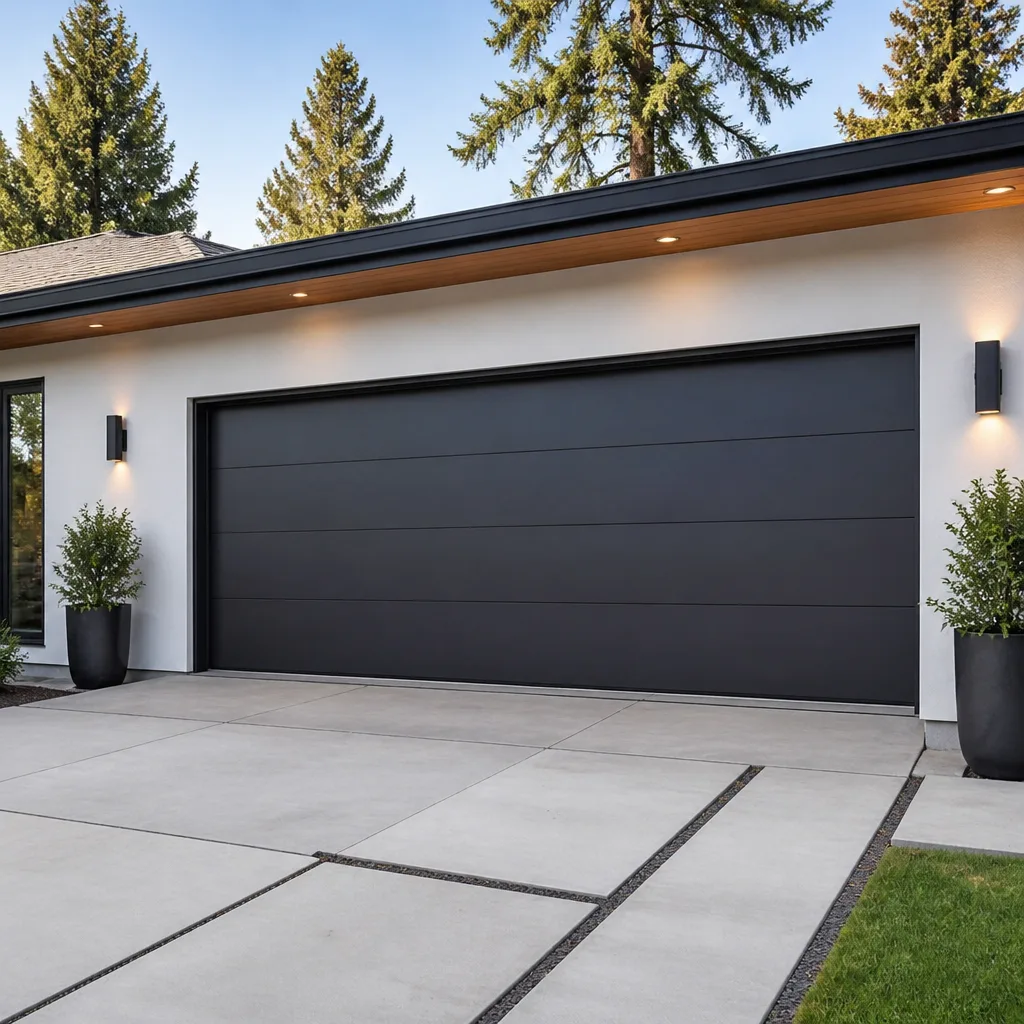 Modern flush
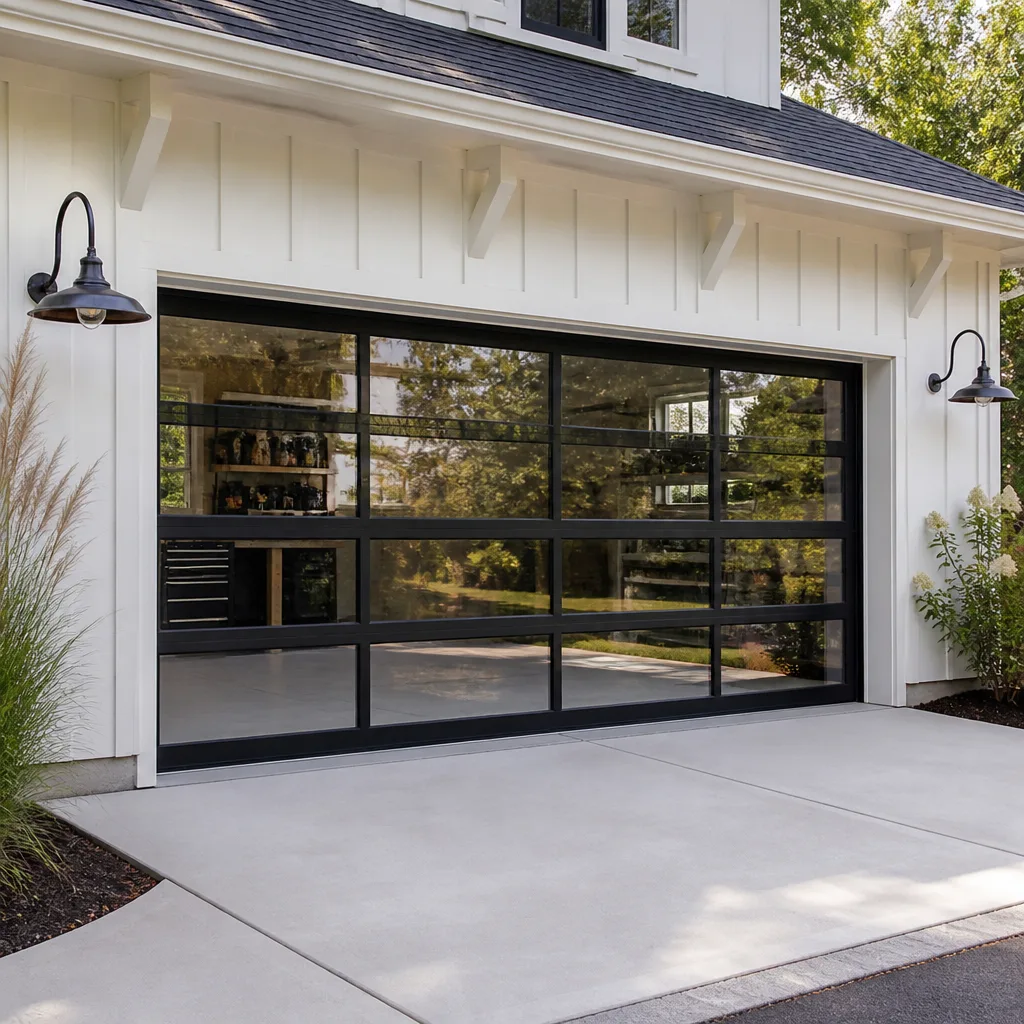 Full-view glass
 LiftMaster openers
 Chamberlain openers
Full 25-point door and opener safety check with every visit - springs, cables, rollers, tracks, and your LiftMaster or Chamberlain opener included
You get a price before we start. It does not change when the pro arrives.
Get your free estimateDIY vs Professional Garage Door: The Arlington Homeowner’s Decision Guide
Garage door springs hold hundreds of pounds of stored tension. That’s not a scare tactic, it’s physics, and it’s the reason the DIY-versus-professional question for garage doors isn’t really about how handy you are. Most guides take one of two useless positions: fix everything yourself, or never touch the door. Neither helps an Arlington homeowner standing in the driveway trying to decide whether to book a technician or spend a Sunday with a socket set. This guide draws the line precisely: which jobs are genuinely weekend-friendly, which ones carry injury or liability consequences that make self-service a bad trade, and what the honest cost comparison looks like once you count your own hours. You’ll finish knowing exactly which side of the line each task sits on.
Quick Answer
In Arlington, garage door repairs split cleanly into two groups. Weatherstripping, painting, remote reprogramming, photo-eye alignment, track cleaning, and lubrication are safe DIY tasks that cost little more in parts than a technician would charge. Springs, cables, bottom brackets, and panel replacement under tension are tasks where the risk calculus points clearly to a professional, because the mechanism stores enough energy to cause serious injury and because a failed DIY repair can complicate an insurance claim later. Everything else falls in between and depends on your tools and comfort level.
Styles & brands we work with
- Raised-panel steel
- Carriage house
- Modern flush
- Full-view glass
- LiftMaster openers
- Chamberlain openers
Table of Contents
- Where the Hard Line Actually Falls
- Tasks That Are Genuinely DIY-Appropriate
- Tasks Where the Risk Calculus Says No
- The Honest Cost Comparison, Time Included
- Parts Sourcing: What You Can Buy and What You Can’t
- Liability and Insurance in Virginia
- Three “Easy” Repairs That Usually Make It Worse
- When to Call a Professional
Where the Hard Line Actually Falls
The dividing line for garage door work isn’t complexity. It’s stored energy and structural load. A torsion spring on a standard residential door holds hundreds of pounds of tension even when the door is fully closed and appears at rest. A cable under that same tension can whip free in a fraction of a second. Any task that requires you to release, adjust, or work around that tension sits on the professional side of the line, full stop. That’s not a judgment about your competence; it’s a description of what the hardware does when something slips.
On the other side of the line sit tasks that don’t touch the tension system at all. Painting a door, replacing a bottom weather seal, cleaning and lubricating rollers and hinges, adjusting a photo-eye that’s been bumped, clearing obstructions from the track, and reprogramming a remote or keypad all work on the outer shell of the system. A careful homeowner with basic tools can handle these without special risk. In our experience, most Arlington homeowners who call us for these jobs are paying for convenience, not safety, and we tell them so.
The middle zone is where judgment matters most. Replacing a bent bottom roller, re-aligning a track that’s been nudged, or swapping a worn hinge are tasks that are mechanically simple but sit close enough to the tension system that a mistake can cascade. If the door is balanced and the section is at rest, these are manageable. If the door is crooked, jerky, or binding, stop and get it assessed before you touch anything.
- Safe to DIY: painting, weather seal replacement, lubrication, remote pairing, photo-eye alignment, track cleaning
- Judgment call: roller and hinge replacement on a balanced door, track adjustment on a door that runs smoothly
- Professional only: springs, cables, bottom brackets, drum work, panel replacement under tension, opener rail adjustment on a door that won’t balance
If you’re unsure which side of the line a specific task falls on, the safest move is a quick assessment before you start. Kingsley Garage Door Repair offers free estimates in Arlington, and a technician can tell you in a few minutes whether the job is safe to tackle yourself.
Tasks That Are Genuinely DIY-Appropriate
These are the jobs where paying a technician is reasonable but not necessary. Arlington’s climate, with its humid summers and freeze-thaw winters, drives most of the wear on the components in this list, and none of them involve the tension system.
- Replacing the bottom weather seal. The rubber seal along the bottom of the door takes the most abuse from humidity and ground contact. It slides out of a channel and a new one slides in. Most hardware stores stock universal seals, and the job takes under an hour.
- Lubricating hinges, rollers, and the torsion bar bearings. A garage door lubricant, not WD-40, applied to hinges and roller stems quiets most squeaks. Do this twice a year and you’ll head off a lot of premature wear.
- Reprogramming a remote or keypad. LiftMaster and Chamberlain openers both use a learn button on the motor head. Press it, then press your remote, and you’re done. The manual for your model spells out the exact sequence.
- Aligning the safety photo-eyes. Two small sensors near the floor should face each other with their LEDs solid. If one is blinking, it’s misaligned or obstructed. Loosen the bracket, aim it, tighten it back down.
- Cleaning the tracks. Wipe out dust, spider webs, and debris with a rag and a light solvent. Don’t lubricate the tracks themselves; that attracts grit.
- Painting or staining the door. Cosmetic work on the exterior face is low-risk. Prep, prime, and paint according to the manufacturer’s recommendation for your door’s material.
Each of these tasks costs less in parts than a service call, and none of them require a technician to be present. If you’re comfortable on a step ladder and can follow a manual, they’re yours to handle. For a deeper look at what routine maintenance includes, see our guide to garage door repair in Arlington.
Tasks Where the Risk Calculus Says No
This is the short list, and it’s the one that matters. Every task here involves components under stored mechanical energy or structural load, and the failure mode is not “the door stops working.” The failure mode is injury. We’re not going to describe how to do any of these; that would be irresponsible, and no reputable source should walk a homeowner through releasing a torsion spring in a driveway.
- Torsion and extension springs. These hold the full weight of the door. A torsion spring under tension can release with enough force to break bones. Extension springs on older doors were often installed without safety cables, which is a separate hazard.
- Cables, drums, and bottom brackets. The cable runs from the bottom corner of the door up to the drum on the torsion bar. Releasing the bracket while the cable is tensioned is one of the most common serious-injury scenarios in residential garage door work.
- Replacing a damaged section under tension. Swapping a bent panel requires the door to be de-tensioned and properly supported. Doing this without the right tools and training risks the door coming down on you.
- Opener rail and force adjustment on a door that won’t balance. If the door won’t stay in place when you lift it halfway, the spring system is out of adjustment. The opener isn’t the problem, and adjusting the opener’s force settings to compensate will burn out the motor and mask a dangerous condition.
How much does spring work cost in Arlington? Typical residential torsion spring replacement runs in the low-to-mid hundreds for a single spring, and a matched pair usually costs about twice that because both are replaced together. Your written estimate sets the final price before any work starts. If you want a real number for your door, call (844) 484-2584. Estimates are free.
One more note on the risk here: the danger isn’t only to the person doing the work. A door that’s been improperly de-tensioned can fail later, without warning, when someone is walking underneath. That’s the reason we treat spring and cable work as a professional-only category rather than a judgment call.
The Honest Cost Comparison, Time Included
The DIY math most homeowners run is parts versus service call, and that math is incomplete. The real comparison includes your hours, tool rental, and the cost of a second attempt if the first one doesn’t work. Here’s how it tends to break down for the tasks in the DIY-appropriate list.
| Task | DIY cost (parts + tools) | Typical professional estimate | Time for a careful homeowner |
|---|---|---|---|
| Bottom weather seal | $15-$40 | $60-$120 | 30-45 minutes |
| Lubrication (hinges, rollers, bearings) | $10-$20 | $50-$100 | 20-30 minutes |
| Remote or keypad reprogram | $0 | $50-$90 | 10-15 minutes |
| Photo-eye alignment | $0 | $50-$100 | 15-20 minutes |
| Track cleaning | $5-$15 | $40-$80 | 20-30 minutes |
| Paint or stain | $40-$120 | $200-$450 | 3-6 hours plus dry time |
These are typical ranges for the Arlington area, and they’re estimates rather than quotes. Paint is the one place where the DIY savings are substantial enough to justify the hours for most homeowners. The rest are small enough that paying a technician is genuinely convenience spending, and there’s nothing wrong with that if you’d rather not spend a Sunday on it.
Now the other side. For spring replacement, opener replacement, or track and cable work, the DIY math usually falls apart once you price the right tools. A proper torsion winding bar set, a door-weight scale, and a cable tensioning tool will cost more than the service call for a one-time job. Add in the risk, and the comparison isn’t close. For more on the components involved, our garage door opener repair guide walks through the opener side of the same equation.
Parts Sourcing: What You Can Buy and What You Can’t
Parts availability is one of the least discussed and most consequential parts of the DIY calculation. Some components are priced essentially the same for a homeowner as for a contractor. Others are marked up significantly through trade-only channels, or simply aren’t sold retail in the specifications you need.
Readily available at comparable cost: weather seals, lubricant, universal hinges, standard rollers, remote controls for Major-brand openers like LiftMaster and Chamberlain, photo-eye sensors, and paint. These are commodity items stocked at most hardware stores.
Available but harder to match: springs, when you know the exact wire gauge, inside diameter, and length for your door. Springs are also the component where getting the specification wrong is genuinely dangerous, so the matching is a professional skill rather than a retail purchase decision.
Trade-channel only or significantly marked up: cables cut to length for a specific door, drums, bottom brackets, opener circuit boards for some models, and replacement panels matched to a discontinued door model from Clopay, Amarr, Wayne Dalton, or Raynor. For these, a specialist with trade accounts and a working relationship with the manufacturers gets the right part faster and often at a lower landed cost than a homeowner ordering blind online.
Our technicians have up to 11 years of experience and work on all eight major residential brands: LiftMaster, Chamberlain, Genie, Clopay, Amarr, Wayne Dalton, Craftsman, and Raynor. That brand familiarity matters most on part sourcing, where knowing the exact model line and revision is the difference between the right part the first time and a second order two weeks later.
Liability and Insurance in Virginia
Here’s the part most DIY guides skip. If a repair you performed fails and causes property damage and injury, your homeowner’s insurance claim can be complicated by the fact that the work was self-performed and unpermitted. Virginia doesn’t require a license for garage door repair in most cases, but the absence of a licensing requirement doesn’t affect how an adjuster treats a claim where improper work is a contributing cause.
What that means in practice:
- A failed repair that damages a car, a wall, or another structure will likely be investigated for cause. If the adjuster determines the failure traces to a non-professional repair, coverage may be reduced or denied.
- Personal injury to a household member from a failed DIY repair is typically not covered by homeowner’s insurance at all, because most policies exclude injury to the named insured and household residents.
- If a door fails and injures a visitor or a delivery person, the claim becomes a third-party liability question. A documented professional repair history helps your position; a do-it-yourself history rarely does.
- Deed restrictions in some Arlington neighborhoods and townhome associations may require professional work on shared or visible components, so check your association documents before you start.
None of this means never touch the door. It means the tasks that carry liability consequences should be handled by someone insured to do them: a small seal repair is low-stakes, and a spring replacement is not. If you’re not sure where your specific job falls, a quick conversation with a technician will settle it. Kingsley Garage Door Repair offers free estimates in Arlington, and we’ll tell you honestly if the job you’re describing is one you could safely do yourself.
Three “Easy” Repairs That Usually Make It Worse
We get called to fix a lot of jobs that started as a DIY attempt and ended as a bigger problem. These three come up most often.
- Adjusting the opener’s force or travel limits to compensate for a door that won’t balance. The symptom is a door that reverses halfway up or stops short. The instinct is to dial up the force until it goes. What’s actually happening is the spring system has lost tension, and the opener is being asked to lift a door it wasn’t designed to lift. Raising the force burns out the motor and masks a dangerous condition. The fix is spring work, and it’s a professional job.
- Replacing a single spring when the door has two. When one spring on a matched pair breaks, the other has absorbed the same cycles and is close behind. Homeowners often replace only the broken one, then get a callback a few months later when the second fails. A matched pair is the standard, and it’s why a pair costs about twice a single spring. We recommend replacing both.
- Bending a bent track back into shape by hand. A track that’s been hit by a car or a bike has usually deformed in more than one plane. Bending it back by eye restores the visible line but leaves the rollers binding, which wears down the roller stems and can pull the track loose from the jamb. Track replacement is a straightforward job when it’s done early and a much bigger one when it’s done after a season of binding.
Other repeat offenders: forcing a door down when the photo-eye is obstructed and the opener holds, using the wrong lubricant on the tracks and turning them into a magnet for grit, and swapping a panel for one from a different manufacturer because the color looked close. Panels need to match the door’s model, not just its color, and that’s where brand familiarity with Clopay, Amarr, or Raynor matters.
See the difference
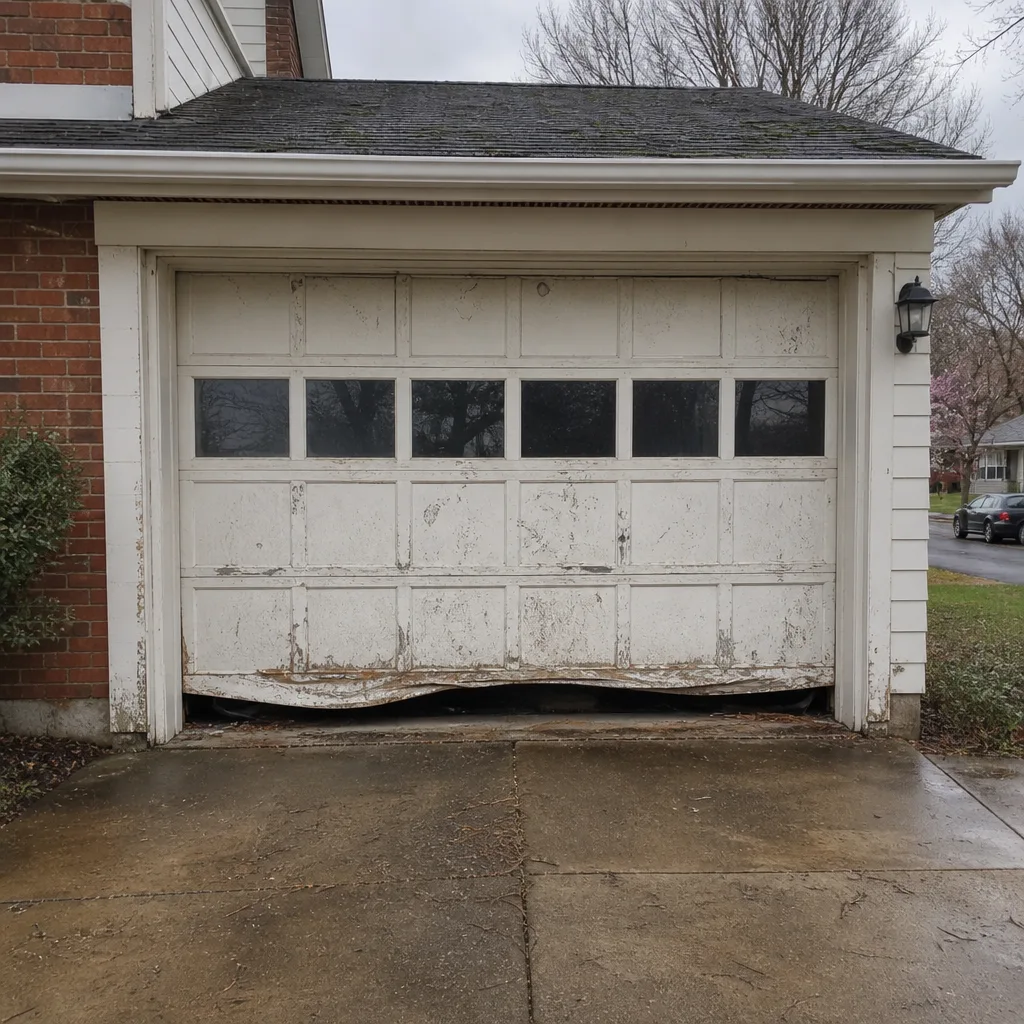 Before
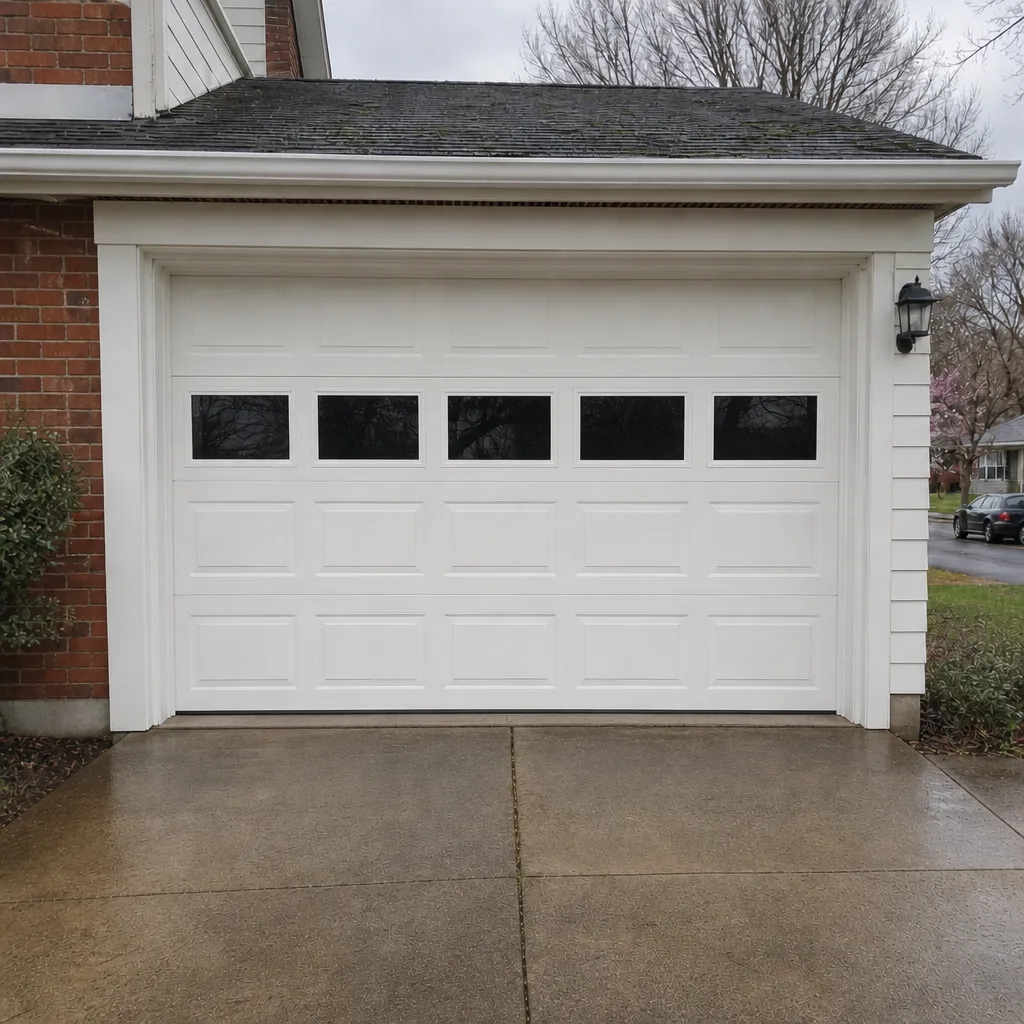 After
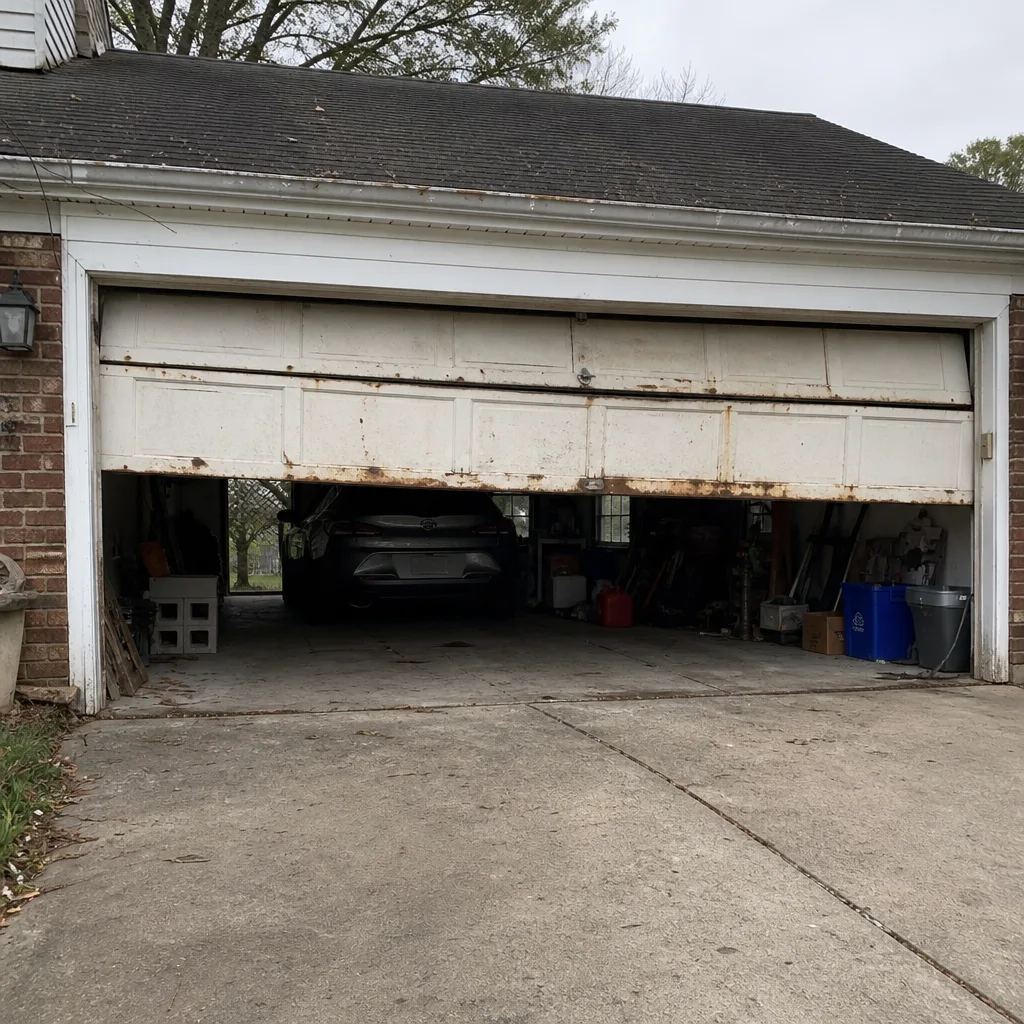 Before
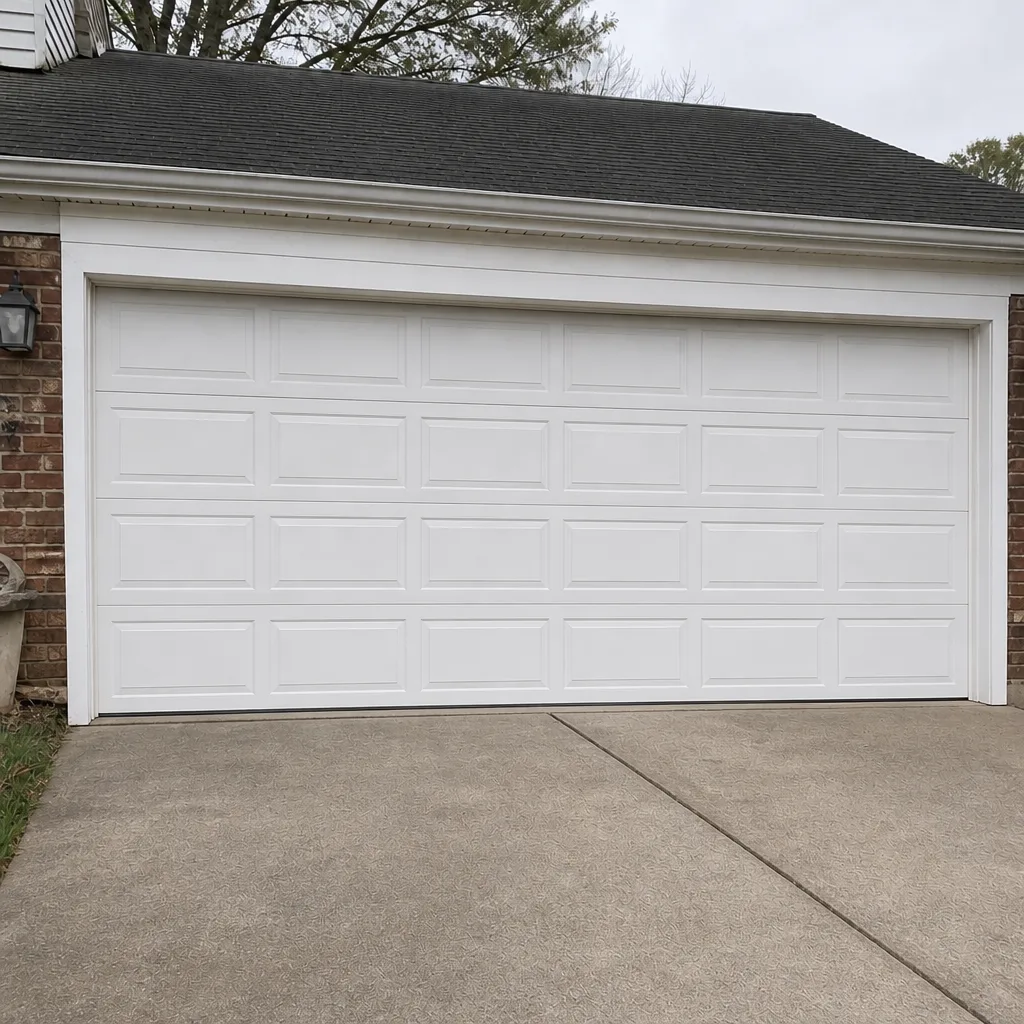 After
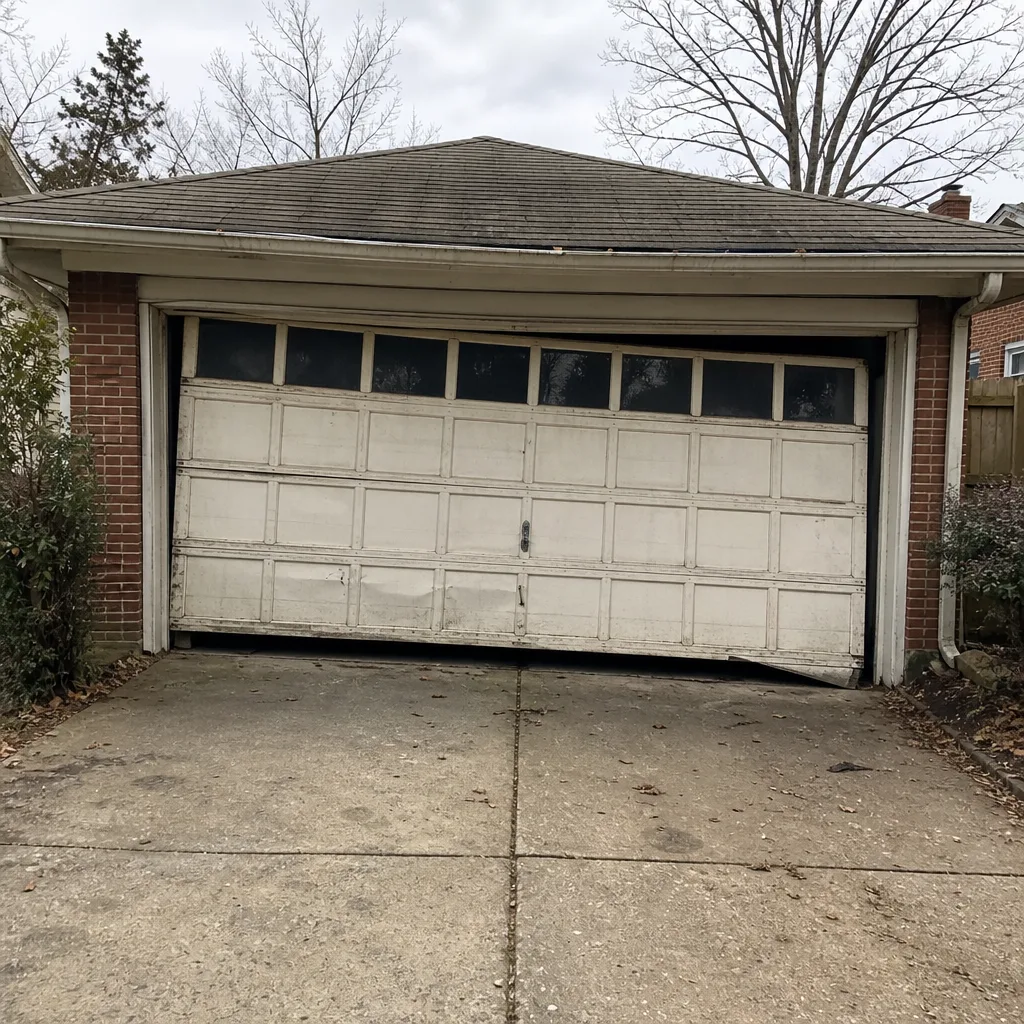 Before
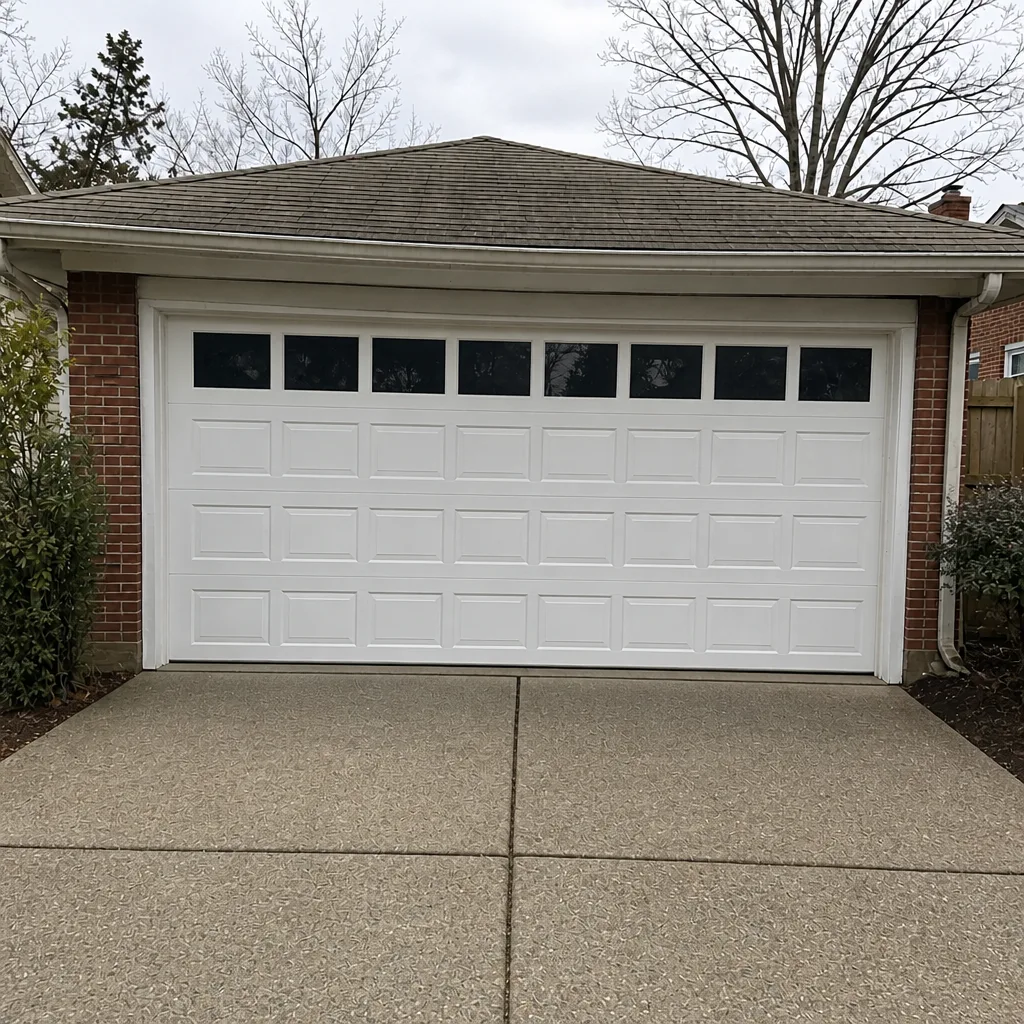 After
Common Mistakes to Avoid
- Attempting spring work without the right winding bars. A makeshift tool like a screwdriver or an adjustable wrench can slip out of the winding cone under load. A professional set is a small investment compared to the risk.
- Lubricating the tracks. It feels like it should help. It collects grit and turns the track into sandpaper for the rollers. Wipe them clean and leave them dry.
- Adjusting the force settings on the opener instead of diagnosing the door. This is the most common DIY mistake we see in Arlington, and it always comes back as a failed opener a few months later.
- Ordering a replacement panel by color alone. Panel dimensions, rib patterns, and embossing vary between manufacturers and between model lines. Match the model number, not the color swatch.
- Skipping the balance test after any repair. Lift the door to halfway and let go. If it doesn’t stay, the spring system is out of adjustment and the door isn’t safe to operate. This takes ten seconds and catches most problems early.
- Ignoring association or deed restrictions. Some Arlington townhome and HOA communities restrict exterior door changes, including color and panel style. Check before you buy materials.
- Treating a creeping door as an opener problem. A door that creeps up or down on its own is a symptom of spring tension loss or a failing logic board, and the diagnosis matters. Guessing at the opener wastes money.
When to Call a Professional
Call a professional when the job involves a spring, a cable, a bottom bracket, a drum, or a door section that’s under tension. Call when the door won’t stay in place when you lift it halfway, when the opener reverses for no visible reason, when a panel is cracked or bent, or when the door has come off its track entirely. Call when you’ve tried a repair and it didn’t resolve the symptom, rather than trying a second approach. And call when you’re not sure which category your job falls into, because a few minutes of diagnosis is worth more than a wasted weekend.
Kingsley Garage Door Repair offers free estimates in Arlington, and we can tell you in one visit whether the job is safe to do yourself, whether it’s a repair, or whether replacement makes more sense. Garage doors are the only work we do, so there’s no incentive to push a replacement you don’t need. Call (844) 484-2584. We answer 24/7. Fast dispatch from 7am to 7pm, Sunday through Friday.
Frequently Asked Questions
No, and we’d advise against it even for homeowners with mechanical experience. Torsion and extension springs hold hundreds of pounds of stored tension, and the release can cause serious injury in a fraction of a second. Spring replacement requires the correct winding bars and a proper understanding of the tension system. Call (844) 484-2584 for an exact quote. Estimates are free.
Typical residential repairs in Arlington run from under $100 for a weather seal or photo-eye adjustment to several hundred for spring replacement, with a single torsion spring in the low-to-mid hundreds and a matched pair about twice that. Opener repairs are usually in between. The written estimate sets the final price before any work begins. Call (844) 484-2584 for an exact quote. Estimates are free.
No. The estimate you agree to before work starts is the price, and we quote it in writing. If we find additional problems during the repair, we stop and walk you through what we found before anything else is done. You approve the extra work or you don’t, and nothing gets added to the invoice without your agreement. Call (844) 484-2584 to book an estimate.
Yes. Kingsley Garage Door Repair works with insured technicians, and our technicians have up to 11 years of experience on residential garage doors. We work on all eight major residential brands, including LiftMaster, Chamberlain, Genie, Clopay, Amarr, Wayne Dalton, Craftsman, and Raynor. Call (844) 484-2584 to book an appointment.
We’re closed Saturday. We’re open Sunday through Friday, 7am to 7pm, so a Sunday appointment is usually the best fit if the work week is tight. Call (844) 484-2584. We answer 24/7, and a call outside dispatch hours gets booked into the next opening, Sunday through Friday, 7am to 7pm.
Adjusting the opener’s force settings to compensate for a door that won’t balance. It feels like a fix because the door starts moving again, but the real problem is spring tension loss, and the raised force setting pushes the opener past its design limits. It usually ends with a failed opener and a spring repair, which is more expensive than the original diagnosis. Call (844) 484-2584 before touching the force settings.
The Bottom Line
Garage door work divides into two clean categories, and the line is stored energy, not skill. Weather seals, lubrication, remote programming, photo-eye alignment, track cleaning, and paint are genuinely doable yourself, and the savings on paint alone are real. Springs, cables, bottom brackets, drums, and any panel work under tension belong to a professional, because the failure mode is injury and because a DIY history can complicate an insurance claim later. The parts sourcing picture follows the same line: commodity items are fine to buy retail, and matched components from Clopay, Amarr, Raynor, or Wayne Dalton are better sourced through a specialist. If you’re on the fence about a specific job, get it assessed. It’s cheaper than a second attempt.
Kingsley Garage Door Repair works on garage doors exclusively, which means every technician’s knowledge stays current on the eight major residential brands rather than spread across a dozen unrelated trades. That’s the reason we can usually diagnose your door on the first visit and tell you honestly whether it’s a repair or a replacement. For a free estimate in Arlington, call (844) 484-2584. We answer 24/7. Fast dispatch from 7am to 7pm, Sunday through Friday. You can also start with Kingsley Garage Door Repair for an overview of everything we handle, or read more about Arlington and the neighborhoods we serve.
Written by the team at Kingsley Garage Door Repair.