
Last updated November 16, 2026
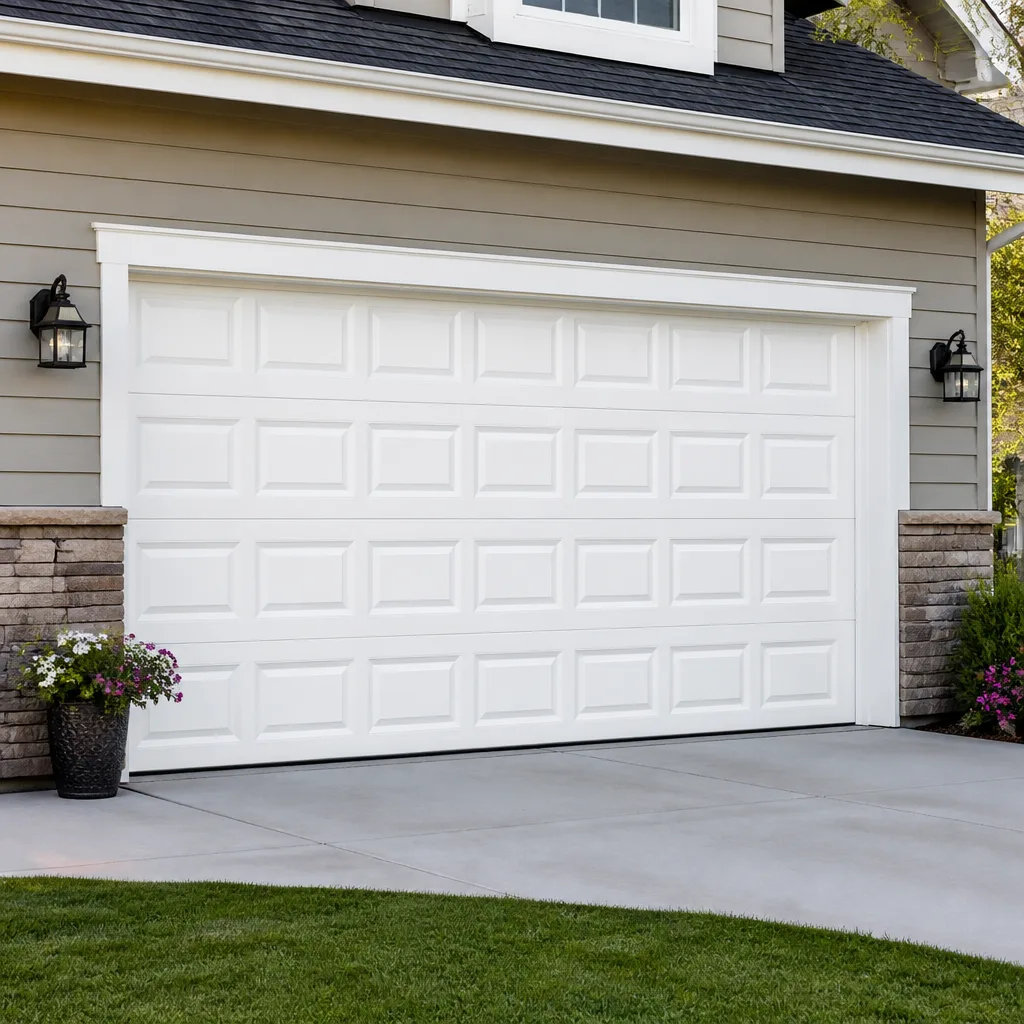 Raised-panel steel
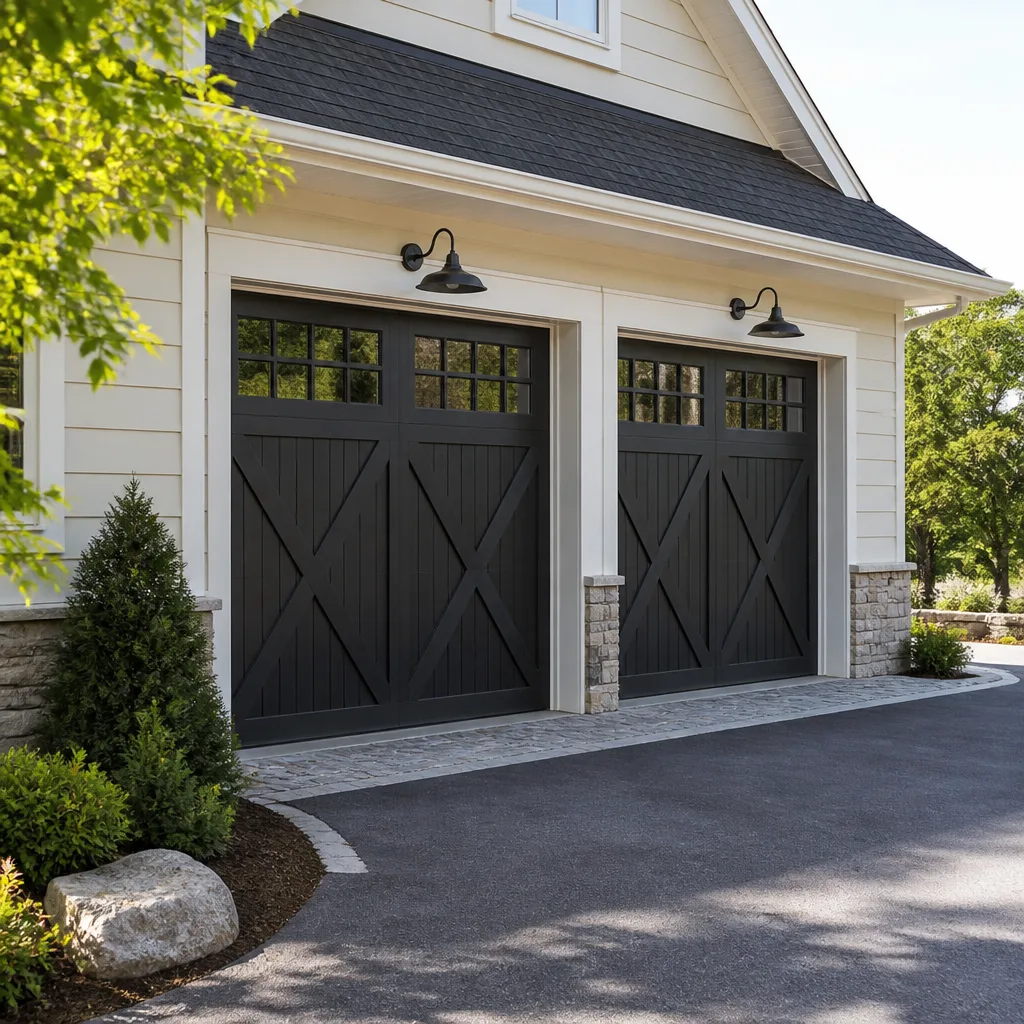 Carriage house
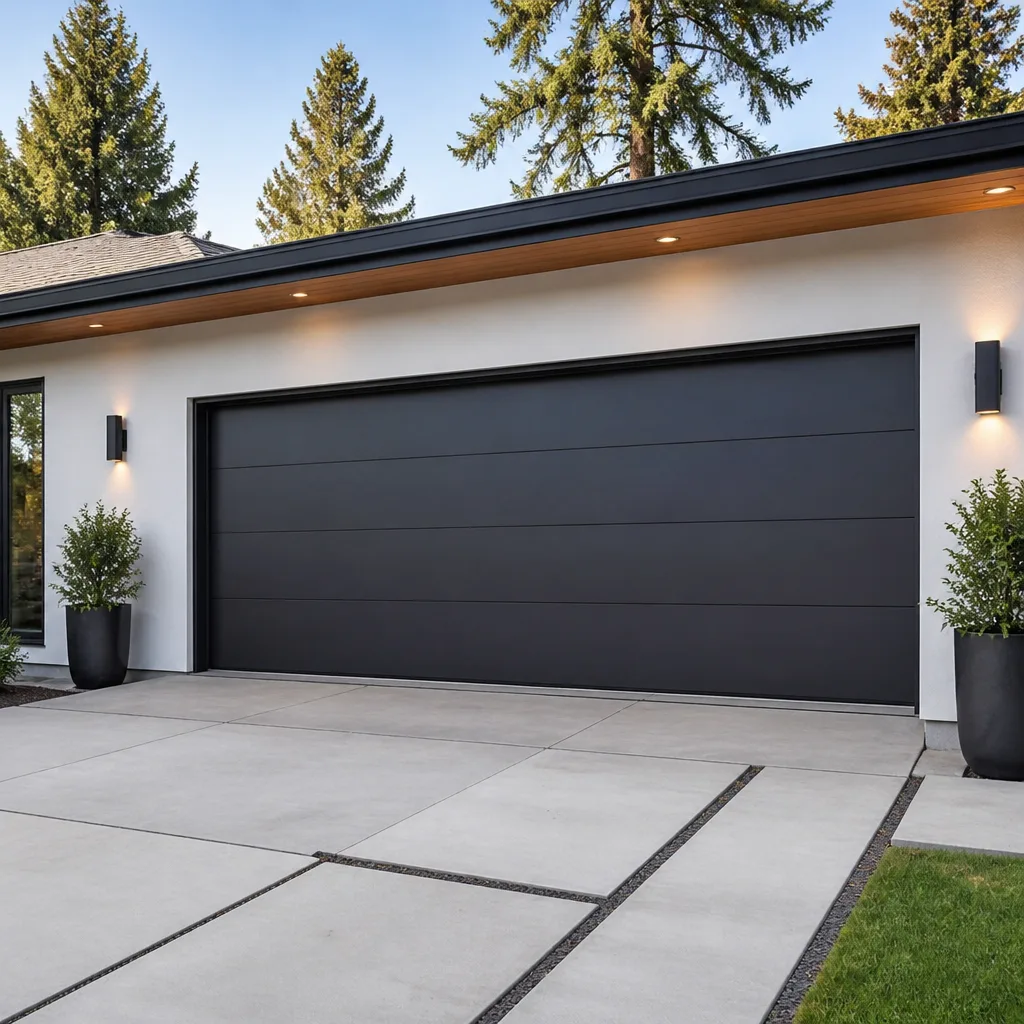 Modern flush
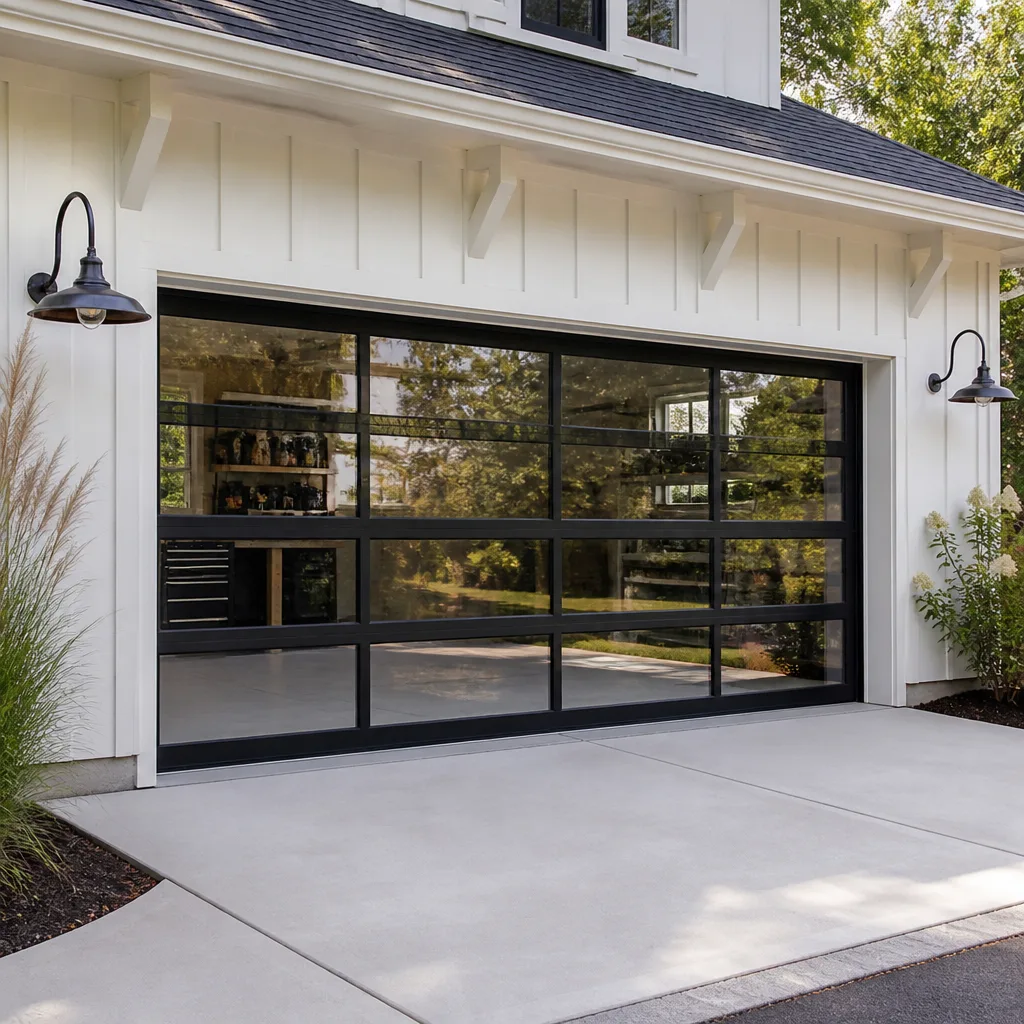 Full-view glass
 LiftMaster openers
 Chamberlain openers
Full 25-point door and opener safety check with every visit - springs, cables, rollers, tracks, and your LiftMaster or Chamberlain opener included
You get a price before we start. It does not change when the pro arrives.
Get your free estimateGarage Door Repair Troubleshooting in Arlington: Common Problems and How to Fix Them
The most expensive garage door repair is the one that fixes the wrong thing. A homeowner sees a door that reverses before it touches the floor and assumes the safety sensors are bad, so the sensors get replaced, the door still reverses, and the real culprit turns out to be a bent track that knocked the panels out of alignment. The visible symptom and the root cause sit in different parts of the door. This guide teaches a diagnostic sequence, not a symptom list, so you can work through causes in the order that actually eliminates them. You’ll learn which problems you can safely check yourself, which ones to leave alone, and how a hot Arlington summer and a cold snap each change the failure pattern you’re likely to see.
Quick Answer
Most garage door problems in Arlington trace back to one of four areas: power and remote signal, spring tension, track alignment, or safety sensors. Work through them in that order, because a dead opener looks exactly like a broken spring from the driver’s seat but costs nothing to rule out. Spring, cable, and off-track roller problems need a trained technician the moment you identify them; sensors, remotes, and obstructions you can check safely yourself.
Styles & brands we work with
- Raised-panel steel
- Carriage house
- Modern flush
- Full-view glass
- LiftMaster openers
- Chamberlain openers
Table of Contents
- The Diagnostic Sequence: Start With Power, End With Sensors
- How Arlington’s Humidity and Temperature Swings Break Garage Doors
- Three Problems You Can Safely Self-Diagnose
- Three Problems That Need a Technician the Moment You Spot Them
- What You’ll Hear vs. What It Means
- The Sensor Misdiagnosis That Wastes the Most Money
- Opener and Remote Problems Specific to Major Brands
- Repair or Replace? How to Decide Honestly
The Diagnostic Sequence: Start With Power, End With Sensors
A garage door is a system, and systems fail in predictable order. If you jump straight to the part that looks broken, you’ll replace good components and still have a door that won’t close. Here’s the sequence our technicians follow, and the reason for each step.
- Power and remote signal first. Check that the opener has power at the outlet, that the wall switch responds, and that the remote battery isn’t dead. This takes two minutes and rules out the single most common “broken door” that isn’t broken at all. If the wall switch works but the remote doesn’t, you’ve already narrowed it to a signal problem.
- Springs second. Look at the torsion spring above the door or the extension springs along the tracks. If the door feels impossibly heavy when you lift it by hand (with the opener disengaged), a spring has failed. This is the dangerous step, so you check by feel, not by reaching for a tool.
- Track alignment third. Run your eye down each vertical and horizontal track. A track that’s out of plumb or has a visible kink will throw the door off balance and make it bind mid-travel. Track problems cause the door to reverse, stall, or scrape, and they’re frequently mistaken for sensor or opener faults.
- Sensors last. The photo-eye safety sensors at the base of the tracks only prevent closing, so they can’t explain a door that won’t open or one that jerks on the way up. Check them for a blocked lens, misalignment, or a sun glare problem, but only after you’ve cleared the first three.
The order matters because each step eliminates a category. Skip to sensors and you’ll spend an afternoon adjusting a photo-eye that was never the issue, while a bent track keeps throwing the door off-line. In our experience, working the sequence front to back saves both time and the cost of parts that didn’t need replacing.
How Arlington’s Humidity and Temperature Swings Break Garage Doors
Arlington garages take a specific kind of punishment. Summers run hot and humid, and winter delivers cold snaps that arrive fast. That combination stresses garage doors differently than a mild coastal climate or a dry desert one, and it explains why certain failures show up here again and again.
- Wood and composite doors swell in summer humidity. A Clopay or Amarr wood-composite door can absorb moisture through the season, and the panels grow just enough to bind against the frame. The door starts scraping or stalling in July and August, then frees up in fall. That seasonal pattern is a humidity clue, not an opener fault.
- Steel doors contract in a cold snap. When temperatures drop quickly, steel panels and the hardware bolted to them shrink at slightly different rates. Weather seals pull away from the frame, gaps open at the bottom, and the door can rattle or whistle in wind it used to block.
- Lubricant thickens in cold and thins in heat. Rollers and hinges that were quietly lubricated in spring can dry out through a hot Arlington summer, then stiffen when the first cold front hits. A door that suddenly grinds in November often just needs its moving parts serviced.
- Spring tension shifts with temperature. Metal springs behave differently hot and cold. A torsion spring near the end of its life may hold on a mild day and snap on a cold morning, which is why spring failures so often seem to come out of nowhere.
The point isn’t that Arlington’s weather is unusual; it’s that the way your door fails tells you which components are under stress. A door that only misbehaves in one season is giving you a climate clue. A door that fails year-round is an alignment or component problem. Reading that difference correctly is half the diagnosis, which is why a specialist familiar with Arlington homes and their door types diagnoses faster the first visit.
Three Problems You Can Safely Self-Diagnose
Not every garage door issue requires a technician at the door. Three common problems you can check and often resolve yourself, because none of them involve spring tension, cable load, or moving parts under force.
1. A remote or keypad that won’t work
Dead batteries, an unpaired remote, and a keypad that lost its code are the most common “my door is broken” calls that turn out to be nothing. Replace the battery, re-pair the remote to the opener per the manufacturer’s instructions for your Genie or LiftMaster unit, and reprogram the keypad. If the wall switch still opens the door, the opener itself is fine.
2. An obstruction or misaligned safety sensor
If the door opens fine but reverses before closing, look at the photo-eye sensors at the base of each track. A cobweb, a stored box, or a lens knocked slightly out of line will trip them. Wipe the lenses, clear the path, and make sure both sensors point at each other. This is safe to check and often fixes a reversing door in minutes.
3. A door that’s simply been locked or disconnected
Check the manual lock on the door and the release cord on the opener. A door that’s been manually locked won’t respond to the opener, and a release cord that got pulled during a power flicker leaves the door disengaged from the drive. Re-engage the trolley and unlock the door before assuming anything is broken.
What ties these three together: they’re all about control, not load. You’re checking whether the door is being told to move and whether it’s allowed to close. The moment a problem involves how the door actually moves under its own weight, you’ve crossed into technician territory.
Three Problems That Need a Technician the Moment You Spot Them
Some garage door components store enormous energy or carry the full weight of the door, and those are not parts to experiment with. Stop and call for these three.
1. Spring tension problems
Torsion springs and extension springs hold the full weight of the door under tension. If a spring is broken, stretched, or visibly damaged, do not try to lift the door, adjust the spring, or wind it yourself. Springs can release stored energy without warning and cause serious injury. A trained technician has the tools and winding bars to replace them safely.
2. Frayed or damaged cables
The cables that run alongside the springs and lift the door are under constant load. A cable with frayed strands, a kink, or visible wear is a failure waiting to happen, and a snapped cable can whip with force. Do not touch it, do not try to re-route it, and do not run the door with a damaged cable. Call a professional.
3. Off-track rollers or a door that’s jumped the track
If a roller has popped out of the track or the door is hanging at an angle, the door is off its guides and can fall or twist further with any movement. Do not run the opener, and do not try to force the door back into the track by hand. This is a technician job, and forcing it risks bending panels and making the repair bigger.
The common thread is stored energy and load. Any part that holds the door up, controls its descent, or guides it under tension belongs to a trained professional. Everything else, you can check safely. For the load-bearing work, the right move is garage door repair from a specialist who works on these components every day.
What You’ll Hear vs. What It Means
A garage door talks to you before it fails. The specific noise points to a specific component, and knowing the difference helps you describe the problem accurately when you call, which shortens the diagnosis.
- Grinding: Metal-on-metal grinding usually means worn or dry rollers, a hinge that’s lost its lubrication, or a track that’s misaligned and scraping the roller. If it’s coming from the opener itself, the drive gear may be wearing.
- Squealing: A high-pitched squeal almost always traces to dry moving parts. Hinges, rollers, and the torsion spring’s coils benefit from proper lubrication, and a squeal that appears in cold weather often means the lubricant has stiffened.
- Popping: A sharp pop, especially when the door is partway up, often signals a torsion spring under stress, a cable slipping in its drum, or a panel that’s catching. Popping from the springs is a stop-and-call signal, not a lubricate-and-retry one.
- Banging: A loud bang at the start or end of travel usually means the door is hitting a travel limit too hard, the opener’s force setting is wrong, or a roller has jumped the track. Banging on the way down can also mean the door is out of balance.
Pay attention to when the sound happens, too. A grind that only occurs in the first few inches of travel points to the bottom rollers and the vertical track. A grind at the top points to the horizontal track and top section. And a bang that happens every time before the door fully closes is a different problem from one that happens only in cold weather. The timing and the temperature narrow the cause as much as the sound itself.
The Sensor Misdiagnosis That Wastes the Most Money
Here’s the trap: a door that won’t close gets blamed on the safety sensors almost every time, and the sensors get replaced. But the photo-eye sensors only do one job. They stop the door from closing when something blocks the beam. They cannot cause a door that won’t open, a door that stalls halfway, or a door that reverses at the same spot every time regardless of what’s in the beam’s path.
When a homeowner has already replaced good sensors and the door still misbehaves, the real cause is usually one of these:
- A limit switch out of adjustment. The opener’s limit switch tells it where the door should stop. If it’s set wrong, the door reverses or stops short even with clear sensors.
- A logic board signal problem. The opener’s control board can lose track of the door’s position or misread the sensor signal, especially after a power surge or a long power outage. The sensors are fine; the board isn’t reading them correctly.
- Track alignment throwing off the door. A bent or out-of-plumb track makes the door bind, and the opener’s safety reverse kicks in as if it hit an obstruction. The sensors never enter the picture.
That last one is why the diagnostic sequence starts with power, then springs, then track, and only then sensors. Fixing the visible symptom (a “sensor problem”) while the root cause (a bent track or a limit switch) stays in place is how a small repair turns into a return visit. For a reversing or non-closing door, accurate opener diagnosis often means proper garage door opener repair, not a sensor swap. Kingsley works on the major opener brands, including Genie, LiftMaster, and Chamberlain, so we can rule out a board or limit issue instead of guessing.
Opener and Remote Problems Specific to Major Brands
Openers fail in brand-specific ways, and knowing the brand shortens the diagnosis. We work on the eight major residential door and opener brands, including LiftMaster, Chamberlain, Genie, Clopay, Amarr, Wayne Dalton, Craftsman, and Raynor, and brand familiarity is usually the difference between a first-visit fix and a callback.
- LiftMaster and Chamberlain: These share much of their internal design, so a chain or belt that’s worn, a gear that’s stripped, or a remote that lost its pairing behaves similarly across the two. A door that moves a few inches and stops is often a travel-limit issue on these units.
- Genie: Older Genie units and their remotes sometimes need a fresh pairing after a power interruption, and the keypad code can reset. A door that responds to the wall switch but not the remote on a Genie is usually a signal problem, not a drive failure.
- Craftsman: These units are common on older Arlington homes, and their logic boards can act up after voltage swings. When the wall switch works but the opener ignores the door’s position, the board is worth checking before replacing parts.
- Doors from Clopay, Amarr, Wayne Dalton, and Raynor: Panel binding, roller wear, and seal problems behave differently depending on the door manufacturer’s panel design and hardware. Brand-matched parts and techniques reduce the chance of a repeat visit.
A repair-first approach matters here. Because we handle both repair and installation, there’s no reason to push a new opener when a board, a gear, or a pair of rollers will solve the problem. Diagnosing by brand and symptom, rather than by guesswork, keeps the fix honest and the price predictable.
Repair or Replace? How to Decide Honestly
Most garage door problems are repairs, not replacements. The decision to replace should come from the door’s condition, not from a sales pitch, and a few clear signals separate a repair from a replacement.
- How old is the door, and how many panels are damaged? A single bent panel or a worn roller is a repair. Multiple dented or rusted-through sections, especially on an older steel door, can cost more to fix than to replace.
- Is the opener failing at the drive or the controls? A dead remote, a reset limit switch, or a board fault is a repair on an otherwise sound opener. A motor that’s failing at the drive, paired with an old unit, often points to replacement.
- Is the door structurally sound? A door that’s off-track, has a bent track, and shows panel damage in the same area may be damaged beyond a simple fix. Honest assessment means looking at the whole door, not one symptom.
- How much of the hardware is failing at once? One spring is a repair. Springs, cables, and rollers all failing together on an aging door is a sign the whole system is due.
Our repair-first approach is simple: if the door can be fixed correctly, we recommend that. When replacement is the better answer, we say so and explain why. Since Kingsley handles repair, opener repair, and full door installation under one name, you don’t have to coordinate between contractors for a single decision. Kingsley Garage Door Repair is garage doors only, so the advice is focused on your door, not on a menu of unrelated home services.
Common Mistakes to Avoid
- Replacing the safety sensors before checking the track. A bent track throws the door off-line and triggers the safety reverse, and new sensors won’t fix it. Work the sequence: power, springs, track, sensors.
- Forcing a door that’s off the track. Forcing an off-track door by hand can bend panels and make the repair bigger. Stop, and call for help.
- Ignoring a seasonal noise. A grind or squeal that only shows up in a hot Arlington summer or the first cold snap is a lubrication or seal clue. Ignoring it lets a small service turn into a spring or roller failure.
- Adjusting spring tension yourself. Springs store enormous energy, and winding them without the right tools and training is how serious injuries happen. This is never a do-it-yourself job.
- Assuming a dead remote means a dead opener. Battery and pairing problems look identical to a failed opener from the driver’s seat. Check the wall switch first; if it works, the opener is fine.
- Letting a single diagnostic symptom drive a replacement. A door that won’t close is a troubleshooting problem, not automatically a reason for a new door. Get an honest assessment before you decide.
- Overlooking a damaged cable. Frayed cable strands are under load and can fail without warning. Don’t run the door with a bad cable; have it checked.
See the difference
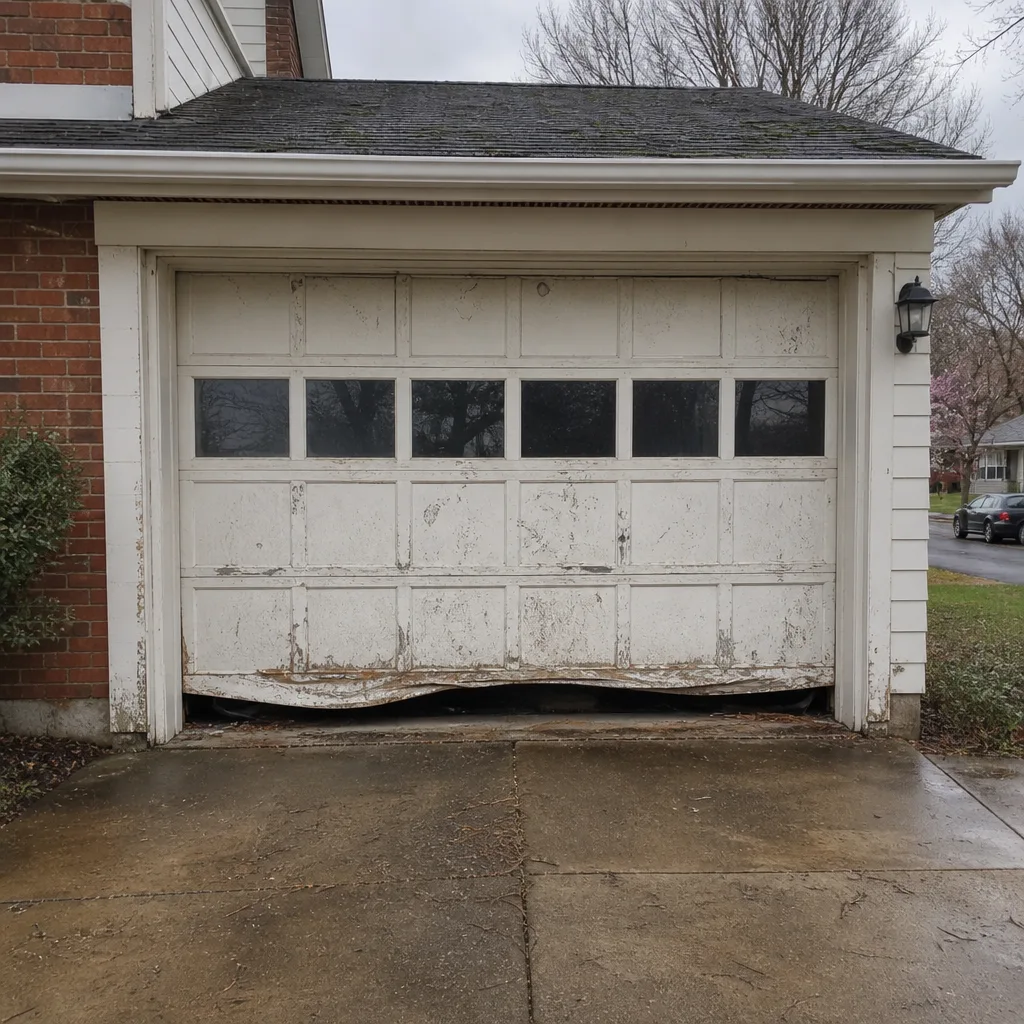 Before
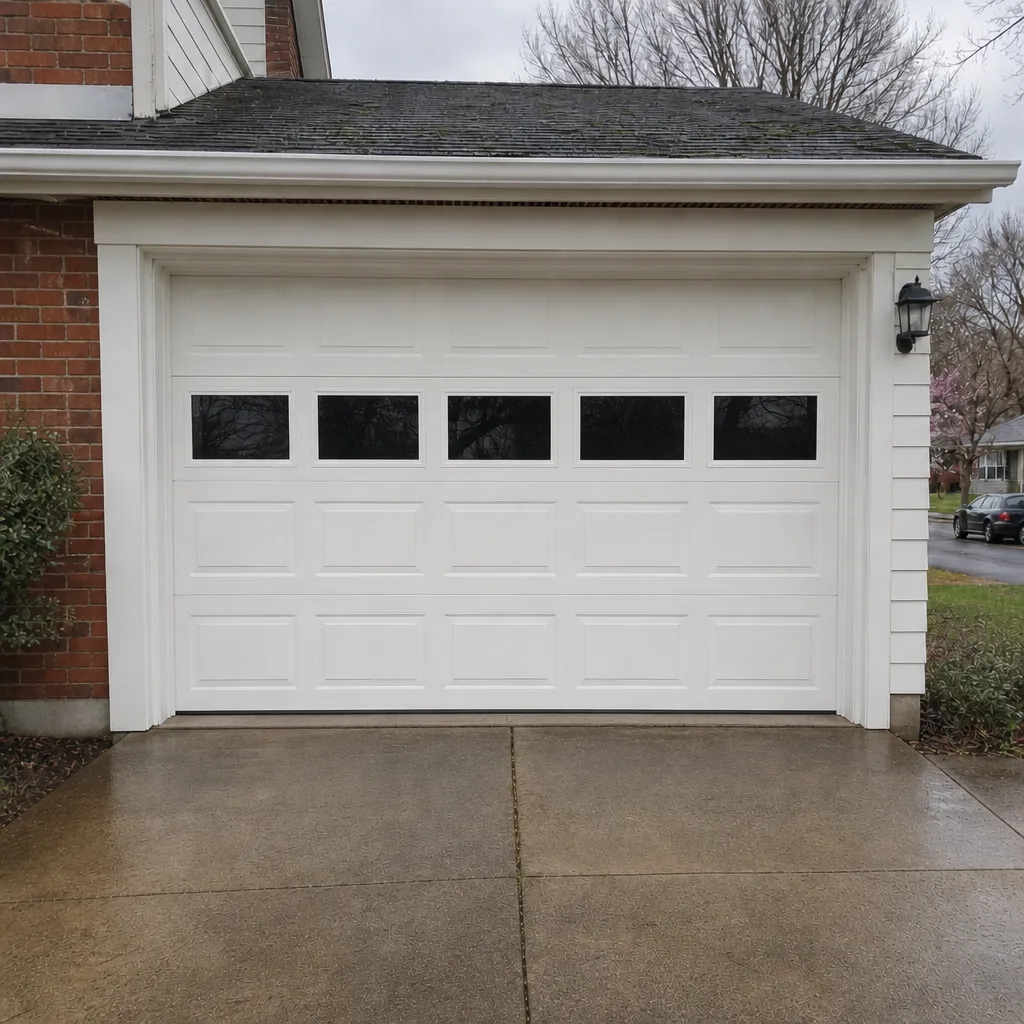 After
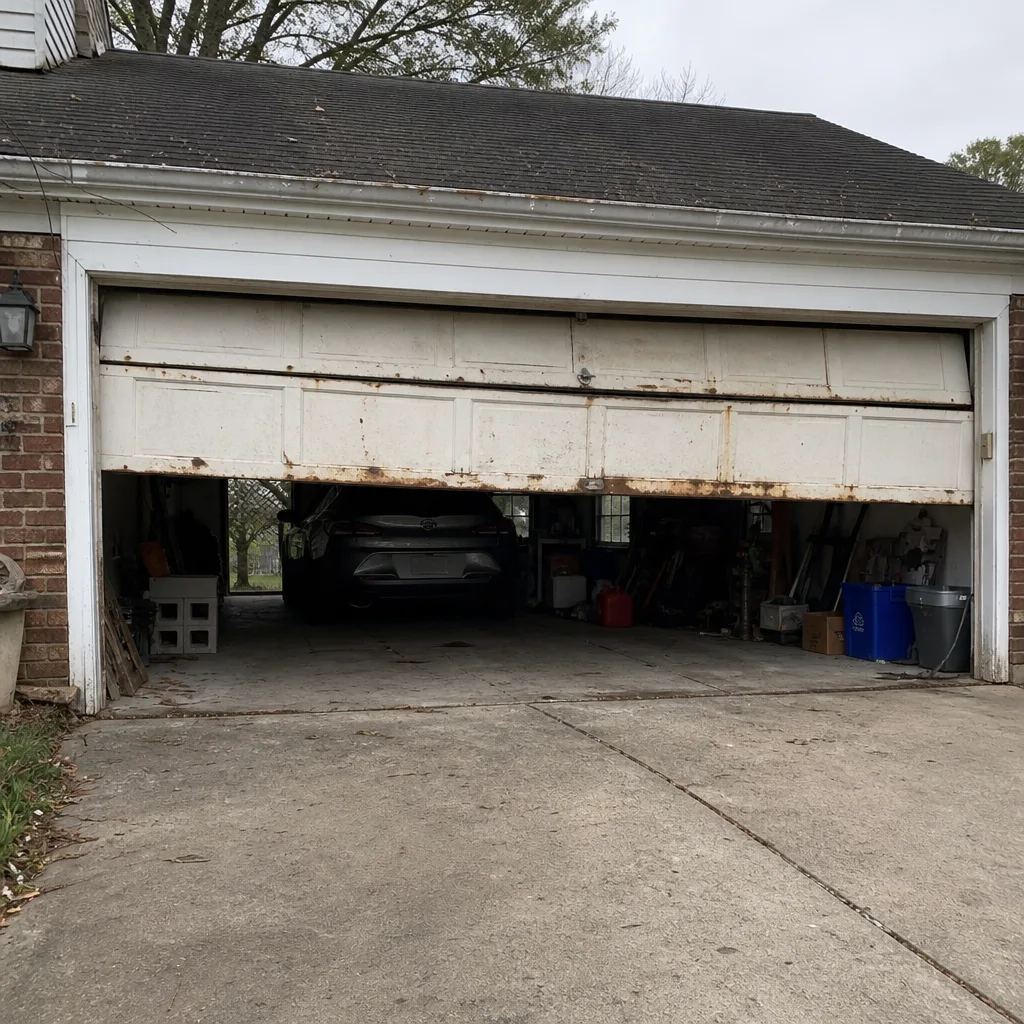 Before
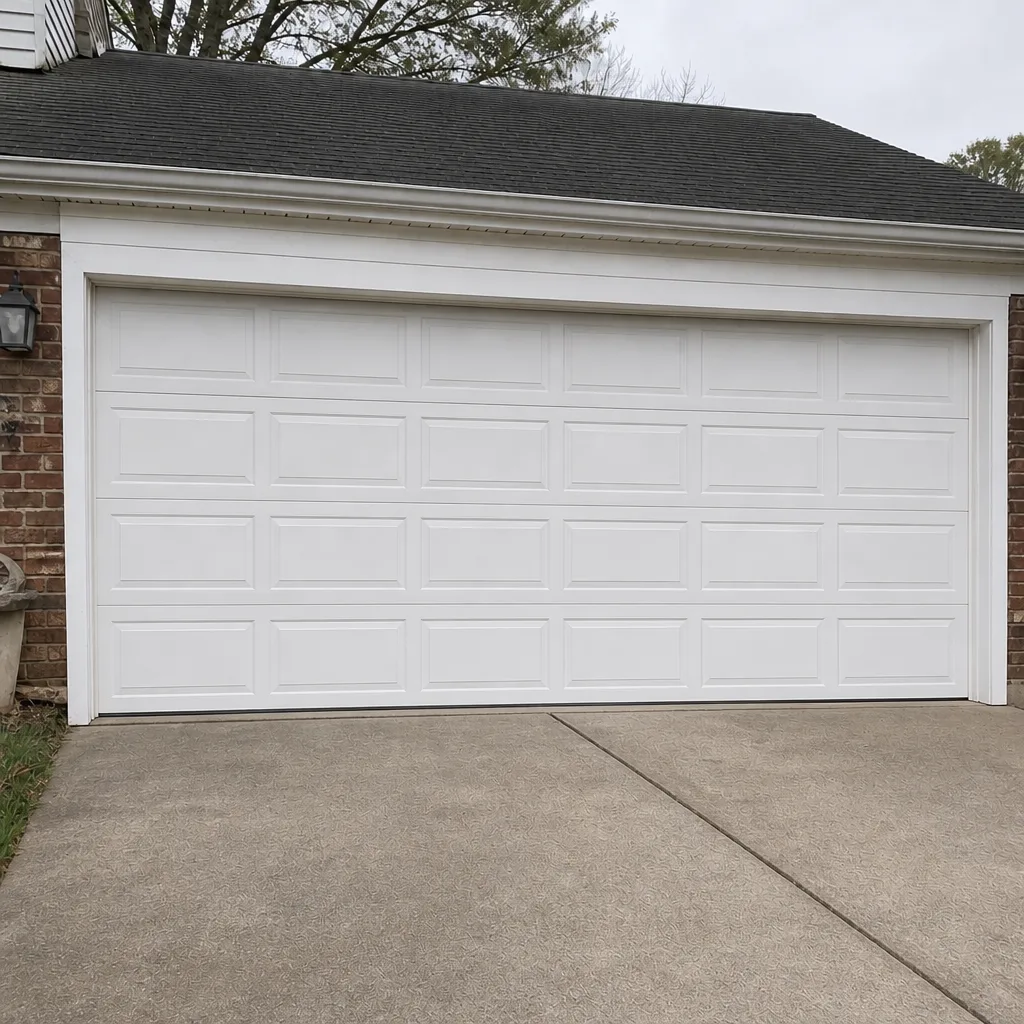 After
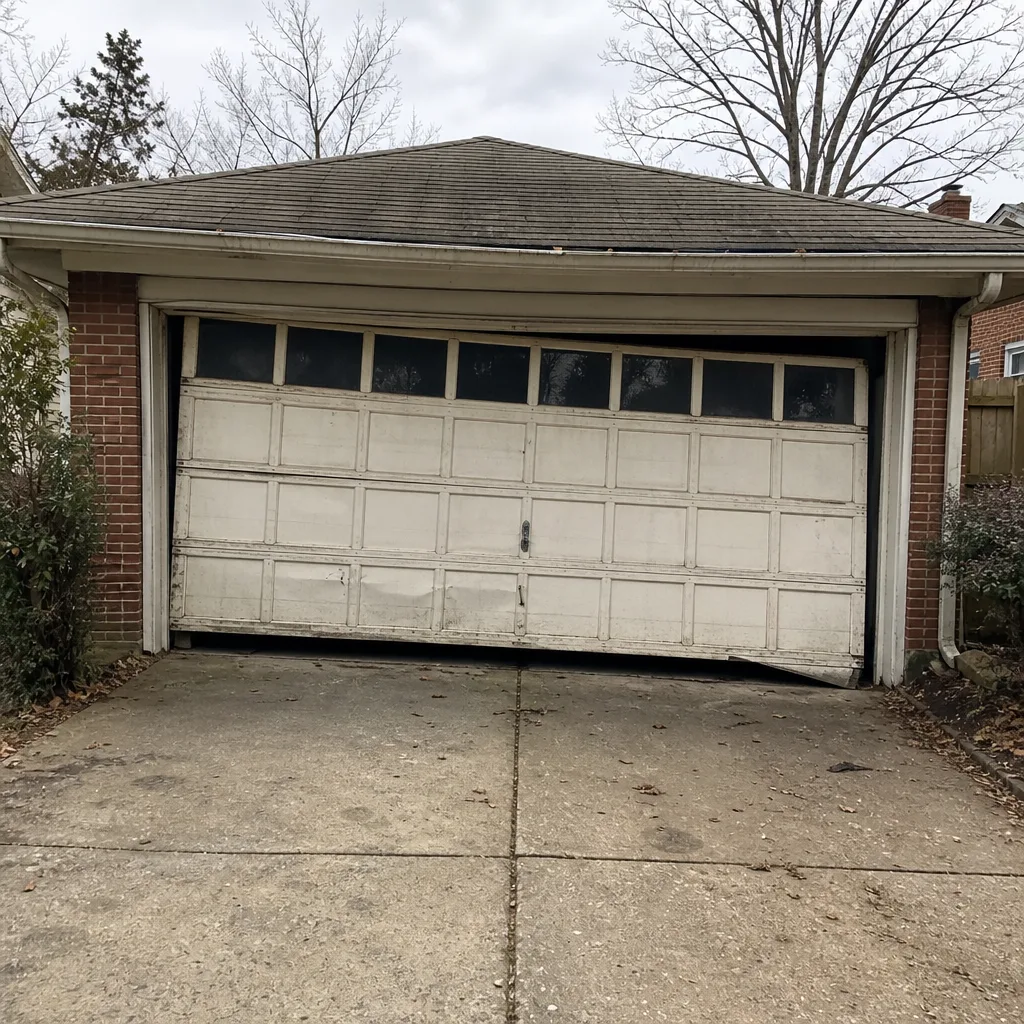 Before
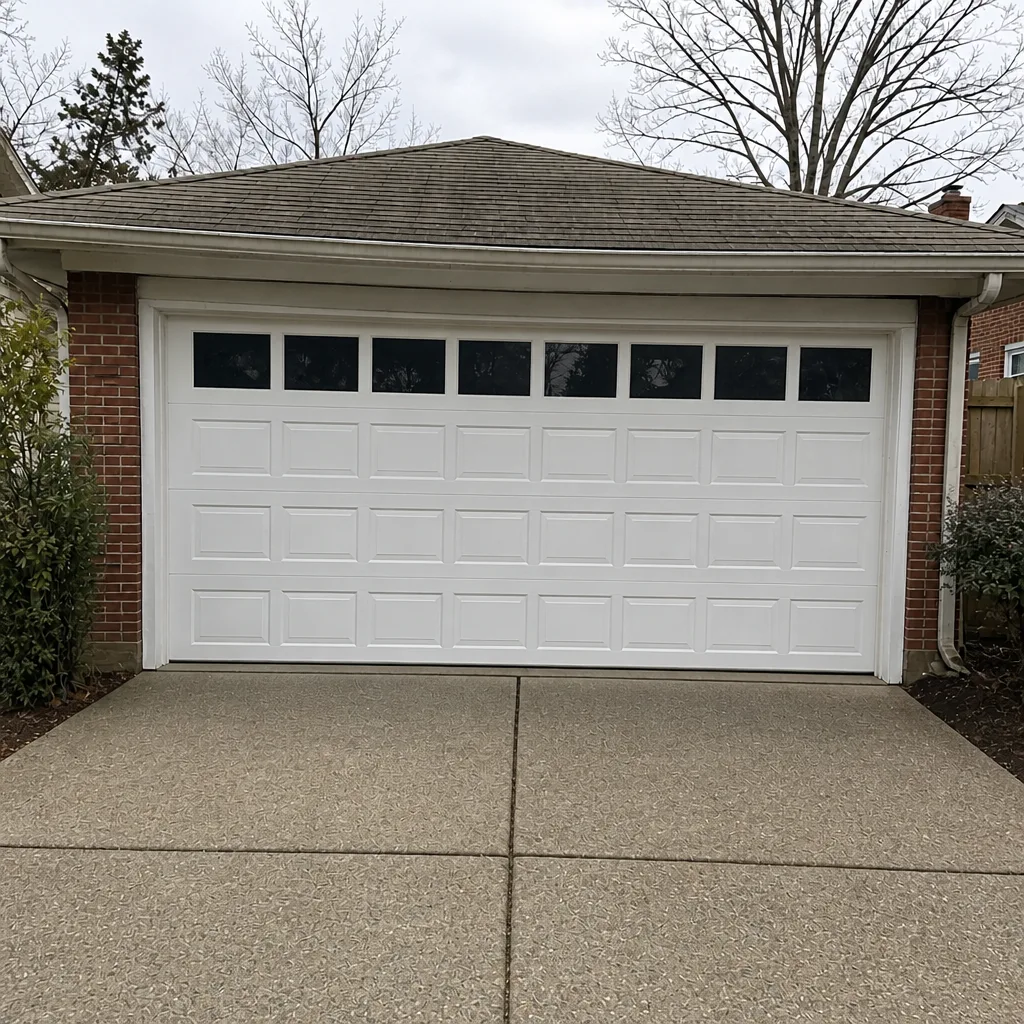 After
When to Call a Professional
Call a technician the moment a problem involves a spring, a cable, or an off-track roller. Those are the components that hold the door up and guide it under load, and they’re not safe to handle without training and the right tools. Call today if the door won’t open or close, if you hear popping from the springs, if the door is hanging at an angle, or if a cable looks frayed. Also call when a door reverses, stalls, or grinds after you’ve cleared the simple causes (remote, obstruction, lock), because that’s when a limit switch, track, or logic board issue is likely. Kingsley Garage Door Repair offers free estimates in Arlington and can diagnose by brand and symptom rather than guesswork. Call (844) 484-2584. We answer 24/7. Fast dispatch from 7am to 7pm, Sunday through Friday.
Frequently Asked Questions
Most commonly, either the photo-eye safety sensors are blocked or misaligned, or the track is bent and the door is binding, which triggers the safety reverse. Rule out an obstruction and check the sensors first, but if the sensors are clear and the door still reverses at the same spot, it’s likely a track alignment or opener limit problem. Call (844) 484-2584 for an accurate diagnosis.
No. Garage door springs hold the full weight of the door under tension and can cause serious injury if handled incorrectly. Spring replacement is a job for a trained technician with the right tools, and it’s one of the three problems that need a professional the moment you spot it. Call us for a free estimate.
A sharp pop often signals a torsion spring under stress or a cable slipping, while a bang at the start or end of travel usually means a travel limit set too hard or a roller that’s jumped the track. If the sound comes from the springs, stop using the door and call. Call (844) 484-2584 to have it checked.
Yes. Summer humidity swells wood and composite panels so they bind against the frame, and cold snaps make steel panels contract and pull the weather seals away from the frame. Lubricant also thickens in cold and dries out in summer heat. A door that only acts up in one season is giving you a climate clue worth acting on.
If the opener motor runs but the door stays put, the door may be disengaged from the drive (check the release cord), the manual lock may be on, or the drive gear or belt may be worn. Check the wall switch and re-engage the trolley first, and if the door still won’t move, the opener needs a trained look. Call us for an exact quote; estimates are free.
Yes, the independent professionals we connect you with are state-licensed and insured and work on the major brands, including Genie, Clopay, Amarr, and Wayne Dalton. Our technicians have up to 11 years of experience, and the price is quoted and agreed before any work starts. Call (844) 484-2584 for a free estimate.
The Bottom Line
Garage door troubleshooting works best when you follow a sequence instead of chasing the most visible symptom. Check power and remotes, then springs, then track, then sensors, and you’ll rule out causes in the order that saves money. Arlington’s seasonal swings explain a lot of the failures you’ll see: humidity swelling panels in summer and cold snaps pulling seals and stiffening lubricant in winter. Know which three problems you can safely self-diagnose (remotes, obstructions, locks) and which three need a technician immediately (spring tension, frayed cables, off-track rollers). When the cause isn’t obvious, an honest, brand-familiar diagnosis beats guesswork. Call (844) 484-2584 for a free estimate and get your door diagnosed right the first visit.
Written by the team at Kingsley Garage Door Repair.