
Last updated November 16, 2026
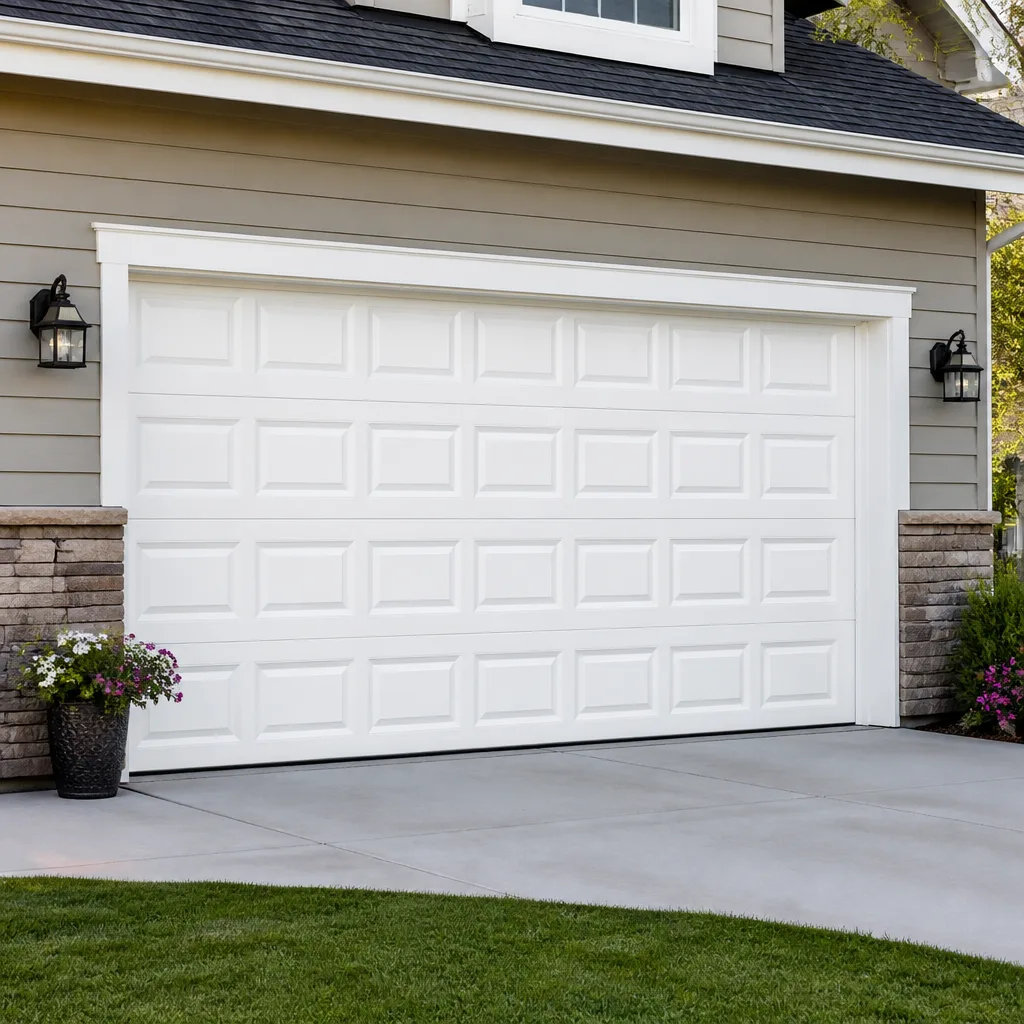 Raised-panel steel
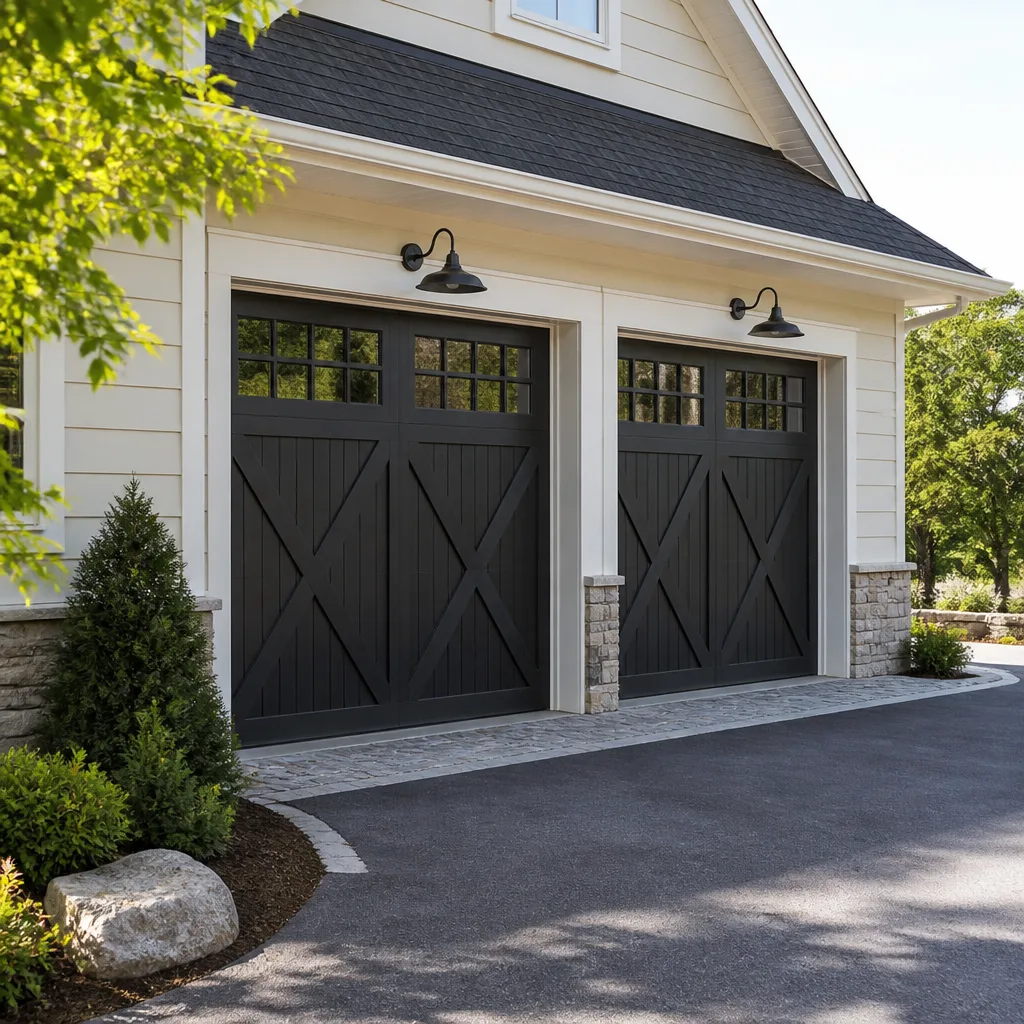 Carriage house
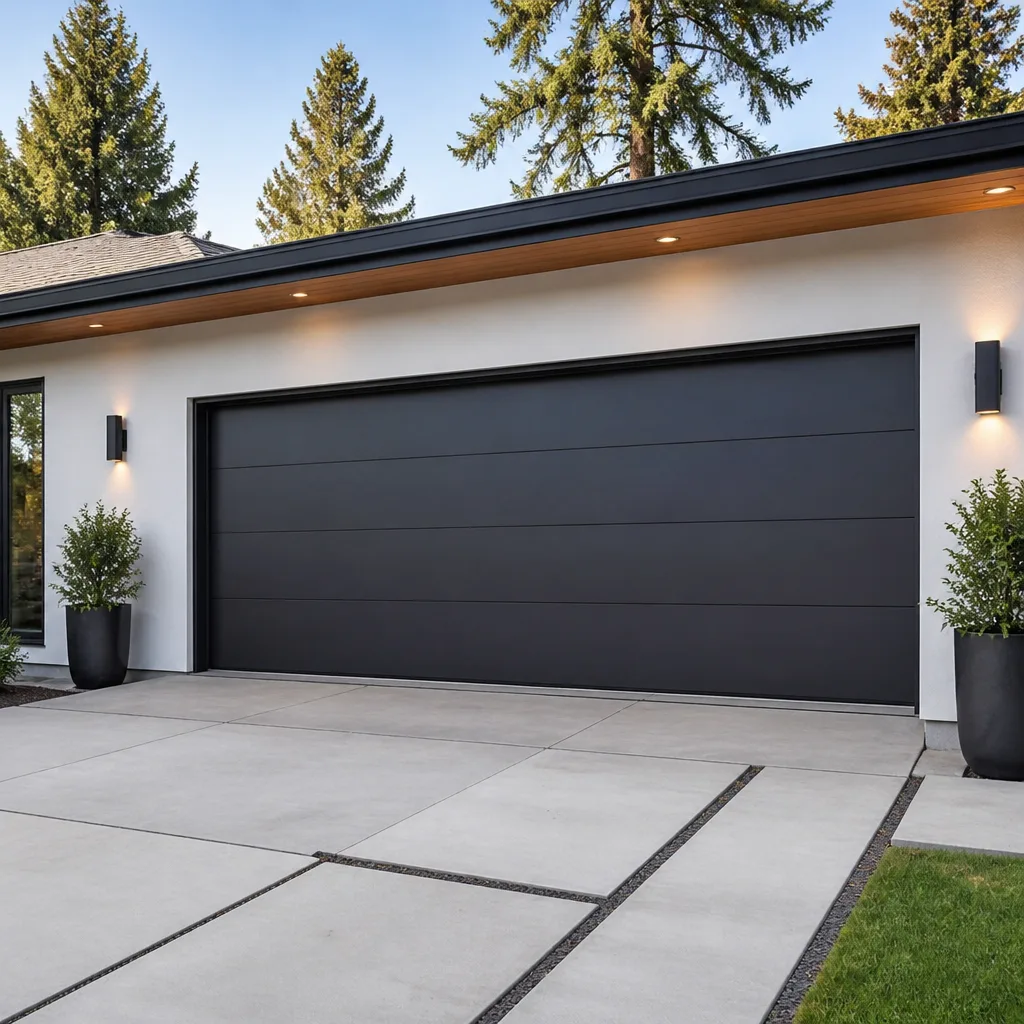 Modern flush
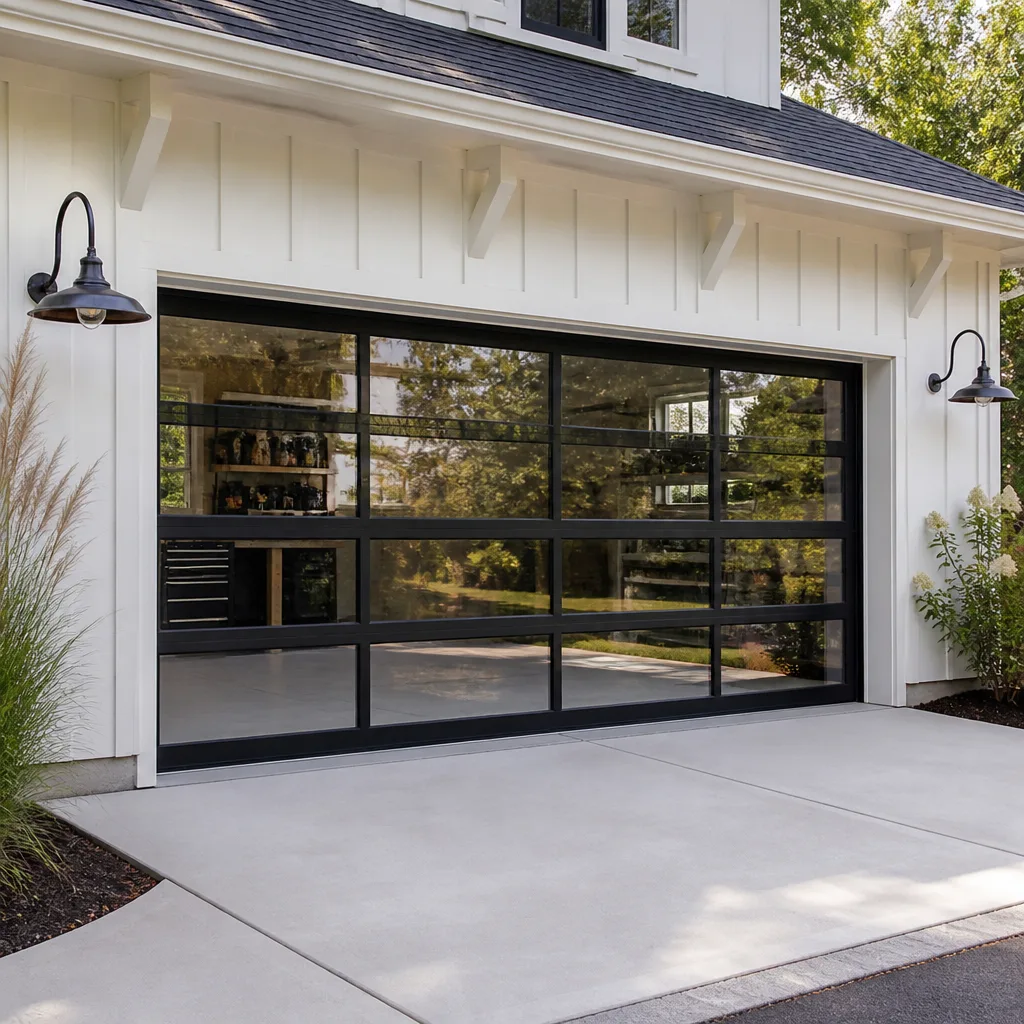 Full-view glass
 LiftMaster openers
 Chamberlain openers
Full 25-point door and opener safety check with every visit - springs, cables, rollers, tracks, and your LiftMaster or Chamberlain opener included
You get a price before we start. It does not change when the pro arrives.
Get your free estimateGarage Door Warning Signs: An Arlington Homeowner’s Reference Guide
A garage door doesn’t fail without notice. It complains first – a grind here, a hitch there, a pop that you hear once and shrug off. Most homeowners miss those complaints because nobody ever taught them which sound maps to which part. A torsion spring under tension sounds nothing like a worn roller, and cable wear has its own signature entirely. Knowing the difference is what separates “schedule this for this week” from “stop using this door right now.” This reference guide decodes the symptoms we see across Arlington, from the older bungalows of Ashton Heights to the newer construction near Shirlington, so you can describe exactly what your door is doing and act on it with confidence.
Quick Answer
Garage door warning signs in Arlington fall into two categories: signs that mean stop using the door now (a snapped spring, a frayed or hanging cable, a door that won’t stay level, or any grinding from the opener with the door disconnected) and signs you should monitor and schedule (slow movement, mild squealing, a door that hesitates once a week, or a bottom seal that’s cracking). If you hear a loud pop followed by the door refusing to lift, that’s a broken torsion spring – don’t touch it, don’t try the opener again, and call a professional.
Styles & brands we work with
- Raised-panel steel
- Carriage house
- Modern flush
- Full-view glass
- LiftMaster openers
- Chamberlain openers
Table of Contents
- The Symptom-to-Component Decoder: What Each Sound Means
- Grinding, Popping, Squealing: Matching the Sound to the Failing Part
- Visual Cues by Location: Door Bottom, Track, Springs, Cables, Opener
- The ‘Stop Using the Door Immediately’ List
- The ‘Monitor and Schedule’ List
- How to Run a Safety Reversal Test on Your Opener
- Why a Hesitating Door Is More Urgent Than a Slow One
- How We Diagnose a Door in Arlington
The Symptom-to-Component Decoder: What Each Sound Means
Every moving part of a garage door makes a specific noise when it starts to wear. Learning to recognize those noises is the single most useful diagnostic skill a homeowner can build. Here’s the decoder we run through in our heads when a customer describes a problem over the phone in Arlington.
- A sharp pop, then the door won’t lift: A torsion spring has snapped. This is the most common call we get, and it’s the one where the door should not be operated at all.
- A rhythmic grind that speeds up with the door: Worn or dry rollers, or a bent track section the roller is scraping against. It gets worse the longer it’s ignored.
- A high-pitched squeal on the way up and down: Dry hinges, a dry torsion spring (on a drum setup), or a dry opener rail and trolley. Usually lubrication, though not always.
- A popping or crunching sound coming from the track: A hinge that’s working loose, a roller that’s seized, or a worn hinge plate that’s flexing instead of pivoting.
- A low grinding or ratcheting noise from the opener head: A stripped opener gear, especially common on older Genie and Chamberlain units, or a stripped drive sprocket.
- A hum from the opener with no movement: The motor is receiving power but the door isn’t moving – seized bearings, a broken spring, or a stripped gear coupling.
- Popping or clicking from one overhead spot: A torsion spring that’s still intact but has separated coils or is beginning to fatigue. This one is the quiet warning.
If the sound you’re hearing isn’t listed here, tell us exactly when it happens – on the way up, on the way down, at one specific point, or all the way through – and we can usually narrow it down before we arrive. That’s the advantage of working exclusively on garage doors in Arlington: the sound patterns repeat, and we’ve learned what each one points to. When we do need to look at it in person, our garage door repair service covers everything from a single roller replacement to a full torsion spring swap.
Grinding, Popping, Squealing: Matching the Sound to the Failing Part
Homeowners often describe three different problems with the same word – “grinding.” The distinction matters, so here’s how we break it down for customers in Arlington who call with a noise complaint.
Squealing
Squealing is almost always friction, which means lubrication is the first thing to check. The most common sources are dry hinges (the pivot points), a dry torsion spring on a drum-and-cable setup, and the opener’s trolley where it rides the rail. On a Clopay or Amarr steel door, dry hinges are the usual culprit. If the squeal comes from overhead near the center of the door, suspect the torsion spring or its bearings. If it comes from the opener rail at one end, suspect the trolley or the belt.
Grinding
Grinding means metal on metal, and it doesn’t go away with lubrication. The two most common sources are worn rollers (nylon rollers wear flat and then grind against the track) and a bent or misaligned track section. On a door that’s been installed for a while, rollers are the first wear item you’ll replace. If you can see a flat spot or a cracked wheel on any roller, that’s your grinding sound.
Popping
A single pop from the torsion area, followed by the door not lifting, is a snapped spring. A repeated pop from the track is usually a loose hinge or a roller that has stopped rolling and started scraping. A popping sound from the opener itself, especially on an older LiftMaster or Craftsman unit, can point to a stripped gear inside the motor housing. That’s an opener repair, not a door repair, and it’s the call where the garage door opener repair side of our work matters most.
Rattling or Banging
Rattling usually points to loose hardware – bolts backing off the hinges or the track brackets. Banging or thumping can be a door that’s out of balance or a torsion spring that’s losing tension unevenly. Either way, a door that bangs on the way up or down is a door to have looked at before it gets worse. If you’re unsure which category your sound falls into, describe it to us and we’ll tell you whether it’s a same-day concern or a scheduled visit.
Visual Cues by Location: Door Bottom, Track, Springs, Cables, Opener
Sometimes the door tells you with a picture, not a sound. When we walk up to a door in Arlington, we look at five zones in sequence. Homeowners can run the same inspection – with the door closed and the opener unplugged – to spot problems early.
The bottom of the door
- A cracking or torn bottom seal: Wear and weather exposure. Not urgent on its own, but a failing seal lets in water and insects and can affect how well the door seats.
- A visible gap on one side when the door is down: The door is out of level, or a cable has slipped a drum. Not a safety emergency, but it should be adjusted.
- Rust or bubbling paint along the bottom edge: Most common on steel doors in Arlington’s humid summers, and worth addressing before it spreads.
The track
- A bent or kinked vertical or horizontal section: Any visible bend is a problem – the roller can’t travel smoothly and the door can come off track.
- Rollers that are sitting at an angle or look flattened: Worn rollers. Replace them all when you replace one, because they wear at the same rate.
- Loose track brackets or bolts: Common on older doors after years of use. Tightening is easy; a door that’s been running with loose brackets is one to have checked for damage underneath.
The springs
- A visible gap in a torsion spring: A spring that’s snapped or is failing. Stop using the door.
- Rust on the coils: A sign the spring is nearing the end of its service life, especially on doors that have seen many years of Arlington’s seasonal humidity swings.
- A torsion spring you can see two separate coils with a visible separation between them: This is spring fatigue, and it’s the classic “it still works but it’s on borrowed time” situation.
- For extension springs: A missing or loose safety cable running through the spring is a safety issue that should be addressed right away.
The cables
- Frayed strands or a cable that’s come off the drum: A cable failure can let the door drop. Stop using the door.
- A cable wrapped unevenly on the drum: Usually a sign the door is out of balance or the drum is worn.
- A slack cable with the door closed: Tension has been lost somewhere in the system.
The opener
- A sagging or drooping rail: Can be a worn trolley or a bracket that’s pulling loose from the ceiling.
- A wall button that needs a hard push, or a remote with a short range: Usually a battery, sometimes a logic board, and occasionally a safety sensor issue.
- Blinking lights on the opener head: Your opener is telling you exactly what’s wrong. On most LiftMaster, Chamberlain, and Craftsman units, the flash count maps to a specific fault code.
If a customer in Arlington describes a visual cue they’re not sure about, a photo helps us more than a paragraph. Not every door has the same layout, especially between manufacturers like Clopay and Wayne Dalton, so seeing the hardware often saves a trip.
The ‘Stop Using the Door Immediately’ List
Some warning signs are urgent, and the reason is simple: the components involved can let a door fall. Here’s the list, and the reasoning behind each entry, so you can judge your own situation with the same logic we use.
- You heard a loud pop and the door won’t lift, or lifts badly. A torsion spring has snapped. The door is now held up by the opener alone, and the opener is not designed to hold that weight. Don’t run it again.
- You can see a frayed or hanging cable. A failing cable can drop the door. Don’t operate it, don’t try to lift it by hand, and don’t try to remove the cable yourself.
- The door is visibly out of level – one side higher than the other – and won’t close flat. This usually means a cable has come off a drum or a spring has lost tension. The door can come down hard.
- You hear a grinding or crunching sound coming from the torsion spring or the drum area. Something structural is failing. Stop.
- The opener runs but the door stays put. This is often a stripped gear, and running it repeatedly can damage the motor further.
- One side of the door hangs loose, or a hinge plate is visibly bent or torn. The door panel could pull free from the track.
- You can see a gap where a spring should be, or a broken spring sitting loose. Never try to remove or adjust a broken spring yourself. High-tension springs and cables store enough energy to cause serious injury. This is work for a trained professional, every time.
If any of those apply, stop operating the door and call us. We answer 24/7, and a call outside dispatch hours is booked into the next opening, Sunday through Friday, 7am to 7pm. The free estimate sets the price before any work starts.
The ‘Monitor and Schedule’ List
Not every warning sign is an emergency. Here’s the list of issues that can wait for a scheduled visit, and why each one isn’t urgent yet.
- A slow door. If the door moves smoothly and only slowly, it’s usually a tired opener or a door that’s slightly out of balance. It’s worth a service, but it’s rarely dangerous.
- Mild squealing. Dry hinges and rollers. Lubrication helps, and a service visit will catch what lubrication alone won’t fix.
- A cracked bottom seal. Not a safety issue, but it lets in water, and in Arlington’s humid summers that leads to rust on steel doors. Worth replacing when it’s convenient.
- A remote with reduced range. Usually a battery, sometimes a signal interference issue on 2.4GHz devices near the opener. Easy to sort out.
- Rust starting on the bottom panel or along a seam. Cosmetic now; address it before it spreads and turns into panel replacement.
- A door that looks like it’s slightly uneven but closes flat. Out of balance. Have it adjusted at the next service.
- A noisy opener that runs fine. The motor or drive has some wear. Worth a look when you have the door serviced.
The distinction matters because it’s the difference between a same-day visit and a scheduled one, and it’s the difference between paying for a repair and paying for a replacement because a small issue turned into a big one. The one caution: if a “monitor” symptom and a “stop use” symptom show up together, treat the whole door as the urgent category. When in doubt, a quick phone description helps us tell you which side of the line you’re on.
How to Run a Safety Reversal Test on Your Opener
Your opener has a built-in safety feature that stops and reverses the door if it meets an obstruction. Testing it is one of the simplest things a homeowner can do, and it’s the test we recommend most often to homeowners in Arlington who want a baseline on their opener’s health.
The test takes under a minute and requires no tools. It’s also one of the few homeowner checks we recommend doing without calling us first.
- With the door fully open, place a solid object about a foot tall – a 2×4 block or a full gallon jug – flat on the floor in the center of the door’s path.
- Press the wall button to close the door. Let it travel until it contacts the object.
- Watch whether the door reverses and returns fully open. It should reverse as soon as it meets the object.
- If the door reverses, the safety system is responding. If it stops but doesn’t reverse, or pushes down on the object, the safety system is failing and the opener should not be used until it’s repaired.
- Repeat the test once more with the door closed and a different object to confirm the result isn’t a fluke.
A failed reversal test means your opener is running without its primary safety protection. That’s a compliance issue – the Consumer Product Safety Commission has required this function on residential openers since 1993 – and it’s the reason we treat a failed test as a “call now” rather than a “schedule it.” If your opener is a LiftMaster or Chamberlain, the owner’s manual will show you how to adjust the force settings, but if that adjustment doesn’t fix it, the logic board or sensor alignment is the next thing to check. That’s the conversation to have with a professional rather than a homeowner repair. On a Genie or Craftsman, the same rule applies: if adjustment doesn’t fix it, it’s a repair call.
Why a Hesitating Door Is More Urgent Than a Slow One
This is the counterintuitive part of the whole guide. A door that’s slow but steady is often the safer door. A door that runs fine most of the time but hesitates, jerks, or stalls once a week is the one to have looked at right away.
Here’s why. A slow door is telling you about a general alignment or balance issue that hasn’t fully stopped the mechanism. A hesitating door is telling you that something is intermittently failing – a gear that’s partially stripped, a roller that’s seized and only occasionally catches the track, a cable that’s slipping on the drum, or a torsion spring that’s losing tension unevenly. The intermittency is the problem: when the door does finally stop, it often stops under load, which is exactly when a spring or cable failure turns into a dropped door.
In our experience in Arlington, hesitation calls are the ones that get put off the longest. A homeowner hears the stall once, tries the door again, and it works. So they conclude it fixed itself. It didn’t – it just hasn’t failed completely yet. The parts that cause hesitation are also the parts that fail hard rather than drifting, so the repair cost is usually lower when it’s caught early. If your door hesitates or jerks even once a week, treat it like the urgent category. It’s the kind of thing our Kingsley Garage Door Repair team can diagnose on the first visit, because we’ve seen the same symptom on the same brands across thousands of doors.
How We Diagnose a Door in Arlington
When we arrive at a door in Arlington, we run a consistent inspection so the diagnosis isn’t guesswork. It’s the same sequence for a door in Ballston, a door in Lyon Village, or a door in Cherrydale – because the physics don’t change with the neighborhood. What changes is the door. Manufacturer differences matter. A Clopay door has different hinge and roller geometry than an Amarr; a Wayne Dalton uses a different torsion setup than a standard LiftMaster-equipped door. Being familiar with the major brands means we know what the factory-fitted parts should look like before we start.
The inspection covers the door, the track, the springs, the cables, and the opener, and we run a balance test on the door with the opener disconnected. If the door won’t hold itself at the halfway point, the springs are the issue. We also check the safety reversal system and the photo-eye alignment before we touch anything else, because both of those determine whether the door is safe to operate at all. The written estimate comes next, before any work starts, so you know the price when you decide.
The single-trade focus helps here. Garage doors are the only thing we work on, so the diagnostic isn’t competing with drywall and gutters for attention. The Arlington door we’re looking at gets the same time and attention as the last one, and the parts we recommend are the ones that belong on that specific make and model. Our technicians have up to 11 years of experience, and the whole point of that experience is knowing what a normal door looks and sounds like so an abnormal one stands out immediately.
Common Mistakes to Avoid
- Retrying a broken-spring door because it works once. A door with a snapped spring sometimes opens partway on the opener before stalling. Every one of those attempts puts stress on the opener and risks the door coming down. Stop after the first failure.
- Lubricating everything to silence a grinding sound. Lubrication is for friction, not for metal-on-metal wear. If the sound is grinding, lubrication masks the problem without fixing it. Check the rollers and the track first.
- Adjusting the opener force setting to get past a hesitation. Cranking up the force lets a door with a failing spring or binding track run longer than it should. It doesn’t fix the cause, and it’s the leading reason doors drop without warning.
- Ignoring a remote that needs a hard push or has lost range. That’s usually a small fix, but it’s also the same signal that a logic board or sensor is failing. If it’s been intermittent for months, get it looked at.
- Assuming a slow door is the most urgent problem. Slow is usually a general adjustment. Intermittent hesitation or jerking is the signal to act faster, because it means a part is failing, not just wearing.
- Running the door with a torn bottom seal. Water gets in, and in Arlington’s humid summers that leads to rust along the bottom panel. Replacing a seal is cheap; replacing a bottom section isn’t.
- Testing the safety reversal with an object that’s too soft or small. A tennis ball or a broom handle won’t reliably trigger the reversal, and a false pass leaves the safety system untested. Use something solid and at least a foot tall.
- Trying to adjust a torsion spring or a cable by hand. These parts hold energy that can cause serious injury. This is the one job where the answer is always to call a professional.
See the difference
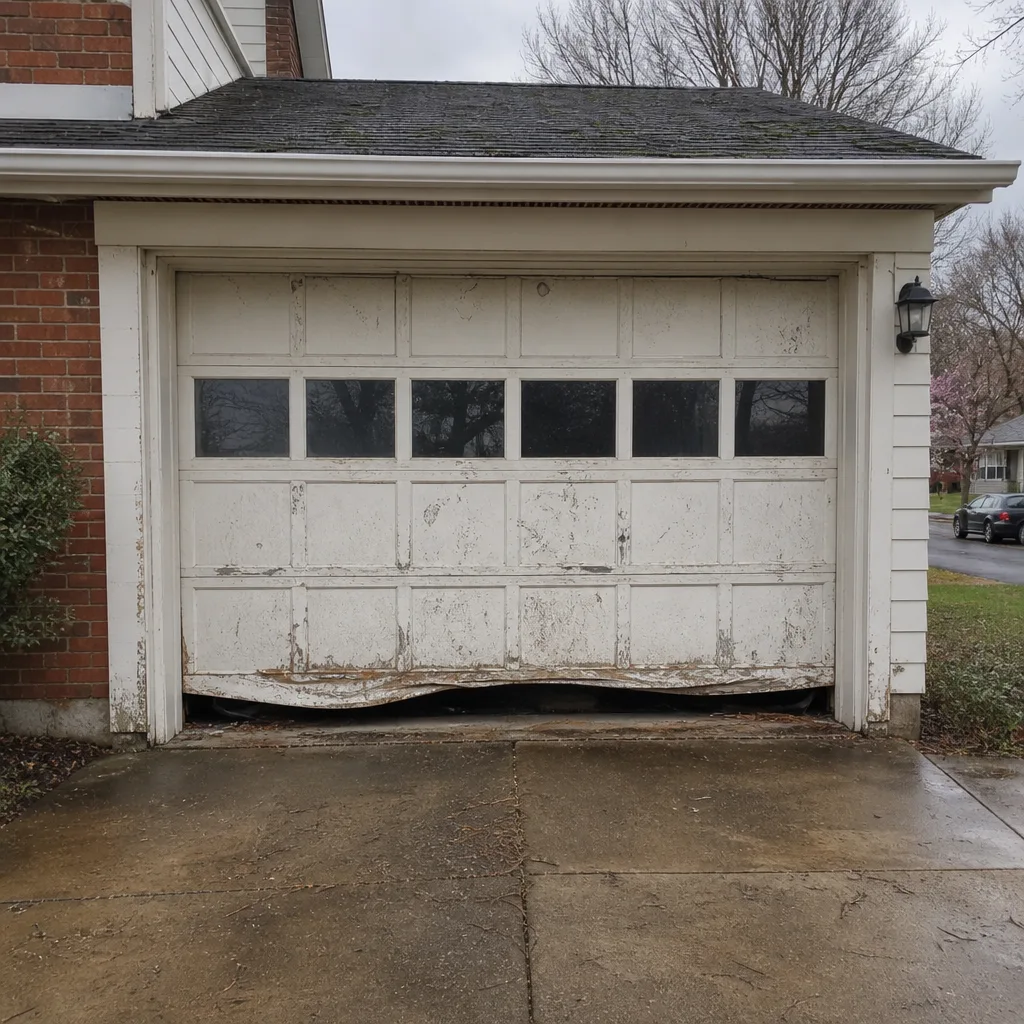 Before
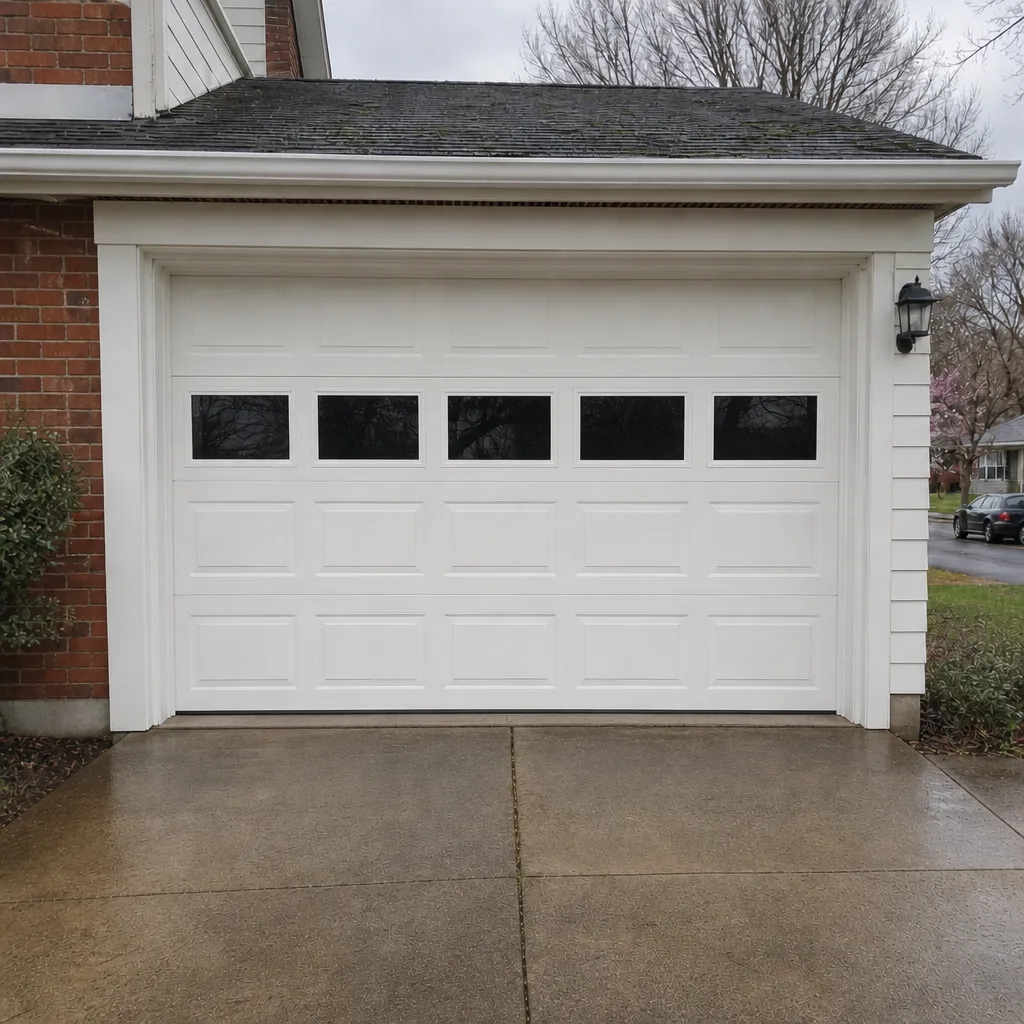 After
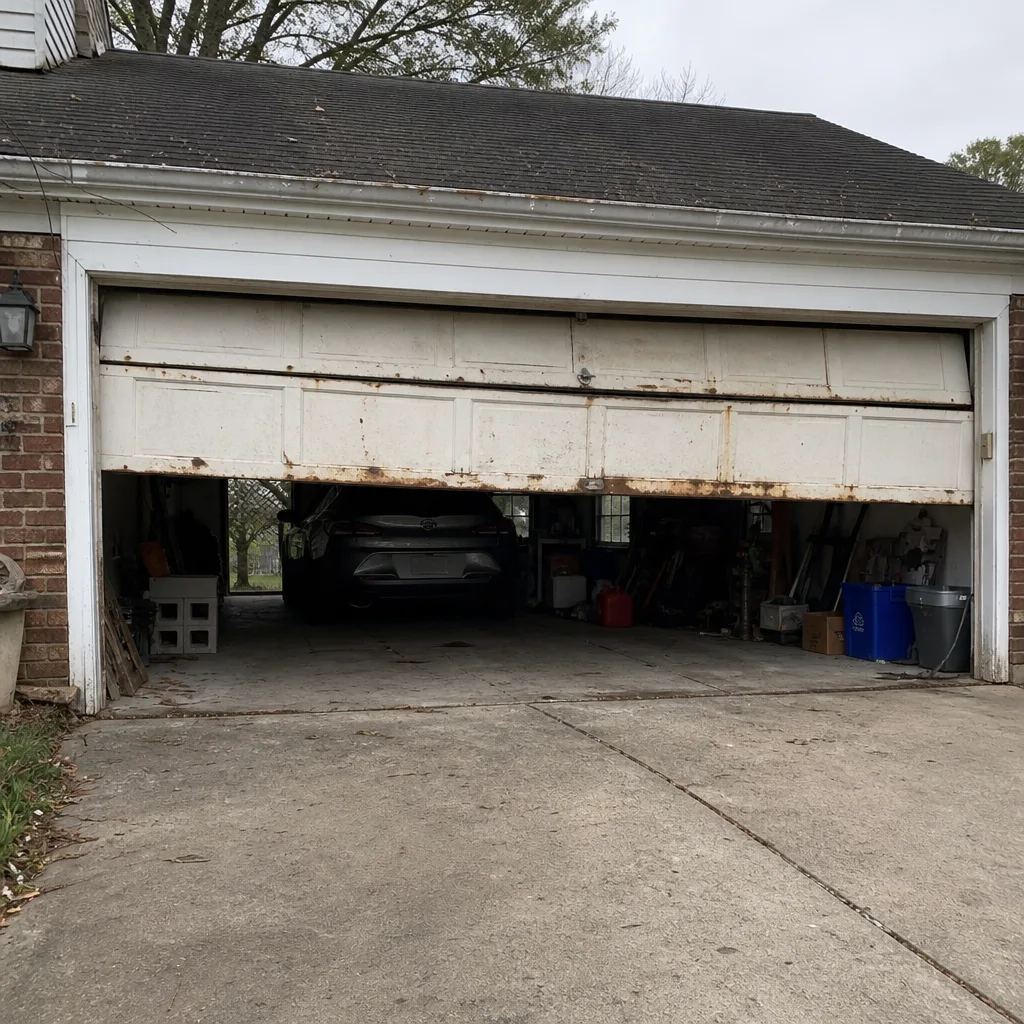 Before
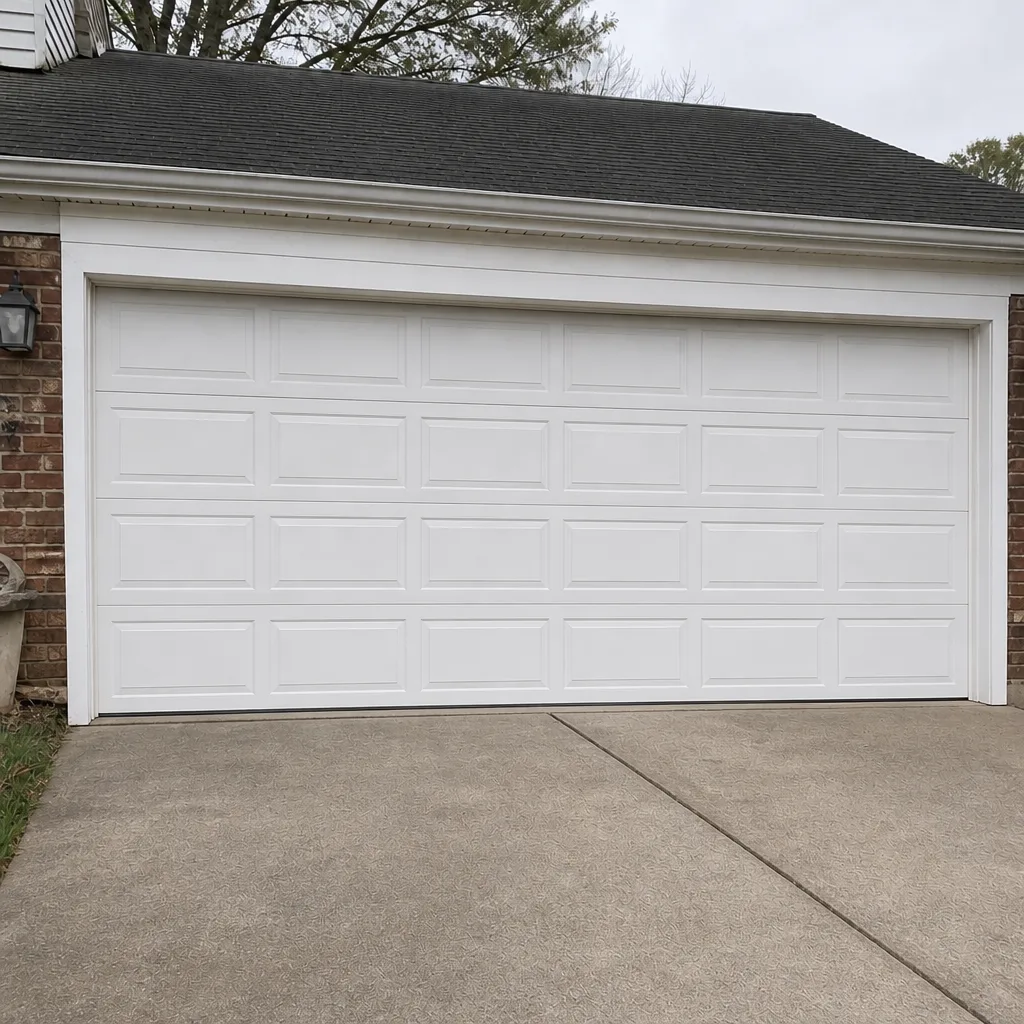 After
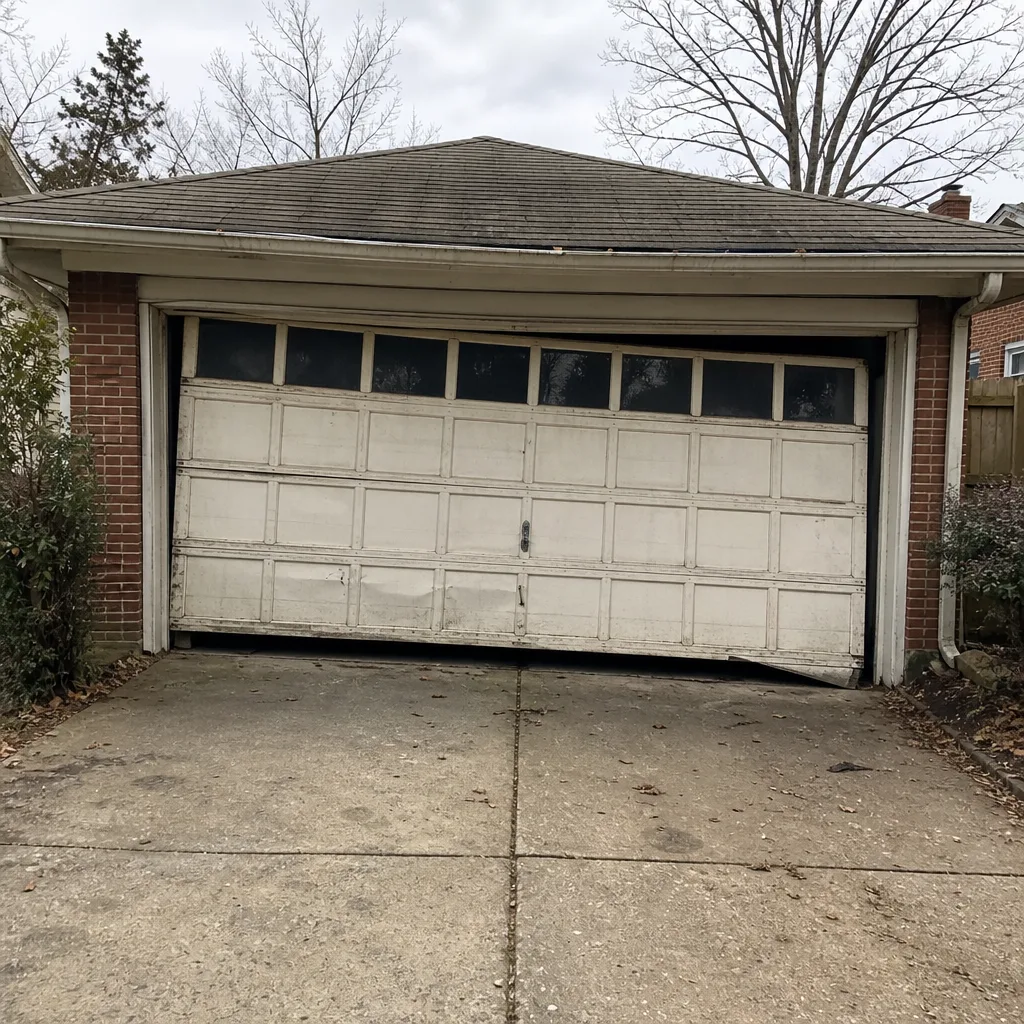 Before
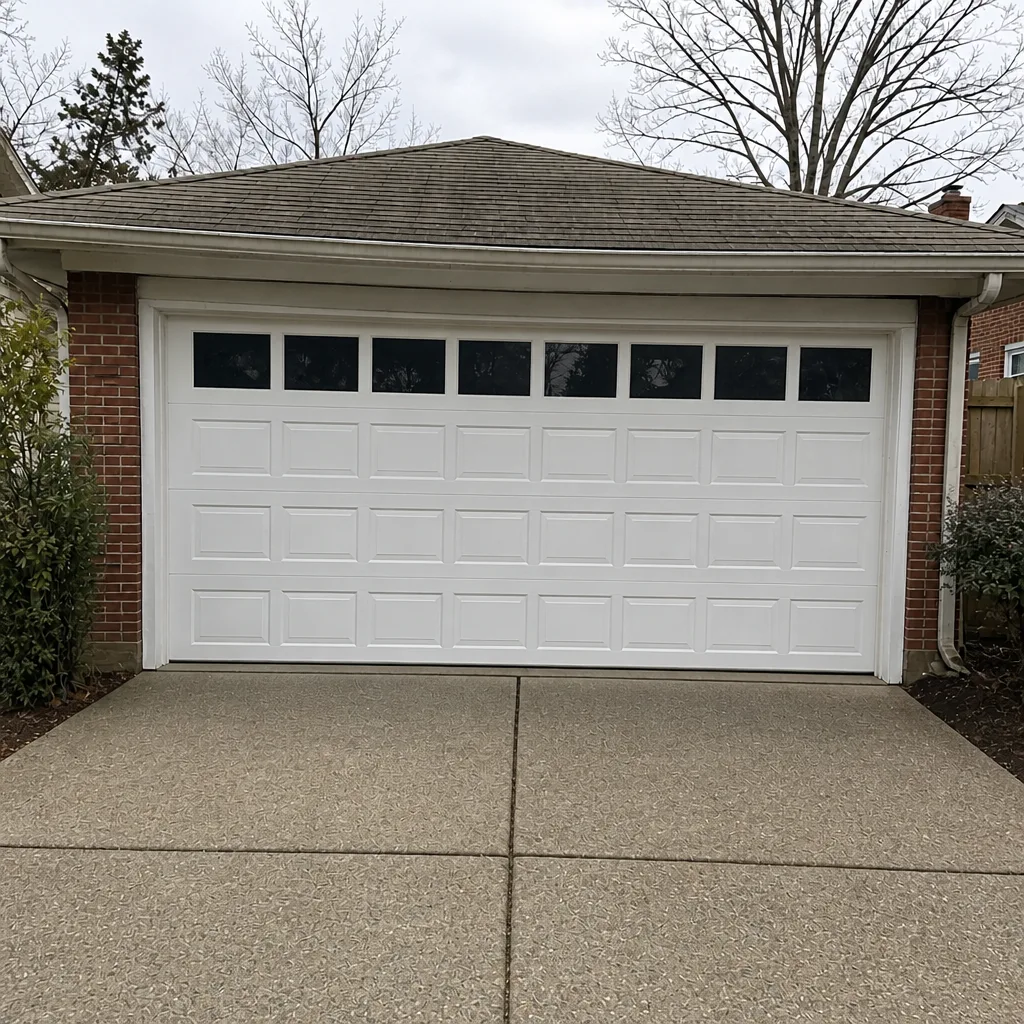 After
When to Call a Professional
Call a professional when the door is on the “stop using” list, when the safety reversal test fails, when the door hesitates or jerks even occasionally, or when a visual inspection shows a bent track, a frayed cable, or a spring with a visible gap. Those are the situations where waiting risks the door dropping or the opener burning out. For everything on the “monitor and schedule” list, you can plan the repair rather than rush it, and that’s usually the cheaper way to do it. Kingsley Garage Door Repair offers free estimates in Arlington – call (844) 484-2584. We answer 24/7. Fast dispatch from 7am to 7pm, Sunday through Friday. The written estimate sets the price before any work starts, and we work on the brands most Arlington homes already have.
Frequently Asked Questions
The most common signs we see in Arlington are a door that grinds on the way up, a door that hesitates or jerks once a week, a spring with a visible gap, a frayed or slack cable, and a bottom seal that’s cracking. Noise complaints are the top reason homeowners call, and grinding and squealing are the two most frequent. If you’re hearing a grinding sound, check the rollers and the track first – that’s where most grinding comes from. Call (844) 484-2584 for an exact quote if you want it diagnosed in person – estimates are free.
Yes, in most cases. Torsion springs usually show a visible gap or separation in the coils before failing, and they often make a popping or clicking sound as they fatigue. That’s the moment to schedule a replacement rather than wait. If you already heard the snap and the door won’t lift, that’s a stop-use situation – don’t run the opener. Call (844) 484-2584 and we’ll get you scheduled – estimates are free.
No. A loud pop from the spring area almost always means a torsion spring has snapped, and the door should not be operated until it’s repaired. The opener is not designed to hold the door’s weight on its own, so running it can damage the motor and puts you at risk of the door coming down. Call (844) 484-2584 – we answer 24/7, and a call outside dispatch hours is booked into the next opening, Sunday through Friday, 7am to 7pm.
Disconnect the opener (there’s usually a pull cord or release lever on the trolley) and lift the door to about halfway by hand. It should hold there on its own. If it drifts down or won’t stay up, it’s out of balance, and the springs are the usual cause. Don’t force it through a full cycle. Call (844) 484-2584 to have it checked – estimates are free.
A hesitation usually means an intermittent failure – a partially stripped opener gear, a seized roller, or a cable slipping on the drum. The intermittency is what makes it more urgent than a door that’s simply slow, because the failure tends to happen under load. If your door hesitates even once a week, treat it like the urgent category. Call (844) 484-2584 for a diagnosis – estimates are free.
Repair is the right call for most doors more often than homeowners expect. A door with a snapped spring, worn rollers, or a failing opener usually just needs those parts replaced. Replacement makes sense when the panels are structurally damaged, the door is badly out of level across multiple sections, or the cost of repair gets close to the cost of a new door. We approach it repair-first because we do both repair and installation, so there’s no reason to push you toward one or the other. Call (844) 484-2584 for a free estimate and a straight answer.
The Bottom Line
Garage door warning signs are almost always present before a failure, and the skill worth building is recognizing which symptom points to which component. A grind is usually rollers or track, a squeal is usually lubrication, a pop from the spring area is a spring, and a hesitation is a part that’s failing without having stopped yet. Treat “stop use” signs as urgent, treat “monitor” signs as a scheduled repair, and treat hesitation as the one that’s more urgent than its sound suggests. If you’re not sure, describe the sound and the visual cue – we can usually narrow it down from that alone. Kingsley Garage Door Repair works on garage doors only, on the brands most Arlington homes already have. Call (844) 484-2584 for a free estimate. We answer 24/7. Fast dispatch from 7am to 7pm, Sunday through Friday.
Written by the team at Kingsley Garage Door Repair.