
Last updated November 16, 2026
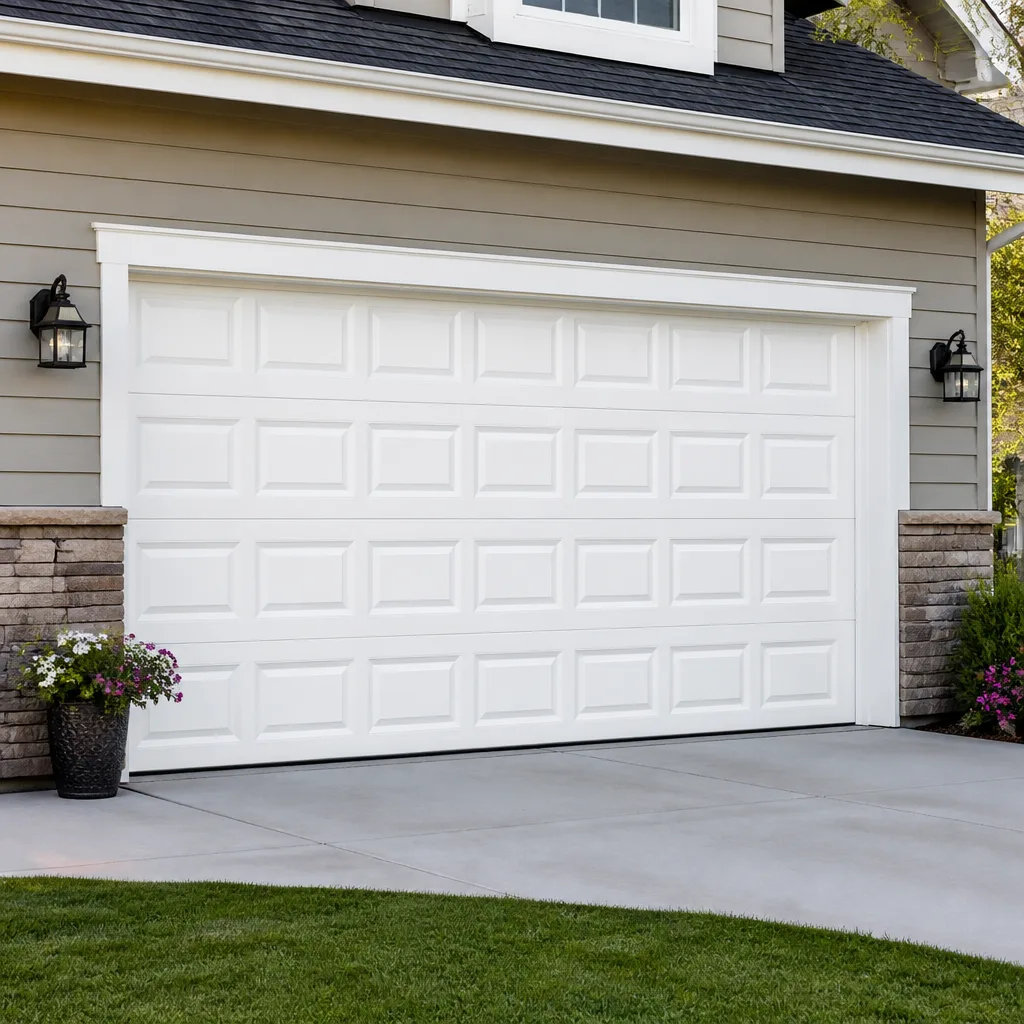 Raised-panel steel
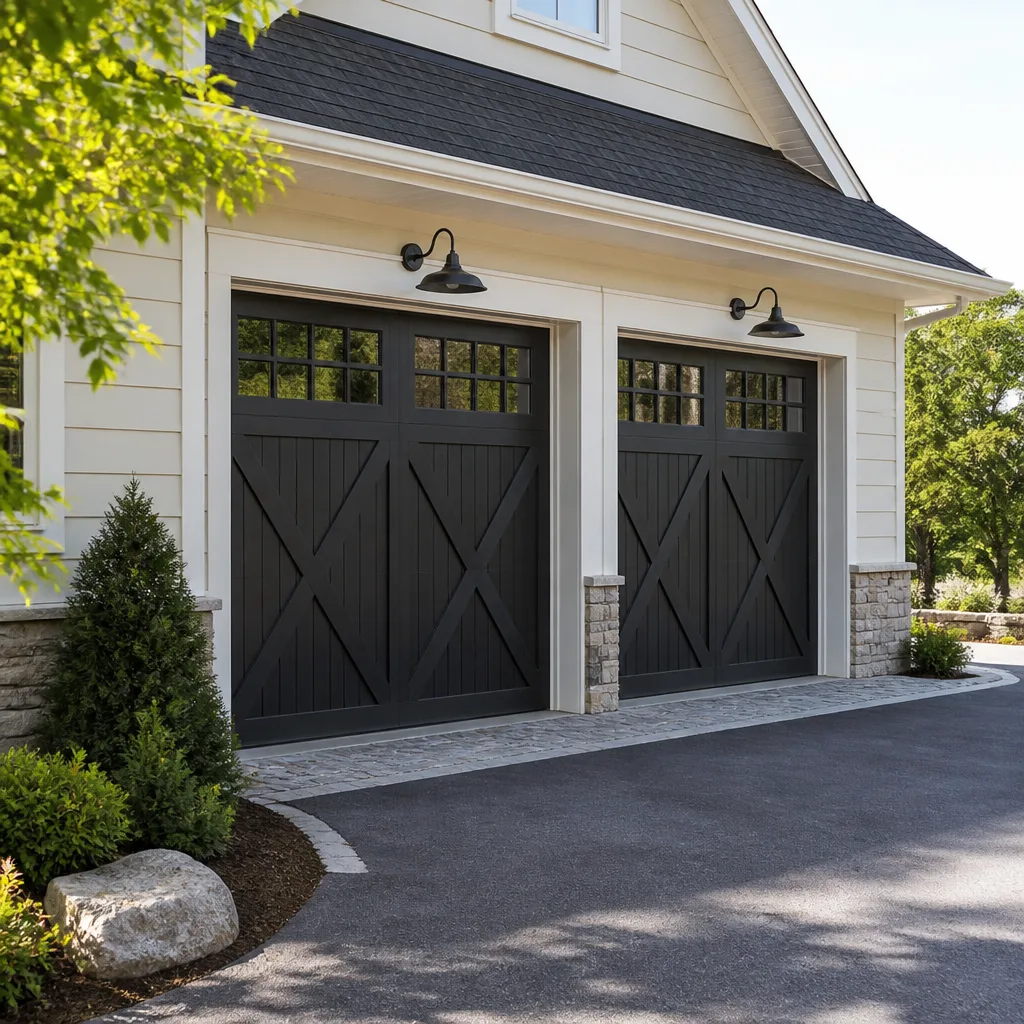 Carriage house
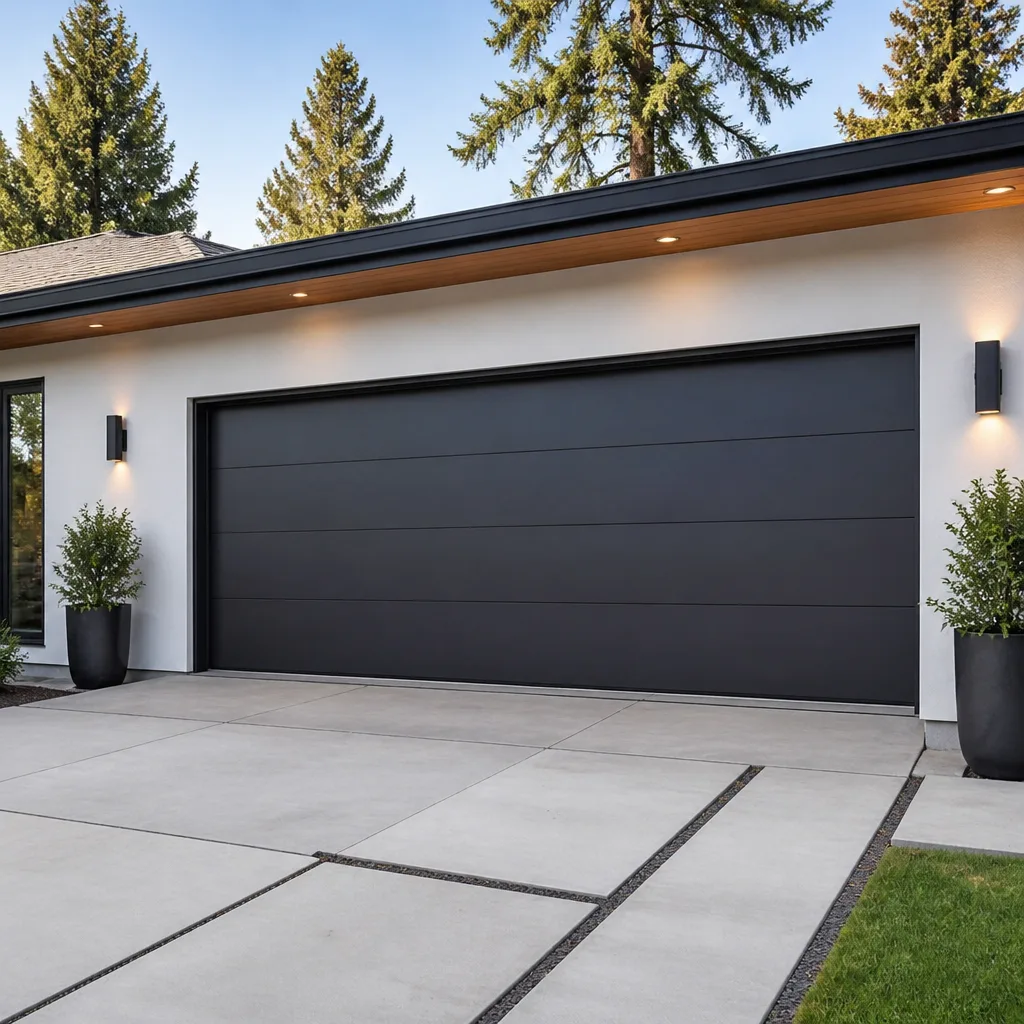 Modern flush
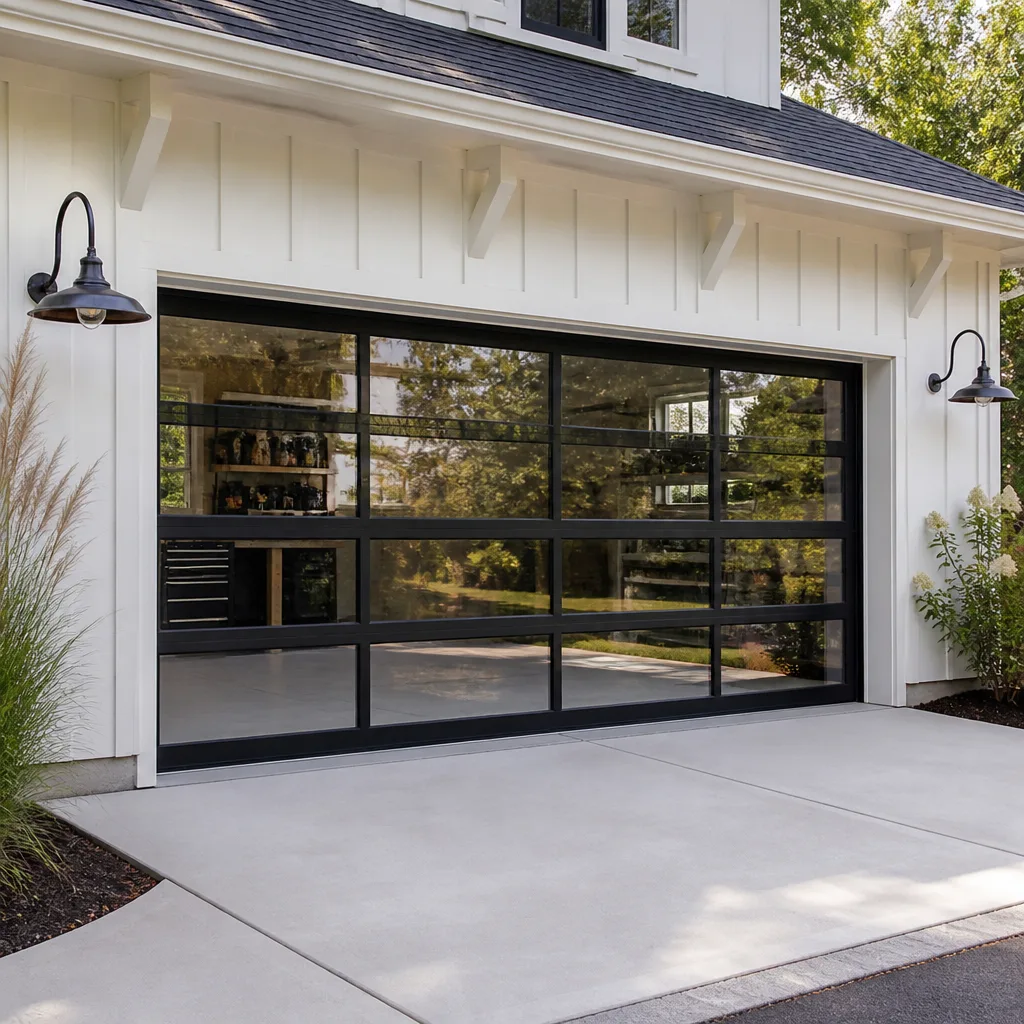 Full-view glass
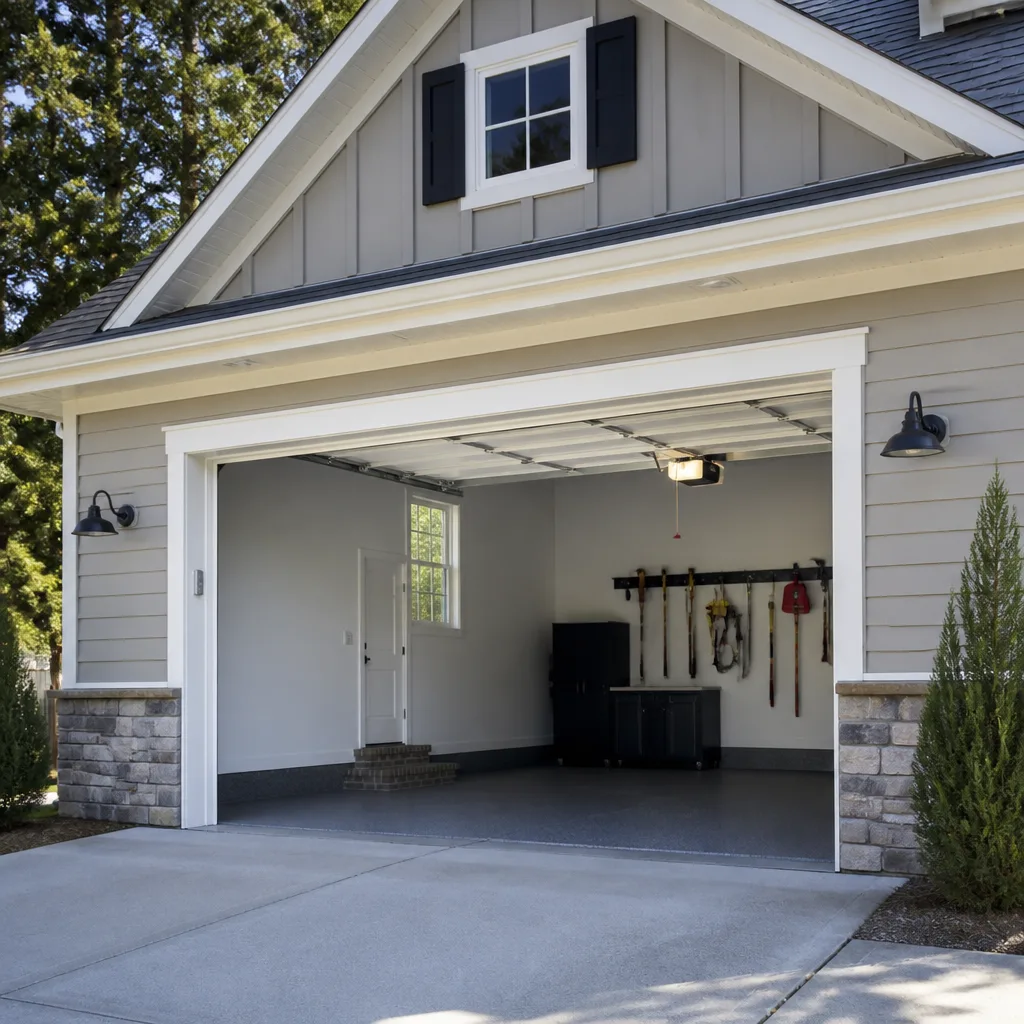 LiftMaster openers
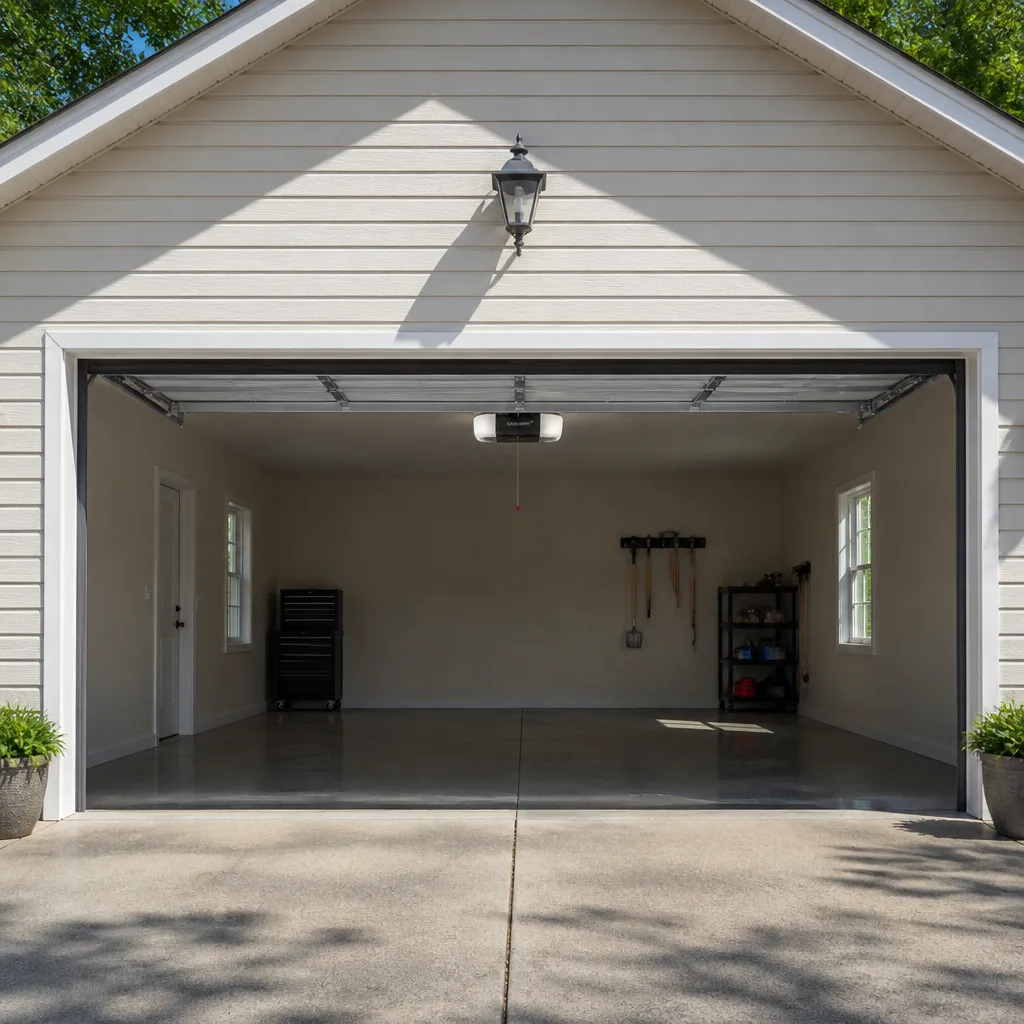 Chamberlain openers
Full 25-point door and opener safety check with every visit - springs, cables, rollers, tracks, and your LiftMaster or Chamberlain opener included
You get a price before we start. It does not change when the pro arrives.
Get your free estimateHow to Hire a Garage Door Contractor in Arlington: A Step-by-Step Guide
Any handyman with a truck and a wholesale account can list “garage door repair” on a website. The barrier to calling yourself a specialist is close to zero, which is why the hiring decision comes down to the questions you ask before anyone touches your door. In Arlington, where homes on the same block can run Clopay, Amarr, Wayne Dalton, or LiftMaster systems, the difference between a specialist and a generalist shows up in whether they can answer questions about your specific equipment before they arrive. This guide gives you a straightforward interview framework: five diagnostic questions, a licensing check, a quote comparison method, and the red flags that should end the conversation early.
Quick Answer
Hiring a garage door contractor in Arlington means verifying three things before you book: a current Virginia contractor license through the DPOR database, brand-specific knowledge of your door and opener, and a written estimate that names parts by brand and separates parts from labor. Ask the contractor to identify your door and opener by name over the phone. If they can’t, they’re planning to learn on your driveway.
Styles & brands we work with
- Raised-panel steel
- Carriage house
- Modern flush
- Full-view glass
- LiftMaster openers
- Chamberlain openers
Table of Contents
- Why Garage Door Contractors Are Easy to Get Wrong
- The Five Diagnostic Questions to Ask on the Phone
- How to Check a Virginia Contractor License
- Red Flags Specific to Garage Door Quotes
- What a Legitimate Warranty Looks Like
- How to Compare Quotes on Different Part Tiers
- Why Brand Familiarity Changes the Job
- What’s Different About Hiring in Arlington
Why Garage Door Contractors Are Easy to Get Wrong
Garage doors look simple from the street. A panel, a spring, an opener. That surface simplicity is exactly what makes the trade so easy to enter without real expertise. A general handyman can install a door if nothing goes wrong, and the work will look fine for a season or two. Then the spring fails early, the opener strains against a door it wasn’t sized for, or the panels start to bind because the track wasn’t leveled to the door’s actual weight.
None of that shows up on the invoice. That’s the core problem with hiring in this trade: the quality gap is invisible at the moment of payment and only surfaces months later, when the contractor is long gone.
The other issue is that garage doors are a system, not a part. The door panels, the torsion or extension springs, the cables, the rollers, the hinges, and the opener are engineered to work together as a unit. A contractor who only knows openers will replace an opener when the real problem is a spring. A contractor who only knows doors will miss the opener’s travel limits. You want someone who works across all of it, every day, on the brands in your neighborhood.
That’s why Kingsley Garage Door Repair does garage doors only. One trade, every day, on every major residential brand. When you’re interviewing contractors in Arlington, that single-trade focus is the first thing worth asking about, because it’s the fastest proxy for whether the knowledge is deep or spread thin.
Here’s the practical point: the interview happens on the phone, before anyone drives out. You don’t need technical knowledge to run it. You need five good questions and a browser tab open to the state license lookup.
The Five Diagnostic Questions to Ask on the Phone
These five questions separate specialists from generalists in about three minutes. A brand-fluent contractor will answer each one specifically. A generalist will answer vaguely, deflect, or promise to “take a look when we get there.” That deflection is your signal.
- “What brand and model is my door?” Give them what you can see on the label or the opener housing and ask them to name it back. A specialist who works on Clopay, Amarr, Wayne Dalton, and Raynor regularly will recognize the model line from a description of the panel style, the label, or the opener brand. A generalist will say “we’ll check when we arrive.”
- “What kind of spring does my door use, torsion or extension?” This is a basic diagnostic. Torsion springs mount on a bar above the door; extension springs run along the sides. If they can’t tell you which type your door likely has from a description, they don’t work on doors often enough to diagnose yours.
- “What opener brand do you work on most?” You want to hear specific names: LiftMaster, Chamberlain, Genie, Craftsman. A contractor who says “we work on all of them” without naming any is telling you they don’t work on enough of them to have a specialty.
- “Can you tell me roughly what the repair involves before you come out?” A specialist can describe the likely repair path from your symptoms. “If the door won’t lift and the opener runs but the door doesn’t move, that’s usually a broken spring or a snapped cable.” A generalist will refuse to guess.
- “Will the written estimate name the parts brand and model?” This is the tell. Specialists name parts because they know what they’re installing and stand behind it. Generalists stay vague because they buy whatever’s cheapest that week. For more on how a specialist diagnoses before quoting, see our guide to garage door repair.
Notice that none of these questions require you to know anything about garage doors. They’re designed to make the contractor demonstrate knowledge, not to test yours. If a contractor answers all five with specifics, you’re probably talking to someone who does this work every day. If two or three answers are vague, keep calling.
How to Check a Virginia Contractor License
Virginia requires contractors to hold a valid license for most residential work, and the state makes it easy to verify. Before you book anyone, spend five minutes on the Department of Professional and Occupational Regulation (DPOR) database. It’s public, it’s free, and it’s the single most important check you can run.
Here’s the step-by-step:
- Go to the DPOR website and open the license lookup tool.
- Search by the contractor’s business name, or by the individual’s name if you only have that.
- Confirm the license is current, not expired or suspended. The database shows status and expiration date.
- Check the classification. Residential work should show a class that covers residential contracting, not just commercial or specialty.
- Confirm the license matches the name on the estimate. If the person quoting you is an unlicensed sub working under someone else’s number, that’s a problem.
Run this check before the estimate, not after. A contractor who can’t pass a five-minute state lookup isn’t someone you want on a ladder above your car. If the lookup shows a lapsed or missing license, stop there. There are plenty of licensed contractors in Arlington who can do the work.
Ask two follow-up questions while you have them on the phone: “Are you insured and bonded?” and “Can you send me a certificate of insurance?” A licensed contractor should be able to produce both. If they hesitate, move on.
Red Flags Specific to Garage Door Quotes
Garage door quotes have a few failure modes that show up over and over. Watch for these:
- Vague line items. A quote that says “spring replacement – $X” without naming the spring type, the brand, or whether it covers one spring or a pair is a quote you can’t compare to anything. Ask for the breakdown in writing before you agree to anything.
- Refusal to put parts brands in writing. If they won’t name the brand of the spring, the opener, or the rollers, they’re probably installing generic parts and don’t want you to know. A specialist names brands because they work on them every day.
- Same-day pressure. Legitimate repair work doesn’t require you to decide in the next ten minutes. If someone pushes you to sign before you’ve had time to read the estimate, that’s a sales tactic, not a service.
- Quoting a replacement before diagnosing. A contractor who quotes a full door replacement before they’ve looked at the door is guessing. Spring and opener repairs fix far more doors than most homeowners expect.
- No written estimate at all. Verbal quotes are how disputes start. Get it in writing, every time, with the parts and labor separated.
- The upsell ladder. If every quote includes a “recommended upgrade” to a higher-tier opener, springs, or door, ask why. Sometimes there’s a real reason. Often there isn’t.
One local wrinkle: in Arlington, homes range from older bungalows in Ashton Heights to newer builds in Ballston and Virginia Square, and the door systems vary accordingly. A contractor who quotes the same “standard spring replacement” to every house on the block isn’t looking at your door. They’re running a script. Ask them to describe what’s actually on your door before they quote, and be wary if they can’t.
What a Legitimate Warranty Looks Like
Warranty language is the easiest thing to fake and the hardest thing to enforce. A legitimate warranty on garage door work spells out three things separately: the parts, the labor, and the conditions under which the warranty is void.
Here’s what to look for:
- Parts warranty. Manufacturer warranties on springs, openers, and panels vary widely. LiftMaster and Chamberlain openers typically carry a manufacturer warranty on the motor and components, but the length and terms vary by model. Ask for the manufacturer’s warranty document, not just a verbal promise.
- Labor warranty. This is the contractor’s own commitment. It should specify a time period and what’s covered. Vague language like “we stand behind our work” without a timeframe is not a warranty; it’s a slogan.
- Written terms. Any warranty worth having is in writing on the estimate or a separate document. If it’s verbal only, you don’t have a warranty.
- Void conditions. A real warranty says what voids it: tampering, improper use, third-party repairs. If the document is silent on this, it’s not a real warranty.
- No “lifetime” ambiguity. “Lifetime warranty” means different things to different contractors. Ask exactly whose lifetime and what it covers. If they can’t clarify in plain language, treat it as marketing.
The classic warranty trap is the warranty that evaporates when you need it. That happens when the warranty was never written down, when the contractor claims the failure was “your fault,” or when the part was a generic that the manufacturer won’t honor. Naming the brand on the estimate and getting the manufacturer’s warranty document fixes all three. Ask for the paperwork before the work starts, not after something fails.
Same principle applies to openers. When you’re booking garage door opener repair, ask which opener brands the contractor services and whether they’ll provide the manufacturer warranty on any parts they install. If they install LiftMaster or Genie, the warranty comes from the manufacturer. If they install a no-name brand, the warranty is whatever they say it is.
How to Compare Quotes on Different Part Tiers
This is where most homeowners get confused, and where unscrupulous contractors make their money. Two quotes for the same job can look wildly different because they’re quoting different part tiers, and if you don’t normalize them, you’ll choose the wrong one.
Here’s how to compare accurately:
- Ask for the parts list, itemized. Every quote should list springs, cables, rollers, hinges, and opener components separately, with brand and model.
- Identify the tier. Springs come in standard and high-cycle versions. Openers come in belt-drive, chain-drive, and screw-drive, with different motor sizes. Rollers come in nylon and steel. Ask which tier each quote represents.
- Match the scope. If quote A includes one spring and quote B includes a pair, they’re not comparable. If quote A includes new rollers and quote B doesn’t, they’re not comparable. Get both to quote the same scope.
- Separate parts from labor. If the quote lumps them together, ask for the breakdown. Labor should be roughly similar across quotes for the same job; the parts tier is where the price gap usually lives.
- Ask why the tier differs. A legitimate contractor can explain why they recommend one tier over another for your door’s weight and usage. “It’s what we had” is not an explanation.
One specific note on springs: a price for a spring replacement is for one spring. Most doors use a matched pair, which is usually replaced together, so a pair costs about twice a single-spring price. If one quote covers a single spring and another covers the pair, that’s the price difference, not a contractor trying to overcharge. Ask which one you’re being quoted.
Same goes for openers. A LiftMaster belt-drive and a Genie chain-drive aren’t the same product at different prices; they’re different products. Compare like with like, or at least ask the contractor to tell you what the difference means for your door’s weight and your street noise.
Why Brand Familiarity Changes the Job
Brand fluency is not a marketing claim. It changes how the job goes in three concrete ways.
Diagnosis speed. A technician who works on Raynor doors regularly knows how their springs are tensioned, where the label is, and what the panel styles look like. That translates into a faster, more accurate diagnosis on the first visit, rather than a return trip with the wrong part.
Parts sourcing. Doors and openers have brand-specific parts, and the wrong part doesn’t just fit poorly; it voids the manufacturer warranty and causes premature failure. A brand-fluent contractor sources the correct part the first time. A generalist often sources what’s available and makes it work.
Warranty integrity. If a contractor installs a genuine OEM part on a brand they know, the manufacturer warranty stands. If they install a generic on a brand they don’t work on often, the warranty is compromised. That’s a real risk on a door you’ll keep for a decade.
We work on your brand because we work on every major residential brand, every day. LiftMaster and Chamberlain openers, Genie and Craftsman drive systems, Clopay, Amarr, Wayne Dalton, and Raynor doors. That coverage is the reason we can diagnose on the first visit instead of scheduling a second one after the parts run. When you’re interviewing contractors, ask which brands they work on most. The answer tells you whether they’ll recognize your door or learn it in your driveway.
What’s Different About Hiring in Arlington
Arlington is not a single housing market. Neighborhoods like Ashton Heights, Lyon Village, and Cherrydale have older homes with doors that have been replaced or retrofitted over the years, often with mismatched components. Newer builds in Ballston, Virginia Square, and along the Clarendon corridor tend to have modern doors paired with newer openers, sometimes factory-installed. A contractor serving Arlington well needs to be comfortable with both: diagnosing a mix-and-match system from an older home and matching a modern brand to a modern door.
The other local factor is the housing stock itself. Arlington has a mix of attached townhomes and single-family houses, and garage configurations vary widely. Some doors are single-car, some are oversized, and some have low headroom that limits the opener type. A contractor who works only on one configuration will quote you the wrong parts. Ask whether they’ve worked on your door’s configuration before, and whether they’ll measure headroom and door weight before quoting an opener.
One more thing worth knowing: Arlington’s building department handles permits for structural garage work, but routine spring, opener, and panel repairs typically don’t require a permit. If a contractor tells you a permit is required for a spring replacement, ask them to show you where that’s written. If they can’t, that’s a sign they don’t do this work often enough to know what’s standard.
If you’re comparing contractors across the region, our guides to garage door repair in Arlington and to garage door opener repair cover the specific repair paths and what a fair scope looks like. The same vetting applies whether you’re in Arlington or a neighboring jurisdiction, but the housing stock and door configurations you’ll encounter are specific to this area.
Common Mistakes to Avoid
- Hiring on price alone. The cheapest quote is usually the cheapest because it uses the lowest part tier. A spring that fails a year early costs more in the long run than a properly spec’d one up front.
- Skipping the DPOR check. It takes five minutes and it eliminates the contractors most likely to cause problems. There’s no good reason to skip it.
- Accepting a verbal estimate. Verbal quotes are how disputes start. Get every quote in writing with parts and labor separated, and don’t agree to work until you’ve read it.
- Letting a contractor quote a replacement before diagnosing. Springs and openers fix the vast majority of door problems. A full replacement should be the conclusion of a diagnosis, not the opening pitch.
- Not asking about the part brand. A quote that doesn’t name the parts is a quote you can’t compare or warranty. Ask for the brand on the estimate in writing.
- Assuming all springs are interchangeable. Torsion and extension springs are different systems, and spring weight varies by door. A generic spring on a heavy door fails early. Ask whether the spring was matched to your door’s weight.
- Ignoring the opener when the door is the problem. Replacing an opener won’t fix a binding door or a broken spring. If the diagnosis starts with the opener, ask why.
See the difference
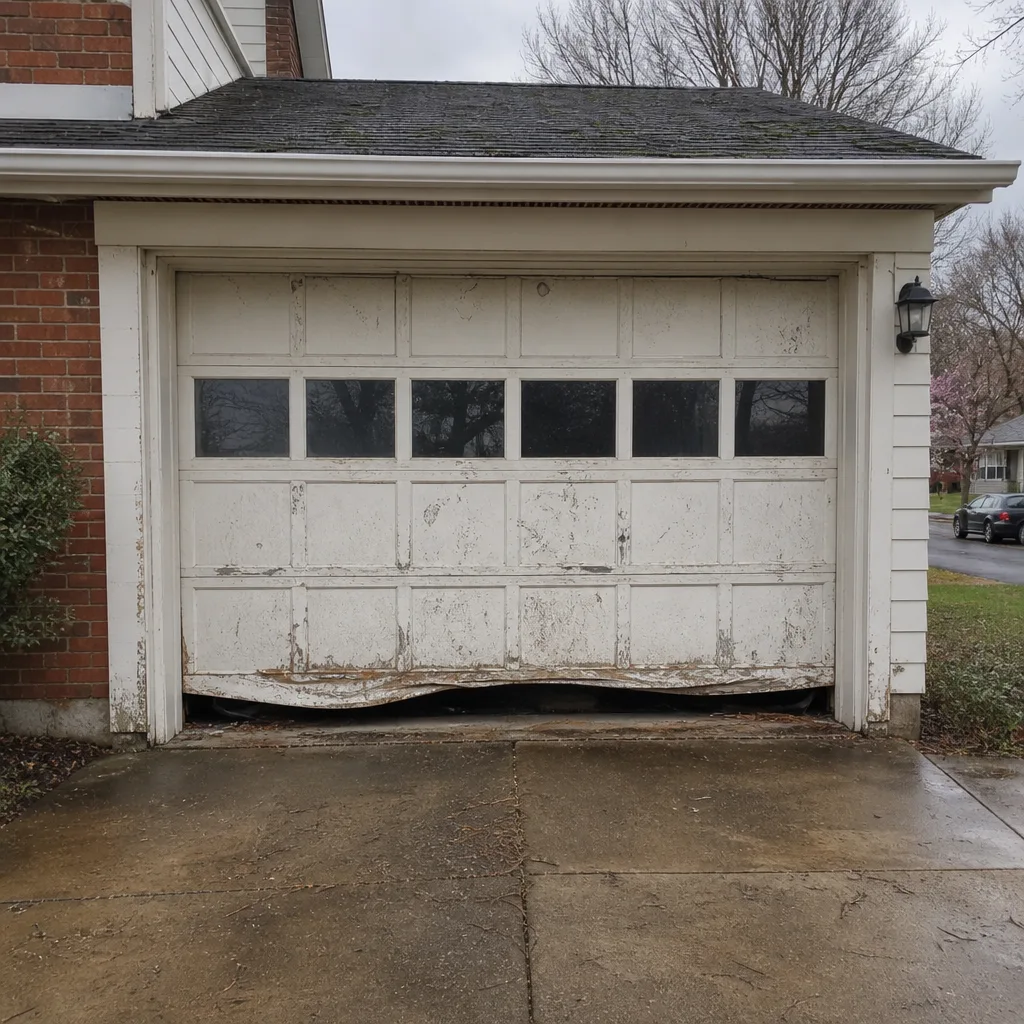 Before
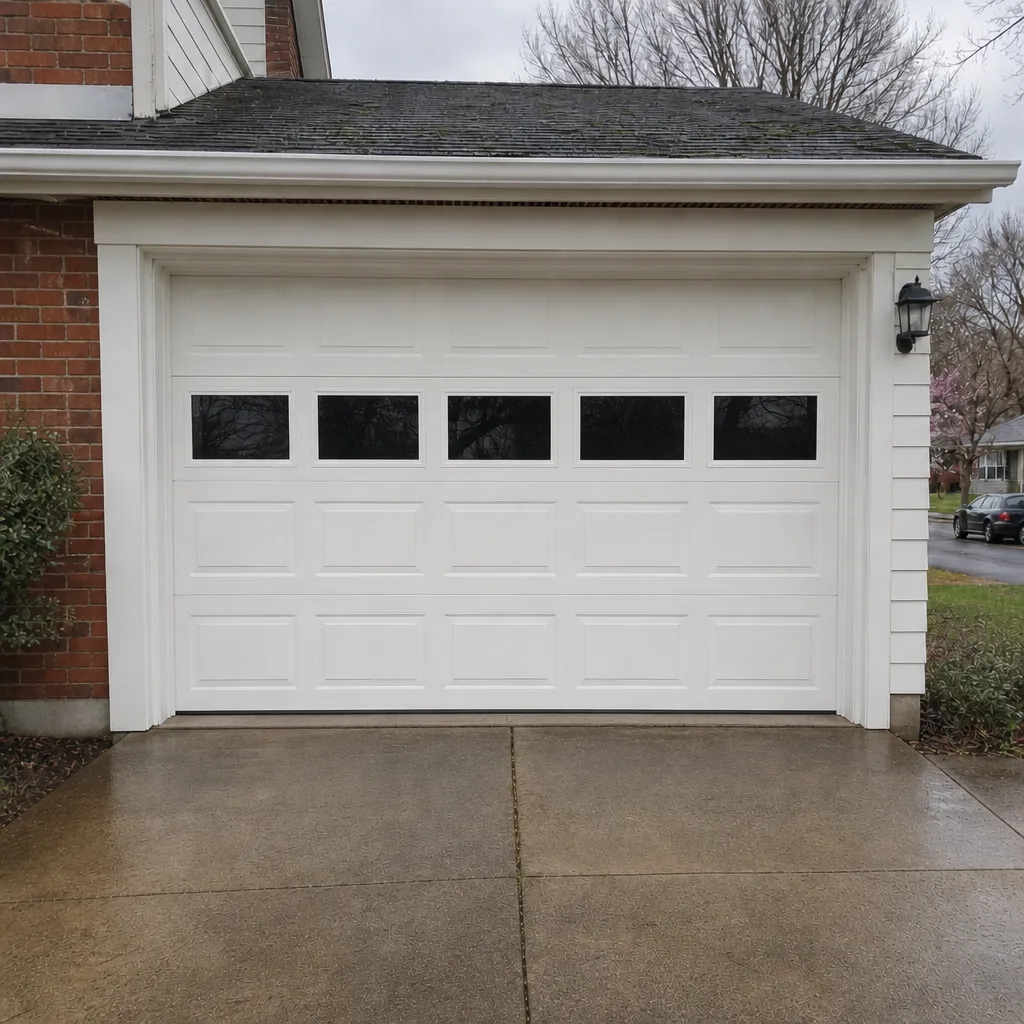 After
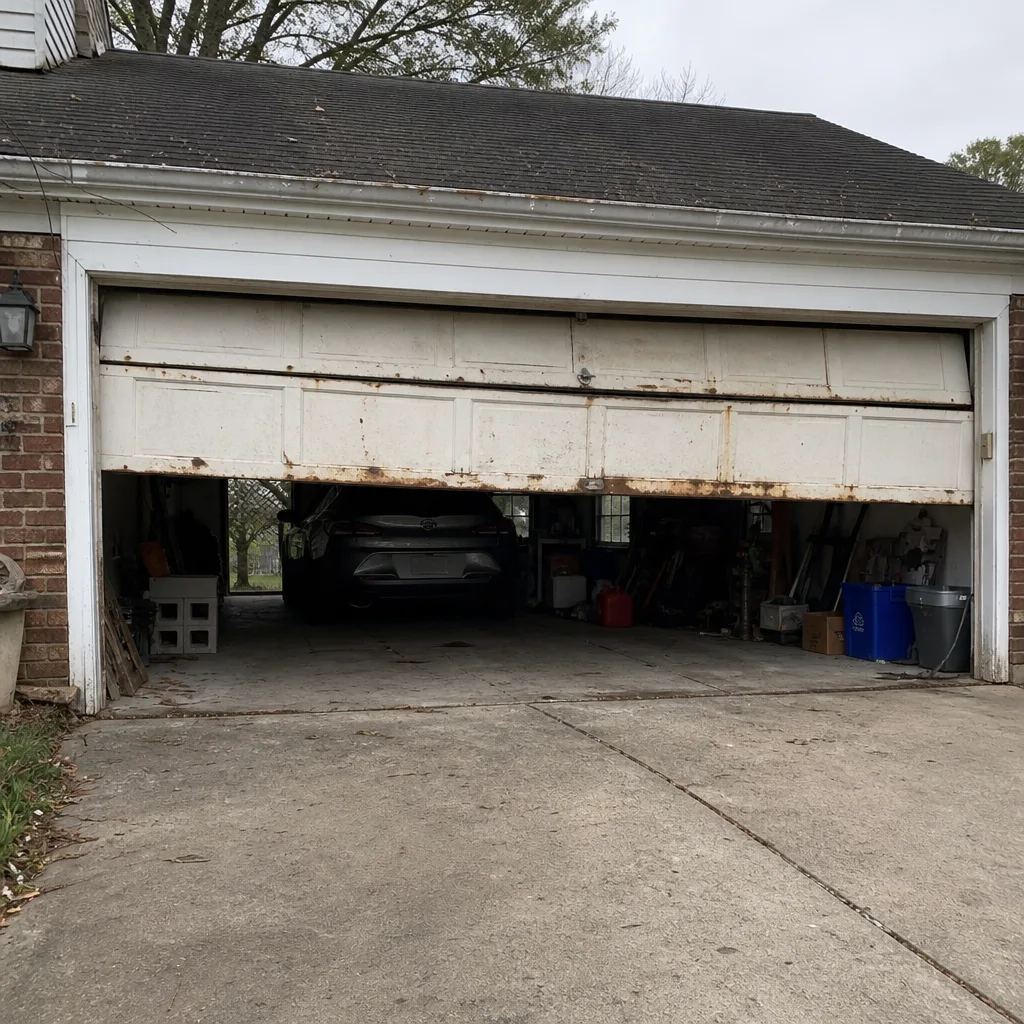 Before
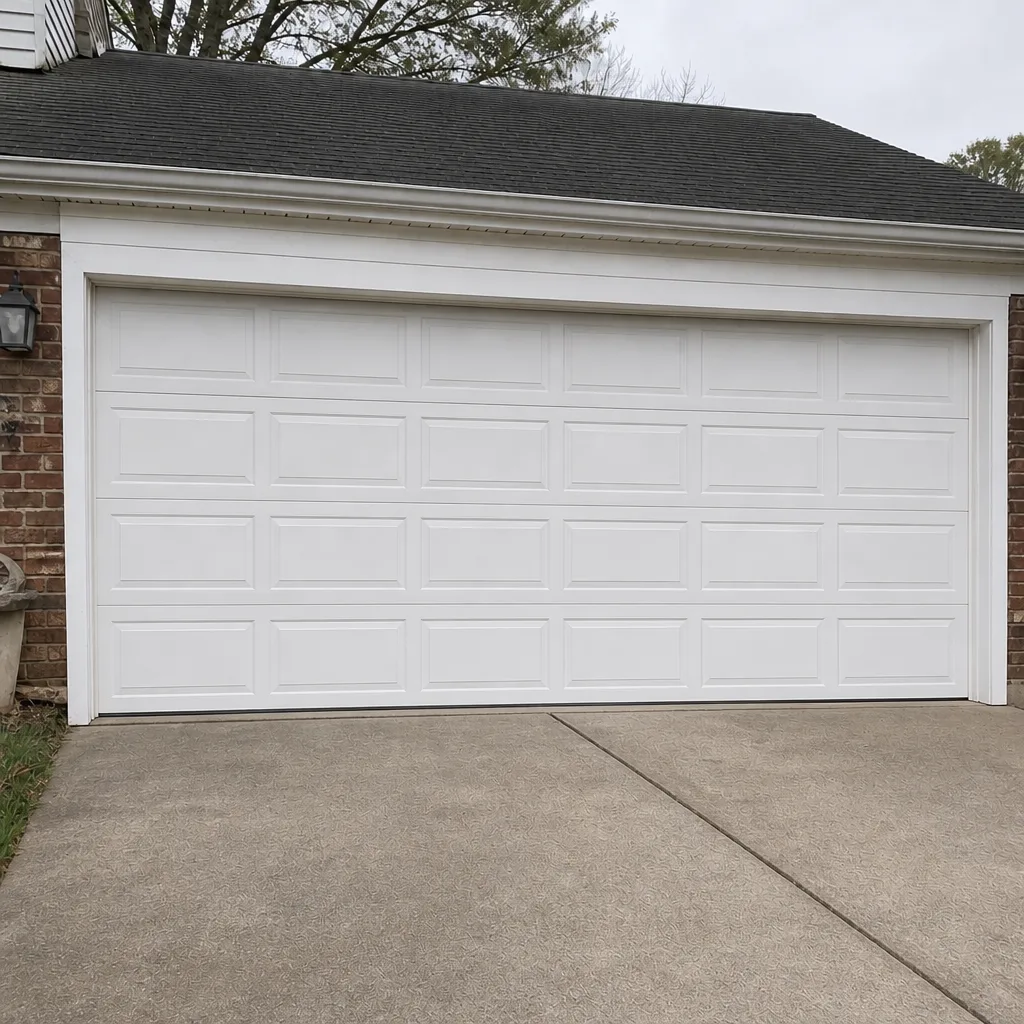 After
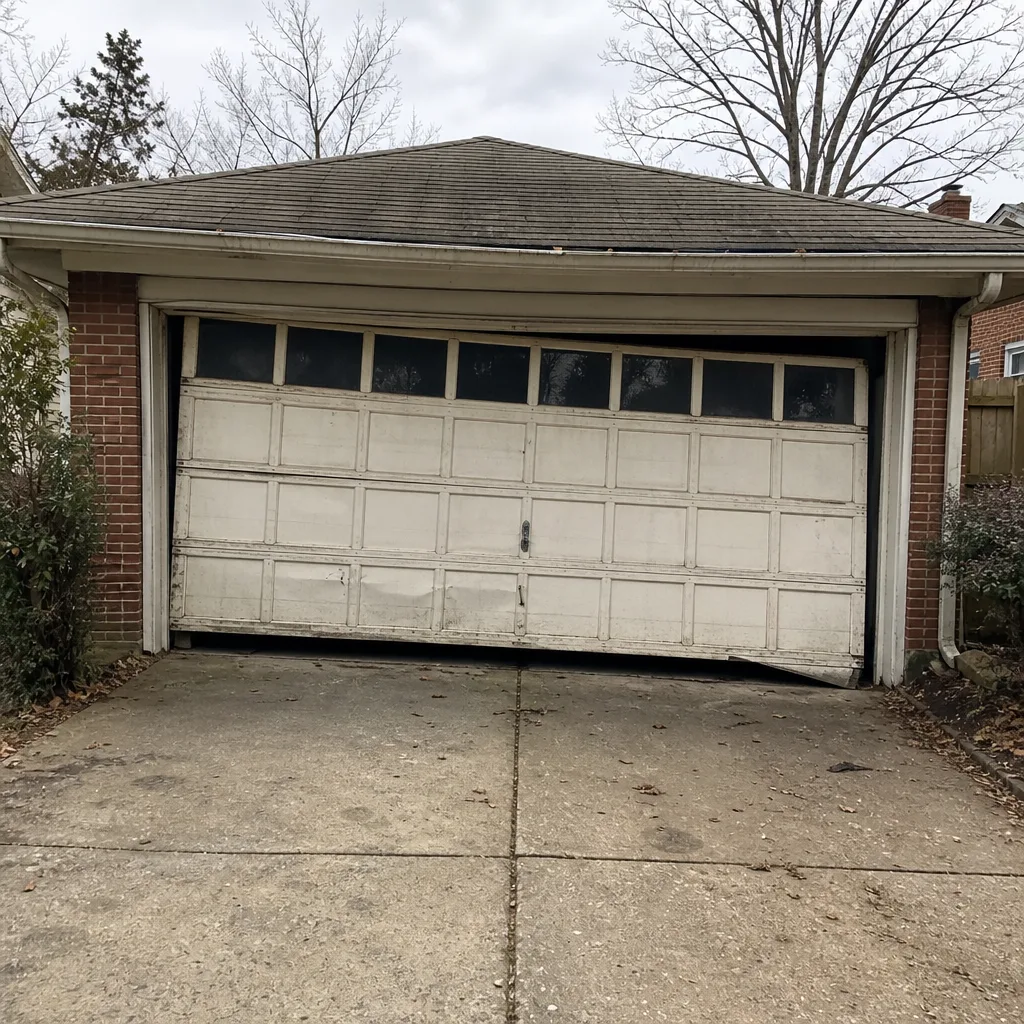 Before
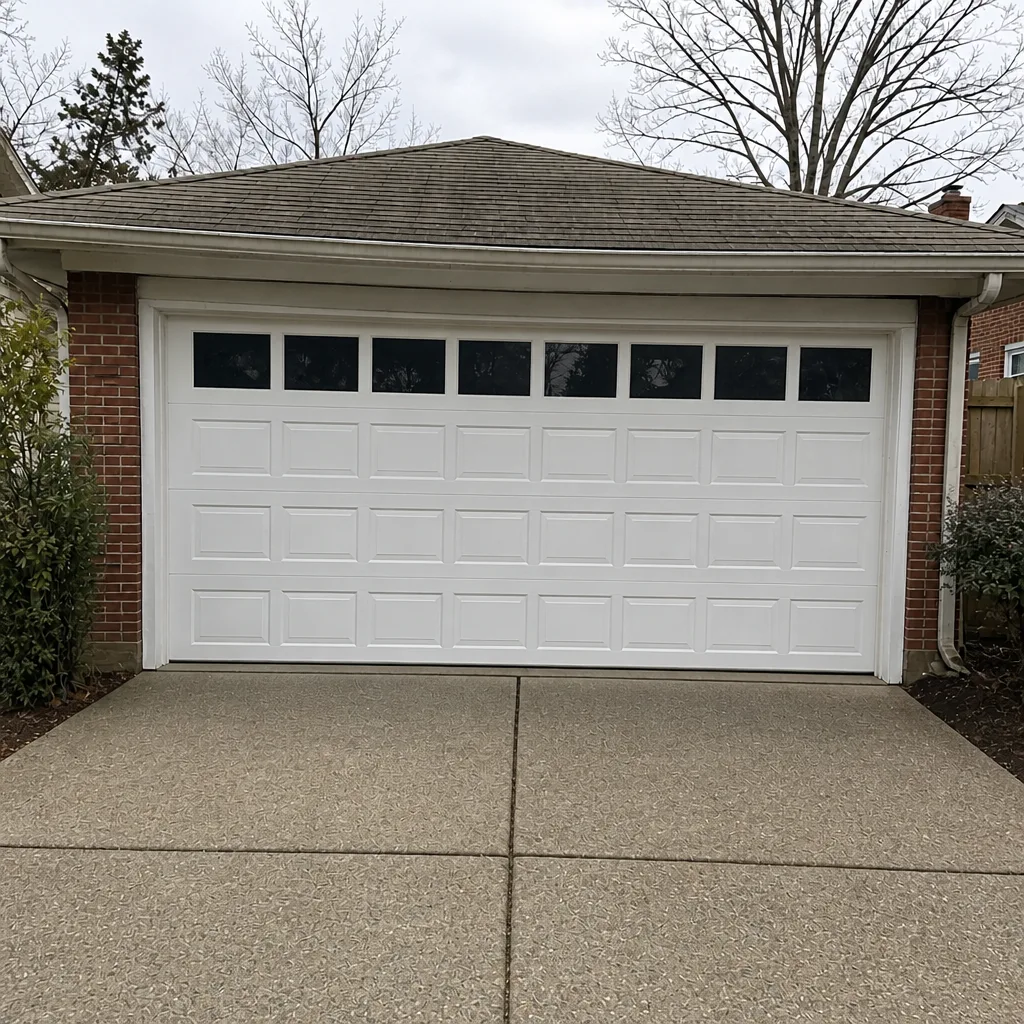 After
When to Call a Professional
Some garage door issues are safe to watch, and some aren’t. If you see a snapped spring, a frayed or hanging cable, a door that’s come off its track, or a door that won’t stay up on its own, stop and call a professional. High-tension torsion springs and the cables under them store enough energy to cause serious injury, and this is not work to attempt yourself. A door that reverses before it closes, an opener that runs but doesn’t move the door, or a remote that’s stopped working are all worth a diagnostic call. So is any door that’s making new noises, binding, or running unevenly, because those are early signs of a spring or roller problem that gets worse.
Kingsley Garage Door Repair offers free estimates in Arlington. We answer 24/7, with fast dispatch from 7am to 7pm, Sunday through Friday, and we’re closed Saturday. Call (844) 484-2584 to book an estimate, and we’ll tell you honestly whether the door needs a repair or a replacement before any work starts.
Frequently Asked Questions
Search the contractor’s business name on the Virginia DPOR license lookup tool, confirm the license is current, and check that the residential classification matches the work you’re hiring for. The lookup is free and takes about five minutes. If the license is expired or the name doesn’t match the estimate, don’t book the work.
A legitimate quote names the parts by brand and model, separates parts from labor, specifies whether springs are quoted singly or as a pair, and states the warranty terms in writing. Vague quotes like “spring replacement – $X” without part details aren’t comparable to anything. Ask for the breakdown before you agree to work.
A pair costs about twice a single-spring price, because most doors use a matched pair that’s replaced together. If one quote covers a single spring and another covers the pair, the price difference reflects the parts, not a markup. Ask which you’re being quoted so you’re comparing like with like. For an exact figure on your door, call (844) 484-2584; estimates are free.
A brand-fluent contractor recognizes your door and opener model faster, sources the correct part the first time, and keeps the manufacturer warranty intact. A generalist often learns your brand on-site and substitutes generic parts when the correct one isn’t immediately available. Ask which brands the contractor works on most and whether they’ll name your model over the phone.
Two quotes is usually enough if you normalize them for part tier and scope. Three is worth it if the first two disagree on whether the door needs repair or replacement. Get every quote in writing with parts and labor separated, and ask each contractor to quote the same scope so the comparison is fair.
Spring and opener repairs are often same-day jobs when the parts are on hand and the diagnosis is clear. Replacement doors and openers are measured, ordered, and scheduled, so they take longer. Call (844) 484-2584 to describe the problem and get booked; we answer 24/7 and dispatch from 7am to 7pm, Sunday through Friday.
The Bottom Line
Vetting a garage door contractor in Arlington comes down to three checks: license, brand knowledge, and a written quote that names parts. Run the DPOR lookup before you book. Ask the five diagnostic questions on the phone and pay attention to whether the answers are specific. Get every quote in writing with parts and labor separated, and normalize the part tiers before you compare prices. The contractor who can name your door, your opener, and the parts going on it before they arrive is the one worth hiring. That’s the standard we hold ourselves to: garage doors only, every major residential brand, repair or replace honestly. When you’re ready to get a quote, call (844) 484-2584 for a free estimate in Arlington.
Written by the team at Kingsley Garage Door Repair.